Wisdom tooth pain is one of the most common reasons people who have never had a dental problem in their lives suddenly find themselves searching for emergency relief at two in the morning. These late-arriving third molars, relics of an evolutionary past when human jaws were larger and diets required more grinding surface, rarely have enough room to erupt cleanly into the modern mouth.
The result is a spectrum of pain that ranges from dull, intermittent pressure as the tooth pushes through the gum to acute, debilitating infection when bacteria invade the partially erupted tissue. Understanding why wisdom teeth hurt, recognizing the symptoms that distinguish routine eruption discomfort from a genuine emergency, and knowing which at-home remedies actually work while you wait for professional care are the three pieces of knowledge that can transform a frightening experience into a manageable one. This guide provides all three.
What Is Wisdom Tooth?
Wisdom teeth, clinically known as third molars, are the last set of teeth to develop and erupt in the human mouth. Most people have four wisdom teeth, one in each quadrant (upper right, upper left, lower right, lower left), though it is entirely normal to have fewer than four, or occasionally more, as a result of natural anatomical variation. They typically begin forming within the jawbone during early adolescence and attempt to erupt between the ages of 17 and 25, a stage of life historically associated with the onset of maturity, which is how they earned the name “wisdom” teeth.
From an evolutionary perspective, third molars served a critical function. Early human diets consisted of coarse, unprocessed foods, raw plants, nuts, roots, and tough meats, that required extensive grinding and caused significant tooth wear. A third set of molars arriving in late adolescence provided replacement chewing surface as the first and second molars wore down.
Modern diets, cooking methods, and food processing have eliminated this need, while simultaneously the human jaw has progressively decreased in size over millennia of evolution. The American Association of Oral and Maxillofacial Surgeons reports that approximately 85 percent of wisdom teeth will eventually require extraction due to insufficient space, impaction, or associated pathology. The mismatch between the size of the modern jaw and the persistence of these vestigial teeth is the fundamental reason wisdom tooth pain is so extraordinarily common.
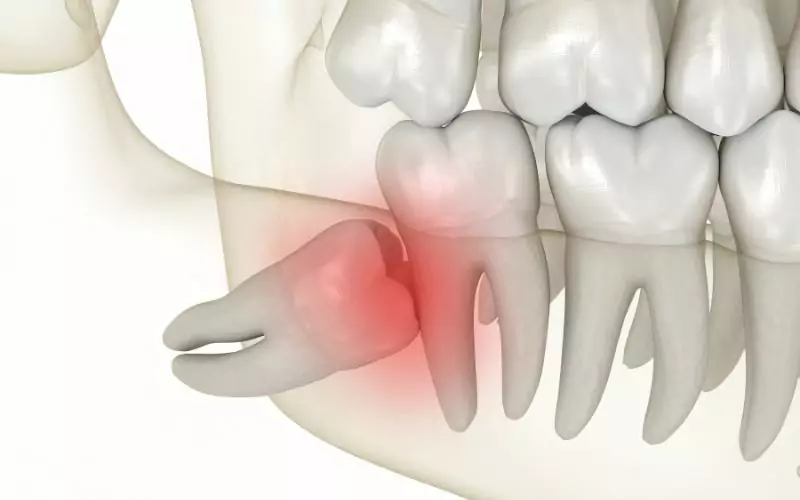
A wisdom tooth can erupt fully and function normally if the jaw provides adequate space and the tooth is properly aligned. When space is insufficient or the tooth develops at an abnormal angle, the tooth becomes impacted, meaning it is partially or completely blocked from erupting through the bone and gum tissue into its intended position. Impaction is classified by the tooth’s angulation: mesioangular (tilted forward toward the second molar), distoangular (tilted backward), horizontal (lying on its side), and vertical (correctly oriented but unable to erupt due to space restriction). Each type of impaction carries distinct risks and pain profiles.
Why Do Wisdom Teeth Hurt?
Wisdom tooth pain arises from several distinct mechanisms, and understanding which one is causing your pain determines both the urgency of the situation and the most effective response.
Eruption pressure is the most common initial cause. As the wisdom tooth develops and pushes upward (or downward in the upper jaw) through the bone toward the gum surface, the force creates a deep, aching pressure in the back of the jaw that can radiate to the ear, the temple, and the adjacent teeth. This pressure is similar to the teething pain infants experience but occurs in a smaller, more rigid adult jaw with less capacity to accommodate the emerging tooth. Eruption pressure tends to come and go in cycles, intensifying for a few days or weeks and then subsiding as the tooth pauses in its movement before pushing again.
Pericoronitis is the most frequent pathological cause of wisdom tooth pain and the one most likely to escalate into a genuine emergency. When a wisdom tooth partially erupts, the gum tissue overlying the tooth creates a flap called the operculum. This flap forms a pocket between the tissue and the tooth surface where food debris and bacteria accumulate but are virtually impossible to clean.
The trapped bacteria trigger an acute inflammatory infection of the surrounding tissue, producing intense, throbbing pain, swelling of the gum and cheek, difficulty opening the mouth (trismus), a foul taste from pus discharge, and in severe cases, fever and swollen lymph nodes. The British Dental Journal identifies pericoronitis as one of the most common dental emergencies in the 18 to 25 age group.
Caries on the wisdom tooth or the adjacent second molar is an insidious cause of pain. The cramped position of impacted wisdom teeth creates an inaccessible contact zone between the third and second molars where plaque accumulates and decay develops on one or both teeth. The patient may first notice sensitivity or aching in the area without realizing that the wisdom tooth is causing decay on the neighboring tooth, potentially compromising a perfectly healthy molar.
Cyst or tumor formation around an impacted wisdom tooth is uncommon but clinically significant. The follicular sac surrounding the unerupted tooth can accumulate fluid and expand into a dentigerous cyst, a slowly growing lesion that destroys the surrounding bone without producing pain until it has reached a significant size. Routine panoramic radiography, recommended in the late teens or early twenties, allows early detection of these lesions before they cause extensive damage.
Root resorption of the adjacent tooth occurs when an impacted wisdom tooth presses directly against the root of the second molar. The sustained pressure triggers the body’s resorptive cells to dissolve the root surface of the neighboring tooth, which can progress to the point where the second molar is irreversibly damaged and requires extraction alongside the wisdom tooth that caused the problem.
Symptoms of Wisdom Tooth Pain
Wisdom tooth pain manifests in a characteristic constellation of symptoms that helps distinguish it from other sources of dental discomfort. The pain is almost always located in the posterior region of the mouth, behind the last visible molar, and may be felt in the gum tissue, in the jaw itself, or as a deep ache that is difficult to pinpoint precisely.
The most common symptoms include a dull, persistent ache or pressure in the back corner of the jaw that worsens when chewing or when opening the mouth wide. Swelling of the gum tissue behind the last molar, often accompanied by redness and tenderness to touch, indicates active eruption or pericoronitis. A foul taste in the mouth, particularly when pressing on the gum tissue in the area, suggests pus drainage from an infected operculum.
Difficulty opening the mouth fully (trismus) occurs when the infection or inflammation involves the muscles of mastication that control jaw movement. Pain radiating to the ear, temple, or the side of the head on the affected side is a frequent companion to wisdom tooth pain because the nerves serving the third molar region share pathways with those serving the ear and temporal area.
Swelling that extends beyond the gum into the cheek, the area under the jaw, or the neck indicates that the infection has spread beyond the local tissue into the deeper fascial spaces, a development that escalates the situation from dental urgency to medical emergency. Fever above 38°C (100.4°F), difficulty swallowing, or difficulty breathing in the context of wisdom tooth symptoms requires immediate hospital evaluation, as these signs may indicate a spreading infection with potential airway compromise.
Less dramatic but equally important symptoms include the second molar becoming sensitive or painful due to pressure from the impacted wisdom tooth, a change in the bite as the erupting tooth pushes adjacent teeth out of alignment, and chronic low-grade jaw stiffness that patients attribute to stress or TMJ issues but that actually originates from chronic pericoronitis or impaction pressure.
Wisdom Tooth Pain Treatments
The definitive treatment for problematic wisdom teeth is extraction, but the specific approach depends on the degree of impaction, the acuteness of any infection, and the overall clinical situation.
Simple extraction is performed when the wisdom tooth has erupted sufficiently to be grasped with forceps and removed through the socket without significant bone removal. This is typically an in-office procedure under local anesthesia, takes 15 to 30 minutes, and carries a straightforward recovery of three to five days.
Surgical extraction is required when the tooth is partially or fully impacted within the bone. The oral surgeon makes an incision in the gum tissue, removes bone overlying the tooth with a surgical handpiece, and may section the tooth into fragments for easier removal. Surgical extractions are more complex, carry a longer recovery of seven to fourteen days, and may be performed under local anesthesia with sedation or under general anesthesia depending on the difficulty of the impaction and the patient’s preference. The American Association of Oral and Maxillofacial Surgeons recommends evaluation of all four wisdom teeth simultaneously, with extraction of any teeth that are impacted, symptomatic, or radiographically at risk for future pathology.
Operculectomy, the surgical removal of the gum flap overlying a partially erupted wisdom tooth, is an option in select cases where the tooth is expected to erupt fully and the pericoronitis is recurrent. By removing the operculum, the pocket that traps bacteria is eliminated, and the tooth can complete its eruption into a cleansable position. This approach is only appropriate when radiographic assessment confirms adequate space and proper angulation for full eruption.
Antibiotic therapy may be prescribed when an acute infection such as pericoronitis is present. Antibiotics reduce the bacterial load and control the spreading infection, but they do not treat the underlying cause. They are a bridge to surgical treatment, not a cure. Common prescriptions include amoxicillin or metronidazole, depending on the suspected bacterial profile.
For patients who lose second molars due to damage caused by impacted wisdom teeth, or whose dental health has been compromised by years of recurrent wisdom tooth problems, restorative solutions including Dental Implants, Dental Crowns, and complete smile rehabilitation with Emax Veneers or a Hollywood Smile design can restore both function and aesthetics once the wisdom tooth situation has been fully resolved.
Immediate At-Home Pain Relief
While professional treatment is the only path to permanent resolution, the following methods provide genuine, evidence-based relief for wisdom tooth pain during the hours or days before your dental appointment.
The Saltwater “Flush” Technique
A standard saltwater rinse is helpful, but a targeted “flush” technique is more effective for wisdom tooth pain specifically because the problem area is in the far back of the mouth where a general swish barely reaches. Dissolve half a teaspoon of salt in a cup of warm water, tilt your head to the affected side, and allow the solution to pool in the back of the mouth directly over the painful area. Hold it there for 30 to 45 seconds, then gently swish and spit.
The warm hypertonic solution draws inflammatory fluid from the swollen tissue, reduces pressure on the nerve endings, and flushes debris from beneath the gum flap (operculum) where bacteria thrive. Repeat every two to three hours. This targeted flush is particularly effective for pericoronitis because it directly irrigates the infected pocket that a standard swish would miss.
For additional antimicrobial effect, a rinse with diluted hydrogen peroxide (equal parts 3 percent hydrogen peroxide and water) can be alternated with the saltwater flush. Swish for 30 seconds and spit thoroughly. Do not swallow either solution.
Temperature Therapy: Ice vs. Heat
Cold therapy is the safest and most effective temperature-based approach for wisdom tooth pain. Wrap an ice pack or bag of frozen peas in a thin towel and hold it against the outside of the cheek over the affected area for 15 minutes, then remove for 15 minutes. The cold constricts blood vessels, reduces swelling, and numbs the nerve pathways. This on-off cycle can be repeated as many times as needed throughout the day and is particularly effective for pain accompanied by visible swelling.
Heat should be avoided when infection is suspected. Applying warmth to an area with an active abscess or pericoronitis increases blood flow and can accelerate the spread of infection into the surrounding tissues. The only exception is the warm saltwater rinse, where the temperature is mild and the contact time is brief. If your wisdom tooth pain involves swelling, redness, or a foul taste, keep it cold externally and warm only in the rinse.
Clove Oil & Numbing Gels
Clove oil (eugenol) is a potent natural analgesic with decades of use in dental emergency care. Place one to two drops on a cotton ball and tuck it gently against the painful gum tissue behind the last molar. The eugenol produces a localized numbing effect within one to two minutes that lasts 20 to 30 minutes. Because the wisdom tooth area is difficult to access, using a cotton-tipped applicator (Q-tip) rather than a cotton ball allows more precise placement.
Reapply every two to three hours as needed. Avoid swallowing large amounts of clove oil, and dilute it with coconut or olive oil if the undiluted form irritates the surrounding tissue.
Over-the-counter benzocaine gels (Orajel, Anbesol) provide surface numbing of the gum tissue for 15 to 30 minutes per application. Apply a small amount directly to the swollen gum tissue around the wisdom tooth using a clean fingertip or cotton swab. Benzocaine is effective for superficial gum pain but does not penetrate deep enough to address pain originating within the tooth itself or at the bone level.
For systemic pain control, the combination of 400 milligrams of ibuprofen alternated every three hours with 500 milligrams of acetaminophen provides the strongest over-the-counter analgesic effect available. A study in the Journal of the American Dental Association demonstrated that this combination outperforms many prescription opioid protocols for dental pain while carrying fewer side effects and no addiction risk. Always follow the maximum daily dose guidelines for each medication and take ibuprofen with food.
FAQ
How long does wisdom tooth eruption pain last?
Wisdom tooth eruption pain typically occurs in waves. Each eruption episode, where the tooth actively pushes through bone and gum tissue, may last several days to two weeks before subsiding as the tooth pauses. These episodes can recur over a period of months or even years as the tooth gradually works its way toward the surface.
If the tooth has adequate space and is properly aligned, the pain resolves once eruption is complete and the gum tissue settles around the new tooth. If the tooth is impacted and cannot fully erupt, the episodes will continue indefinitely and frequently worsen over time as pericoronitis becomes recurrent. Pain that escalates with each cycle, rather than following a pattern of gradually decreasing intensity, strongly suggests that extraction rather than patience is the appropriate response.
Can wisdom teeth cause earaches and headaches?
Yes, and this is one of the most confusing aspects of wisdom tooth pain for patients. The inferior alveolar nerve, which serves the lower wisdom teeth, and the branches of the trigeminal nerve that supply the upper third molars share neural pathways with the nerves serving the ear, the temple, and the side of the head.
When the wisdom tooth generates pain signals, these signals can be referred along shared pathways to produce earaches, temporal headaches, and even pain behind the eye on the affected side. Many patients visit their general practitioner for an “ear infection” or “tension headache” that turns out to originate from an impacted wisdom tooth. If you are experiencing recurrent unilateral earache or headache that does not respond to standard treatment, a dental evaluation including a panoramic radiograph should be part of the diagnostic workup.
Why does my breath smell bad around the back tooth?
The foul odor and taste associated with a problematic wisdom tooth come from two sources. The first is the accumulation and decomposition of food debris trapped beneath the operculum or in the inaccessible contact zone between the wisdom tooth and the second molar. This debris is broken down by anaerobic bacteria that produce volatile sulfur compounds, the same molecules responsible for the smell of rotten eggs.
The second source is the pus (purulent exudate) produced by an active pericoronitis infection, which contains dead bacteria, dead white blood cells, and decomposed tissue, all of which generate intensely unpleasant odor. No amount of brushing, mouthwash, or breath freshener will resolve this smell permanently because the cause is a physical space that home hygiene instruments cannot access. Resolution requires either extraction of the wisdom tooth or, in appropriate cases, operculectomy to eliminate the pocket.
Is it possible for wisdom teeth to grow in with no pain?
Absolutely. In approximately 15 to 20 percent of the population, wisdom teeth erupt fully, align properly with the dental arch, and cause no pain at any point during the process. These patients have sufficient jaw space, favorable tooth angulation, and adequate gum tissue accommodation. Their wisdom teeth function as normal molars for the rest of their lives with no intervention required, provided they can be cleaned effectively. Even in the absence of pain, however, a radiographic evaluation in the late teens or early twenties is recommended to confirm that the wisdom teeth are not causing silent damage such as root resorption of the adjacent molars, cyst formation around unerupted teeth, or decay in areas that cannot be visualized clinically. The absence of pain is not the same as the absence of pathology.
Can a wisdom tooth infection go away on its own?
A wisdom tooth infection such as pericoronitis may appear to resolve spontaneously as the acute inflammation subsides and the body’s immune system partially controls the bacterial population. The swelling decreases, the pain fades, and the patient assumes the problem has gone away. In reality, the infection has transitioned from acute to chronic; the bacteria remain harbored beneath the operculum, and the next episode of food impaction or immune dip will trigger another flare-up. Each recurrent episode risks more extensive spread and greater tissue damage.
A study in the International Journal of Oral and Maxillofacial Surgery found that recurrence rates for pericoronitis exceed 50 percent without definitive treatment, and subsequent episodes tend to be more severe than the initial one. The only way to permanently eliminate a wisdom tooth infection is to remove the tooth or the operculum that creates the bacterial trap. For patients who have delayed treatment and experienced complications affecting adjacent teeth, restorative options including Composite Bonding, Dental Crowns, or Dental Implants can repair or replace the damage once the infection is fully resolved.
Conclusion
Wisdom tooth pain is your body’s signal that a tooth designed for a jaw that no longer exists is struggling to find its place in the mouth you actually have. The pain may be as simple as eruption pressure that resolves on its own, or as serious as an acute infection that requires immediate surgical intervention. The difference between the two is determined by the symptoms you recognize and the speed with which you seek professional evaluation.
Saltwater flushes, cold compresses, clove oil, and the ibuprofen-acetaminophen combination provide genuine, evidence-based relief while you wait for your appointment. They buy you time and comfort, but they do not address the underlying cause. Only a clinical examination and panoramic radiograph can determine whether your wisdom tooth needs extraction, monitoring, or nothing at all.
Do not wait for a manageable problem to become an emergency. A wisdom tooth that could be extracted in a 30-minute outpatient procedure today can become a hospital admission for a spreading infection tomorrow if ignored.
To address your wisdom tooth pain and any dental concerns alongside it, from restoring teeth damaged by impaction pressure to building the smile you have always wanted with Emax Veneers, All on 4 full-arch solutions, or a complete Hollywood Smile transformation, contact Clean Smiley Turkey. Our expert team in Antalya provides complete dental care within all-inclusive packages designed for international patients. Request your free quote today and take the first step toward a pain-free, confident smile.