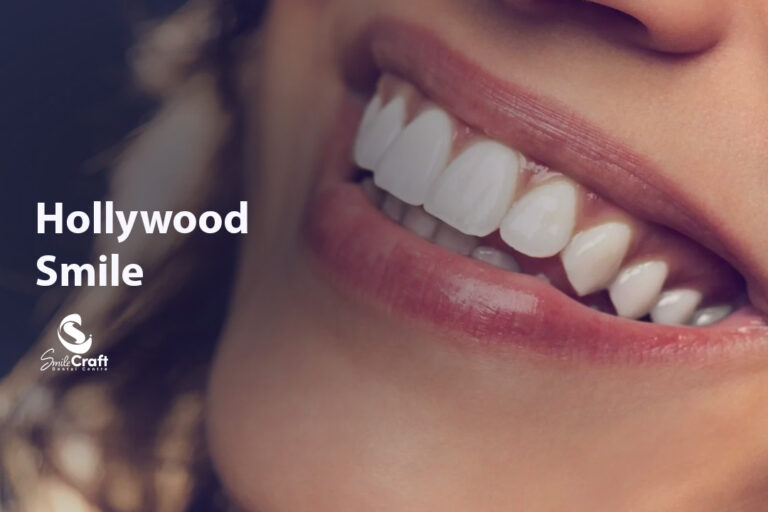
Crooked teeth are far more than a cosmetic inconvenience. They affect how you chew, how you speak, how you clean your teeth, and ultimately how long those teeth last in your mouth. Misaligned teeth create hidden plaque traps that brushing alone cannot reach, generate uneven bite forces that accelerate wear and fracture, and place disproportionate stress on the jaw joint that can manifest as chronic headaches and facial pain. Yet despite being one of the most common dental conditions on the planet, crooked teeth remain surrounded by misconceptions; that they are purely aesthetic, that they can only be fixed in childhood, or that the only solution involves years of metal brackets.
Modern dentistry offers a spectrum of solutions for crooked teeth at every age, from invisible aligners to porcelain veneers, each tailored to the severity of the misalignment and the patient’s individual goals. This guide explains what causes teeth to grow crooked, the types of misalignment that exist, why correction matters far beyond appearance, and which treatment options deliver the best results in 2026.

What Are Crooked Teeth?
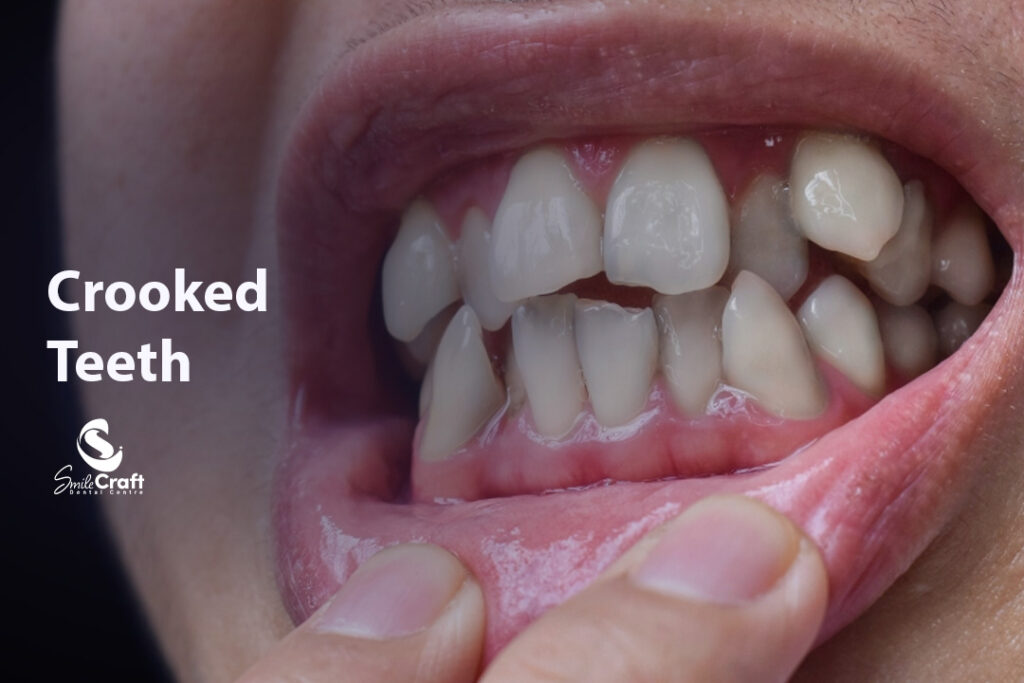
Crooked teeth, clinically referred to as dental malocclusion or malalignment, describes any condition in which the teeth do not follow the ideal arch form or do not meet correctly when the jaws close together. In a perfectly aligned dentition, the upper teeth sit slightly outside the lower teeth, each tooth contacts its neighbors without overlapping or spacing, and the bite distributes chewing forces evenly across all teeth simultaneously.
Crooked teeth deviate from this ideal in various ways: they may be rotated on their axis, tilted forward or backward, displaced buccally (toward the cheek) or lingually (toward the tongue), crowded together with overlapping, or spaced apart with visible gaps.
The World Health Organization classifies malocclusion as the third most prevalent oral health condition globally, after dental caries and periodontal disease. The severity of crooked teeth ranges from mild aesthetic irregularities that have no functional impact to severe skeletal discrepancies that compromise chewing, breathing, and facial development. Understanding where your specific misalignment falls on this spectrum is the first step toward determining whether treatment is advisable and which approach will deliver the most effective and lasting correction.
What Causes Crooked Teeth?
Crooked teeth result from a complex interaction between genetic inheritance, developmental factors, and environmental influences. Rarely is a single cause responsible; in most cases, multiple factors converge to produce the final alignment pattern.
Genetics is the dominant factor. The size and shape of the jawbones, the size and number of the teeth, and the relationship between upper and lower jaws are all largely inherited. A child who inherits large teeth from one parent and a small jaw from the other is almost certain to develop crowding. Jaw growth patterns, including the relative forward or backward positioning of the mandible, are strongly heritable and underlie the skeletal component of overbites and underbites.
Childhood habits play a significant secondary role. Prolonged thumb sucking, pacifier use beyond age three, and tongue thrusting during swallowing exert sustained forces on the developing dental arches that can push teeth out of alignment and alter the growth trajectory of the jawbones. Mouth breathing, whether caused by allergies, enlarged adenoids, or nasal obstruction, leads to a characteristic narrow upper arch and an open bite pattern because the tongue, which normally rests against the palate and acts as a natural expander, drops to the floor of the mouth.
Premature loss of primary (baby) teeth disrupts the natural space-holding function that guides permanent teeth into their correct positions. When a baby tooth is lost early due to decay or trauma, adjacent teeth drift into the vacant space, blocking the permanent successor from erupting properly and creating crowding or impaction.
Wisdom teeth, the third molars that erupt in the late teens or early twenties, have historically been blamed for anterior crowding, though the American Association of Orthodontists notes that the evidence for this link is weaker than commonly believed; late mandibular growth is likely a more significant contributor to adult-onset crowding in the lower anterior region.
Trauma, periodontal disease, and age-related changes can also cause teeth to shift out of alignment in adulthood. A blow to the face can displace teeth from their sockets. Advanced gum disease destroys the bone that holds teeth in position, allowing them to drift, rotate, and tip. Even in healthy mouths, a natural mesial drift, the tendency of teeth to move slowly forward throughout life, can produce gradual crowding of the lower front teeth with age.
The 4 Common Types of Misalignment (Malocclusion)
Crooked teeth manifest in several distinct patterns, each with its own causes, functional consequences, and treatment considerations.
Crowding (The Overlap)
Crowding occurs when the combined width of the teeth exceeds the available space in the dental arch, forcing teeth to overlap, rotate, and layer on top of each other. It is the most common form of malocclusion worldwide. Mild crowding involves slight rotation or displacement of one or two teeth; moderate crowding produces visible overlapping of multiple teeth; severe crowding results in teeth that are completely blocked out of the arch or impacted beneath the gum.
The functional consequences of crowding extend far beyond aesthetics. Overlapping tooth surfaces create interproximal zones that are virtually impossible to clean with a toothbrush and extremely difficult to floss, leading to disproportionately high rates of interproximal caries and localized periodontal disease in crowded segments. Crowded teeth also bear uneven bite forces, with some teeth absorbing more than their share of load and others receiving almost none, accelerating wear on the overloaded teeth and potentially contributing to temporomandibular joint dysfunction.
Diastema (The Gaps)
A diastema is a visible gap between two adjacent teeth, most commonly between the upper central incisors (the midline diastema). Small diastemas are extremely common in the primary dentition and often close spontaneously when the permanent canines erupt and migrate the lateral incisors medially. In adults, persistent diastemas can result from a mismatch between tooth size and jaw size (teeth that are too small for the arch), a thickened labial frenum (the tissue connecting the upper lip to the gum) that physically prevents the central incisors from closing together, periodontal disease that has loosened the teeth and allowed them to drift apart, or habits such as tongue thrusting that apply outward pressure on the front teeth.
While a midline diastema is considered a charming feature in some cultures, functionally significant gaps elsewhere in the arch can affect speech (particularly the “s” and “th” sounds), allow food impaction, and indicate underlying skeletal or periodontal issues that require evaluation. Treatment options range from Composite Bonding for simple cosmetic closure to orthodontic treatment for complete alignment correction.
Overbite & Underbite
An overbite (Class II malocclusion) describes a condition in which the upper front teeth overlap the lower front teeth excessively in the vertical dimension. A moderate overbite of two to four millimeters is considered normal; when the overlap exceeds this range, or when the lower incisors bite into the palatal gum tissue behind the upper incisors, the condition is classified as a deep bite. Deep bites can cause accelerated wear of the lower front teeth, trauma to the palatal tissue, and temporomandibular joint strain.
An underbite (Class III malocclusion) is the opposite: the lower front teeth protrude forward of the upper front teeth. This pattern is usually driven by excessive mandibular growth, deficient maxillary growth, or a combination of both. Underbites affect chewing efficiency, alter facial profile aesthetics, and can create speech difficulties. Mild underbites can be corrected with orthodontics alone; severe skeletal underbites may require orthognathic (jaw) surgery in combination with braces or aligners to achieve a stable, functional result.
Crossbite (The Misaligned Jaw)
A crossbite occurs when one or more upper teeth sit inside the lower teeth rather than outside, reversing the normal relationship. Crossbites can be anterior (affecting the front teeth), posterior (affecting the back teeth), or both. A unilateral posterior crossbite, where one side of the upper arch collapses inward, is particularly common and frequently causes a functional shift of the mandible to the affected side during biting. If left untreated, this shift becomes habitual and can lead to asymmetric jaw growth in children and temporomandibular joint dysfunction in adults.
Crossbites are best treated early, ideally during the mixed dentition phase in childhood when palatal expansion can widen the upper arch and correct the transverse discrepancy before skeletal maturity. In adults, correction may involve a combination of orthodontics and, in severe cases, surgically assisted rapid palatal expansion.
Why Should Crooked Teeth Be Straightened?
The decision to straighten crooked teeth is often framed as purely cosmetic, but the functional and health-related reasons for correction are equally compelling and, in many cases, more important.
Oral hygiene is dramatically easier with properly aligned teeth. Crowded, overlapping, and rotated teeth create recesses and contact points that harbor plaque and resist cleaning. Studies published in the American Journal of Orthodontics and Dentofacial Orthopedics have demonstrated that orthodontic alignment significantly reduces plaque accumulation and improves periodontal health indices, directly lowering the risk of both caries and gum disease. For patients who have invested in restorative or aesthetic treatments such as Emax Veneers, Dental Crowns, or Dental Implants, a well-aligned arch ensures that these restorations are maintained in an environment that supports their longevity rather than undermining it.
Bite balance is restored when teeth are properly aligned. An even distribution of chewing forces protects individual teeth from excessive wear, reduces the risk of fracture, and minimizes stress on the temporomandibular joint. Patients with untreated malocclusion frequently present with symptoms of TMJ dysfunction, including jaw pain, clicking, headaches, and difficulty opening the mouth, that resolve or significantly improve following orthodontic correction.
The psychological and social impact of straightening crooked teeth should not be underestimated. Research consistently demonstrates that an attractive smile positively influences perceptions of intelligence, friendliness, and professional competence. Patients who undergo orthodontic treatment report significant improvements in self-esteem, willingness to smile, and comfort in social and professional settings.
Modern Straightening Solutions
The field of orthodontic treatment has expanded dramatically beyond the traditional metal-bracket model. In 2026, patients can choose from a range of options that vary in visibility, comfort, treatment time, and suitability for different types of crooked teeth.
Clear Aligners (Invisalign & Beyond)
Clear aligner therapy uses a series of custom-fabricated, transparent plastic trays that progressively move the teeth into their planned positions. Each tray is worn for one to two weeks before being replaced by the next in the sequence, with each tray applying a precisely calibrated force to specific teeth. The near-invisible appearance of clear aligners has made them the most popular orthodontic option among adult patients.
Clear aligners are effective for mild to moderate crowding, spacing, and certain bite corrections. Their removability allows normal eating and brushing without the restrictions imposed by fixed braces. However, they require exceptional patient compliance; the trays must be worn 20 to 22 hours per day to achieve the planned tooth movements on schedule. Complex cases involving severe crowding, significant skeletal discrepancies, or teeth that need to be rotated more than 20 degrees may exceed the biomechanical capabilities of aligners and require fixed appliances.
Traditional & Ceramic Braces
Fixed braces, consisting of brackets bonded to each tooth and connected by an archwire, remain the most versatile and powerful orthodontic tool available. Traditional stainless steel brackets handle every type of malocclusion, from simple crowding to complex skeletal cases requiring jaw surgery, with a level of three-dimensional control that no other system can fully replicate. Treatment time for complete cases ranges from 12 to 30 months depending on severity.
Ceramic (tooth-colored) brackets offer the same biomechanical performance as metal brackets with significantly improved aesthetics. The brackets blend with the tooth surface, and when paired with tooth-colored wires, the appliance becomes far less noticeable than traditional metal. Ceramic braces are an excellent compromise for patients who need the power of fixed appliances but prefer a more discreet appearance.
Lingual Braces
Lingual braces are fixed brackets bonded to the tongue-side (lingual) surface of the teeth rather than the cheek-side, making them completely invisible from the outside. They offer the full biomechanical capability of conventional fixed braces with zero visible hardware. The trade-offs include higher cost, a longer adjustment period for speech and tongue comfort, and more complex clinical management for the orthodontist. Lingual braces are the premium choice for adult professionals and public-facing individuals who require complete orthodontic correction with absolute aesthetic discretion.
Veneers
For patients whose crooked teeth involve mild rotations, minor crowding, or size discrepancies and who prefer not to undergo orthodontic treatment, porcelain veneers offer an alternative path to a straight-looking smile. Emax Veneers bonded to the front surfaces of the misaligned teeth can create the visual illusion of perfect alignment by altering the shape, angle, and contour of the visible tooth surface. This approach does not move the teeth; it masks the misalignment with restorative material.
The advantage is speed: a full set of veneers can be completed in two to three appointments over one to two weeks, compared to 12 to 30 months of orthodontics. The limitation is that veneers require irreversible enamel preparation and have a finite lifespan of 15 to 20 years before replacement. Veneers also cannot correct significant skeletal discrepancies or severe crowding where the underlying tooth positions would compromise the restoration’s fit and longevity.
For mild aesthetic cases, however, veneers deliver a stunning transformation in a fraction of the time. A complete Hollywood Smile design frequently combines orthodontic pre-alignment with veneer finishing to achieve the most predictable and natural-looking result.
| Solution | Visibility | Treats Severe Cases | Treatment Time | Reversible | Relative Cost |
| Clear aligners | Nearly invisible | Mild to moderate | 6 – 18 months | Yes (removable) | Moderate to high |
| Metal braces | Visible | All severities | 12 – 30 months | Yes (removable at end) | Moderate |
| Ceramic braces | Low visibility | All severities | 12 – 30 months | Yes (removable at end) | Moderate to high |
| Lingual braces | Invisible | All severities | 12 – 30 months | Yes (removable at end) | High |
| Porcelain veneers | Natural appearance | Mild cosmetic only | 1 – 2 weeks | No (irreversible) | High |
Straightening Teeth as an Adult
One of the most persistent myths in dentistry is that orthodontic treatment is only for children and teenagers. In reality, teeth can be straightened at any age as long as the periodontal support is healthy. The biological mechanism of tooth movement, the remodeling of bone in response to sustained force, functions throughout life.
Adults make up an increasingly large share of orthodontic patients worldwide; the American Association of Orthodontists reports that approximately one in three orthodontic patients in the United States is now over the age of 18, a proportion that has grown steadily for two decades.
Bone Density and Treatment Time
The primary clinical difference between adolescent and adult orthodontics is the rate of tooth movement. Adult bone is denser and less metabolically active than growing adolescent bone, which means that teeth move more slowly in response to orthodontic forces. Treatment times for adults are typically 20 to 40 percent longer than for adolescents with comparable malocclusions.
Additionally, adults are more likely to have existing dental work, including fillings, crowns, and missing teeth, that must be factored into the treatment plan.
Periodontal health is the critical prerequisite for adult orthodontic treatment. Moving teeth through bone that is compromised by active periodontal disease accelerates bone loss rather than correcting it. Any gum disease must be treated and stabilized before orthodontic forces are applied. Once the periodontium is healthy, adult orthodontics proceeds safely and predictably, delivering alignment improvements that not only enhance aesthetics but also create a foundation for easier long-term maintenance of restorations such as Dental Implants, Composite Bonding, or Dental Crowns.
FAQ
Is it too late to straighten my teeth as an adult?
No. Crooked teeth can be straightened at any age provided your gums and bone are healthy. Adults in their 40s, 50s, 60s, and beyond successfully complete orthodontic treatment every day. The treatment may take somewhat longer than it would for a teenager, and the approach may need to account for existing dental work, but the biological process of tooth movement does not stop with age.
Whether you choose clear aligners, fixed braces, or porcelain veneers to address your crooked teeth, the most important factor is a thorough evaluation by a qualified specialist who can design a plan appropriate for your specific oral condition.
How much does it cost to fix crooked teeth?
The cost varies widely based on the severity of the malocclusion and the treatment method chosen. Approximate ranges as of 2026:
| Treatment | USA ($) | UK (£) | Turkey ($) |
| Clear aligners (full case) | 4,000 – 8,000 | 2,500 – 5,500 | 1,500 – 3,500 |
| Metal braces (full case) | 3,000 – 7,000 | 2,000 – 4,500 | 1,000 – 2,500 |
| Ceramic braces (full case) | 4,000 – 8,500 | 2,500 – 5,000 | 1,200 – 3,000 |
| Lingual braces (full case) | 8,000 – 13,000 | 5,000 – 9,000 | 3,000 – 6,000 |
| Porcelain veneers (6–10 teeth) | 9,000 – 30,000 | 4,800 – 15,000 | 2,100 – 7,000 |
Prices are for informational purposes only. Please consult your dentist or clinic for an exact quote.
For patients seeking veneer-based correction, Turkey offers especially significant savings. At Clean Smiley Turkey, treatment packages for Emax Veneers and Hollywood Smile design include digital planning, fabrication, placement, hotel accommodation, and airport transfer.
Do crooked teeth affect speech or pronunciation?
Yes. Certain types of crooked teeth can interfere with the precise tongue-to-tooth contacts required for clear articulation. Gaps between front teeth can produce a lisp on “s” and “z” sounds. Severe overbites or underbites can affect “f,” “v,” and “th” sounds by altering the relationship between the lower lip and the upper incisors.
Open bites, where the front teeth do not overlap vertically, frequently cause frontal lisping because the tongue protrudes through the gap during sibilant sounds. Orthodontic correction typically resolves these speech issues completely as the teeth are repositioned into functional relationships that support normal articulation.
Can crooked teeth fix themselves over time?
Crooked teeth do not self-correct in adults. In children, certain types of mild crowding or spacing may resolve naturally as the jaw grows and the permanent dentition completes its eruption, but this is limited to specific developmental stages and specific types of malocclusion.
In adults, the opposite tends to occur: teeth become more crowded over time due to the natural mesial drift tendency, age-related bone changes, and the forces of the surrounding soft tissues. Without intervention, crooked teeth in adulthood will remain the same or gradually worsen.
What is the fastest way to straighten teeth?
If the goal is the fastest visible result, porcelain Emax Veneers or Composite Bonding can create the appearance of straight teeth within one to two weeks, though this approach masks the misalignment rather than correcting it and is suitable only for mild cases. For actual tooth movement, accelerated orthodontic protocols combined with clear aligners can achieve results in as little as three to six months for mild to moderate crowding.
Severe malocclusions require 12 to 30 months regardless of the system used, because the biology of bone remodeling cannot be safely rushed beyond certain limits. The fastest approach for your specific case depends on the type and severity of your crooked teeth, and a professional evaluation is the only way to determine an accurate timeline.
Conclusion
Crooked teeth are one of the most common dental conditions in the world, and they carry consequences that extend far beyond how your smile looks in a photograph. Misalignment compromises oral hygiene, accelerates tooth wear, strains the jaw joint, and can affect speech and self-confidence in ways that ripple through every area of daily life. The good news is that modern dentistry offers effective solutions for every type and severity of malocclusion, at every age, from discreet clear aligners and invisible lingual braces to the instant transformation of porcelain veneers.
The right treatment depends on your specific alignment, your oral health, your aesthetic goals, and your lifestyle. A thorough evaluation by a qualified specialist is the essential first step, whether you are considering orthodontic correction, a cosmetic veneer solution, or a complete Hollywood Smile design that combines both approaches for the most complete result.
To explore your options for correcting crooked teeth and achieving the smile you deserve, contact Clean Smiley Turkey. Our expert team in Antalya offers world-class cosmetic and restorative dentistry within all-inclusive packages that combine clinical excellence with Mediterranean hospitality. Request your free quote today and take the first step toward a healthier, more confident smile.