“Are Turkish implants actually any good?” Almost every patient who walks into our consultation room with implant questions arrives with that one in their pocket. It is fair, and we get it. Most online reviews about domestic (Turkish-made) implants are either sponsored marketing or one-line forum comments — neither of which tell you what it actually feels like to live with one in your mouth for a year, five years, or longer.
So in this piece we are pulling together what real patients have told us, in our follow-up visits, about choosing a domestic implant brand rather than a premium European one. Names removed. Numbers and details preserved. Reading time is about ten minutes — and if any of it raises a question for your own case, we are happy to look at your imaging in a consultation.
What patients actually say when they choose a domestic implant
Two motivations come up over and over again when patients reach the point of deciding between a Turkish-made implant and an imported premium one. The budget conversation, and the trust conversation. Both are valid, and they usually appear in the same sentence.
The budget side is straightforward. A domestic brand can land at roughly half the cost of an entry-level Straumann or Nobel placement in the same chair, with the same surgeon, in the same clinic. For full-arch cases, where you are placing four to eight implants at once, that gap becomes meaningful in absolute money.
The trust side is where reviews diverge. Some patients tell us they did months of research before deciding a Turkish brand was good enough. Others tell us they walked in expecting Straumann and changed their mind in the chair after we explained what the domestic option actually was. Both groups, looking back a year later, mostly say the same thing: “It works. I don’t think about it.”
Which domestic implant brands come up most in patient feedback?
Turkish-made implants are not a single product. The market has a handful of established brands, each with its own track record, certifications and clinical history. The names patients hear about most often in our consultations are:
- Implance — Ankara-based, academically backed, with FDA registration. Often the first domestic name patients have already read about online before they arrive.
- Mode Medikal (Mode Implant) — widely used in Turkey for routine single-tooth and multi-tooth restorations.
- Nucleoss — pure titanium implant system, common in restorative cases that need flexibility in connection design.
- NTA Implant, Bilimplant, DTI, Opus — smaller-volume but established brands that show up in specific clinical scenarios.
What patients tell us afterwards is that the brand mattered less than the fact that we wrote it down. Several international patients said the moment that changed how they felt was when they received a printed treatment plan listing the exact implant brand, model and lot number — something they had not been offered by other clinics they had consulted.
How patients describe the surgery itself
Here is the part where reviews of domestic implants and reviews of premium implants converge almost completely. The surgery experience is essentially the same. Local anaesthesia, a small gum opening, the implant placed in prepared bone, gum closed with stitches. Most patients describe the chair time for a single implant as “shorter than I thought” — usually 30 to 60 minutes per implant once the surgical plan is locked in.
One thing patients consistently mention from the post-op week is that pain levels did not differ between domestic and premium implants. Day one is numb pressure. Day two is the swelling peak. Day three to five things start to feel manageable. By day seven most patients are eating soft food normally and forget the surgery during the day. Our guide to 50 soft foods after dental implant surgery is the resource most patients refer back to in those first days.
What about osseointegration — does the brand make a difference?
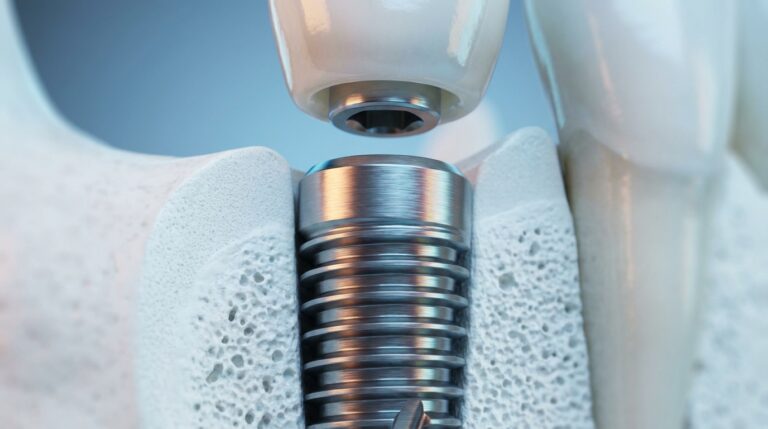
Osseointegration is the slow bone-locking process that happens in the months after surgery. It is what makes the implant a permanent part of your jaw rather than a screw sitting in a hole. The honest answer from clinical follow-ups: a well-placed, well-shaped domestic implant osseointegrates as predictably as a premium one in patients with healthy bone.
Where the difference appears is in edge cases. Compromised bone, immediate-load cases, or specific aesthetic requirements in the front of the mouth — these are where surgeons sometimes lean toward a premium brand because the surface chemistry has decades of well-published clinical data. For routine single or multi-tooth cases in the molar and premolar zones, domestic brands handle the job. Patients who had this difference explained beforehand were the most settled in their decision.
One-year and three-year patient feedback patterns
The interesting reviews are not the day-after ones. They are the year-after and three-year-after conversations. We see this in our recall visits, and patients abroad share it in video follow-ups.
At one year, almost all reviews focus on the same point: the implant is invisible to the patient. They eat without thinking about it. They forget which side it is on. They occasionally floss differently around it but otherwise daily life is unchanged. This is true across both domestic and premium brands when placement is correct.
At three years, the conversation shifts to maintenance. Gum tissue around the implant, occasional cleaning under the crown, screw-tightening if the prosthetic feels different. Domestic implant users are no more likely to need a maintenance visit than premium implant users in this window, based on the cases we follow up.
The patients who report problems in this window almost always describe one of three things: poor bone quality at the start that was underestimated, hygiene drift after the first year, or grinding/clenching that was never addressed with a night guard. None of these are brand issues.
When patients say they wish they had chosen the other option
Honesty matters here. Not every patient who picks a domestic implant stays happy with the decision. The two situations where we hear retrospective regret are specific.
Aesthetic front-tooth cases. A small number of patients who chose a domestic brand for a visible upper front implant later wished they had paid for a premium system with proven aesthetic emergence profile. This is mostly about how the gum drapes around the crown in the first two years.
Patients who plan to receive future maintenance abroad. Premium brands have global service networks. If you live in Germany and your implant is a domestic Turkish brand, finding a local dentist five years later who has the matching prosthetic components can occasionally be a small extra step. Premium brands are easier to service anywhere in Europe.
Neither situation makes domestic implants a bad choice. They are situations where the decision needed a conversation, not a default.
What international patients tell us specifically
Most of the patients who travel to Antalya for implant treatment are weighing the same trade-off: pay less in Turkey for a premium implant, or pay even less for a domestic one. Both options exist in our clinic. Reviews from patients who travelled and went with a domestic brand tend to mention the same three things.
The first is communication. They felt clear about which brand was being placed because we said it on paper, not just verbally. Several patients told us they had asked the same question in other clinics and received vague answers like “premium implant” — which is not actually a brand name.
The second is follow-up. Domestic brand or not, international patients want to know that if something feels off six months later, they have a way to reach the surgeon. A WhatsApp message with a photo of the gum line and a video of the bite is usually enough for us to give an opinion. Several patients mentioned that knowing this in advance made them comfortable with the lower-cost domestic option.
The third is the recovery window. International patients almost always travel for a longer stay than they expected — and the patients who chose to stay seven to ten days for a multi-implant case reported a much smoother experience than those who tried to fly home after three.
What we look at before recommending a domestic implant
Our clinical approach is the same regardless of brand. A panoramic X-ray to see the wider picture. A 3D CBCT scan when the case needs precise nerve or sinus and bone distance measurements. Bone quality and quantity assessed in detail. A written treatment plan with the implant brand, model, and abutment type listed clearly.
For cases where a domestic brand is a reasonable choice, we say so. For cases where the bone, aesthetic position or long-term mobility plan makes a premium brand the better call, we say that too. The decision is made together, and it is written down.
If you have been quoted for an implant — domestic or premium — and you want a second opinion, you can reach us through the contact form or WhatsApp. We will look at your imaging and your existing quote and tell you, in plain language, whether the brand choice fits the case.
Frequently asked questions about domestic implant reviews
Are domestic Turkish implants as safe as premium European brands?
For routine single and multi-tooth cases in healthy bone, established Turkish brands like Implance, Mode and Nucleoss have track records and certifications that place them in the safe-and-predictable category. The brand difference matters more in edge cases — aesthetic front-tooth zones, compromised bone, or immediate-load full-arch cases — where premium systems have deeper clinical data.
How much do domestic implants cost compared to premium ones?
Domestic Turkish implants can be roughly half the cost of an entry-level Straumann or Nobel placement, in the same chair and with the same surgeon. The gap is most meaningful in full-arch cases where you are placing four to eight implants at once. Exact pricing depends on the specific case and is discussed on the treatment plan rather than in blog content.
Do domestic implants last as long as premium ones?
Based on the cases we follow up at one and three years, well-placed domestic implants behave very similarly to premium implants in routine restorative scenarios. Long-term success depends much more on placement accuracy, bone quality, hygiene and the absence of unaddressed clenching than on the brand itself.
What if my implant needs service or a replacement part years later?
Premium brands have wider global service networks, which can be useful if you live abroad and want straightforward access to matching prosthetic components five or ten years later. Domestic brands have growing networks, especially within Turkey and parts of Europe, but the service map is smaller. This is a real consideration to discuss in advance — not a reason to avoid domestic implants, but a reason to think about your future location.
How do I know which brand I am actually getting?
A serious clinic puts the implant brand, model and lot number in writing on your treatment plan and in your post-operative paperwork. Phrases like “premium implant” or “European quality” without a specific brand name are a warning sign. You have the right to ask for the exact name, see the implant packaging if you want to, and receive an implant passport after surgery.
Can I get domestic implants as part of a dental tourism trip to Antalya?
Yes. Most international patients who choose a domestic implant in our clinic stay in Antalya for around seven to ten days for the surgical phase, with follow-up handled remotely afterwards. The brand discussion happens during the initial consultation, alongside the imaging review, so the decision is made with your own bone and case in front of us — not based on a price list.
How we present the brand choice to every implant patient
Our standard approach is simple. We show you what your bone looks like, what your case actually needs, and which two or three implant options are realistic for that case. We explain where each brand sits in terms of clinical track record, cost, aesthetic predictability and long-term service access. We write it down. You decide.
If a domestic implant is right for your case, you save meaningful money without compromising on the procedure itself. If it is not, we say so. For a personal review of your imaging and a written second opinion, you can reach us through the contact form or WhatsApp.