Losing a tooth changes more than your smile; it affects how you chew, how you speak, and over time, how your facial structure holds up. Dental implants are the most advanced and long-lasting solution for replacing missing teeth, but one question dominates every patient’s research: how much does a tooth implant actually cost? The answer is not a single number. It depends on the type of implant, the materials used, the expertise of the provider, and perhaps most significantly, the country where you receive treatment. This comprehensive guide breaks down every cost factor, compares global prices, and explains why Turkey has become one of the world’s most popular destinations for affordable, high-quality implant treatment in 2026.
What Is The Tooth Implant?
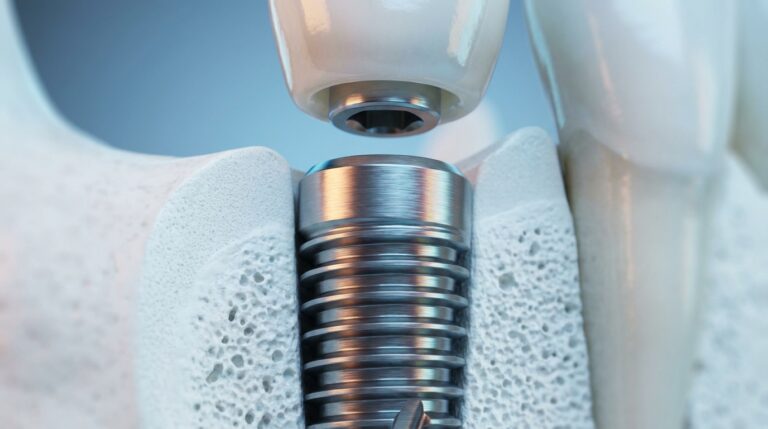
A dental implant is a titanium or zirconia post that is surgically placed into the jawbone to replace the root of a missing tooth. Once the implant integrates with the bone through a biological process called osseointegration, it provides a permanent, stable foundation for a prosthetic crown, bridge, or full-arch denture. Unlike traditional bridges that require trimming adjacent healthy teeth, or removable dentures that sit on the gum surface, implants function independently and preserve the surrounding tooth structure. The American Academy of Implant Dentistry reports that implants have a success rate exceeding 95 percent over a 10-year follow-up period, making them the most reliable tooth replacement method available in modern dentistry.
A complete single-tooth implant restoration consists of three components:
- The implant body (fixture): The titanium or zirconia screw placed into the jawbone.
- The abutment: A connector piece that attaches to the top of the implant and supports the crown.
- The prosthetic crown: The visible tooth-shaped restoration, typically made from zirconia or Emax lithium disilicate ceramic.
Each component carries its own cost, and understanding this three-part structure is essential for interpreting the quotes you receive from clinics.
Detailed Cost Breakdown by Procedure Type
Implant pricing varies dramatically based on the scope of treatment. A single missing tooth, a partially edentulous arch, and a fully edentulous mouth represent entirely different levels of complexity and cost.
Single Tooth Implant Cost
A single tooth implant is the most straightforward implant procedure. The total cost includes the implant fixture, the abutment, and the crown. In some cases, additional procedures such as bone grafting or sinus lifting may be required if the jawbone lacks sufficient volume.
| Component | USA ($) | UK (£) | Germany (€) | Turkey ($) |
| Implant fixture | 1,500 – 2,500 | 1,000 – 1,800 | 900 – 1,500 | 400 – 700 |
| Abutment | 500 – 800 | 300 – 600 | 250 – 500 | 100 – 250 |
| Crown (zirconia) | 1,000 – 2,000 | 600 – 1,200 | 500 – 1,000 | 200 – 400 |
| Total | 3,000 – 5,300 | 1,900 – 3,600 | 1,650 – 3,000 | 700 – 1,350 |
Prices are for informational purposes only. Please consult your dentist or clinic for an exact quote.
If bone grafting is needed, expect an additional cost in both the US and Turkey, with Turkey remaining significantly more affordable. The amount is assessed individually depending on the type and extent of the graft.
Multiple Teeth & Implant-Supported Bridges
When two or more adjacent teeth are missing, an implant-supported bridge offers a more cost-effective solution than placing a separate implant for each tooth. For example, three missing teeth can be restored with a three-unit bridge supported by just two implants, eliminating the need for a third fixture and reducing both surgical complexity and cost.
The average cost for a three-unit implant-supported bridge is highest in the United States, followed by the United Kingdom, and is considerably lower in Turkey. The exact figure is assessed individually for each case. The per-tooth cost decreases as the span increases, making implant-supported bridges an economically intelligent choice for patients with multiple gaps. The material used for the bridge superstructure also influences the price; monolithic zirconia bridges are slightly more expensive than porcelain-fused-to-metal but offer superior durability and aesthetics, particularly in the posterior region. To explore whether an implant-supported bridge is the right option for your case, visit our Dental Implants treatment page.
Prices are for informational purposes only. Please consult your dentist or clinic for an exact quote.
Full Arch (All-on-4) & Full Mouth Reconstruction
For patients who have lost all or most of their teeth in one or both arches, full-arch implant solutions such as All on 4 and All on 6 represent the most transformative and cost-efficient approach. The All-on-4 concept uses four strategically angled implants to support an entire arch of fixed teeth, while the All-on-6 concept uses six implants for additional stability, particularly in cases with significant bone loss.
| Procedure | USA ($) | UK (£) | Turkey ($) |
| All-on-4 (single arch) | 20,000 – 30,000 | 12,000 – 20,000 | 4,000 – 7,500 |
| All-on-6 (single arch) | 25,000 – 35,000 | 15,000 – 25,000 | 5,500 – 9,000 |
| Full mouth (both arches, All-on-4) | 40,000 – 60,000 | 24,000 – 40,000 | 8,000 – 15,000 |
Prices are for informational purposes only. Please consult your dentist or clinic for an exact quote.
These figures typically include the implant fixtures, abutments, temporary prosthesis, and final fixed prosthesis. However, patients should always confirm whether the quoted price includes preliminary procedures such as extractions, bone grafting, CT scanning, and sedation. At Clean Smiley Turkey, our All-on-4 and All-on-6 packages are all-inclusive, covering every clinical step from initial consultation to final prosthesis delivery, along with hotel accommodation and airport transfer.
4 Major Factors Influencing the Final Price
Understanding why implant prices vary so dramatically from one quote to another requires examining the four key variables that shape the final number.
Implant Material
The two primary implant materials are titanium and zirconia. Titanium implants have been the industry standard for over four decades, with extensive clinical data supporting their long-term success. They are biocompatible, osseointegrate reliably, and are available in a wide range of diameters and lengths. Zirconia (ceramic) implants are a newer alternative that eliminates metal from the equation entirely; they are preferred by patients with metal sensitivities or those who prioritize a completely metal-free restoration. However, zirconia implants are generally 20 to 40 percent more expensive than their titanium counterparts and have a shorter track record in long-term clinical studies.
Provider Expertise
Implant placement is a surgical procedure, and the experience and qualifications of the clinician directly influence both the outcome and the price. Oral surgeons and periodontists who have completed specialized residency training and placed thousands of implants command higher fees than general dentists offering implant services. This premium is often justified by lower complication rates, better aesthetic outcomes in complex cases, and the ability to manage bone grafting, sinus augmentation, and immediate-loading protocols in-house. When evaluating quotes, consider the provider’s credentials, case volume, and patient reviews alongside the price itself.
Geographic Location
Geographic location is arguably the single largest determinant of implant cost. The same titanium implant, placed by a comparably qualified surgeon, using the same prosthetic materials, can cost three to five times more in New York or London than in Istanbul or Antalya. This discrepancy reflects differences in labor costs, commercial rent, malpractice insurance, regulatory overhead, and the general cost of living rather than differences in clinical quality. Dental tourism has grown into a multi-billion-dollar global industry precisely because patients have recognized that geography inflates prices without necessarily improving outcomes.
Brand of Implant
Not all implant systems are equal. Premium brands such as Straumann (Switzerland), Nobel Biocare (Sweden), and Zimmer Biomet (USA) invest heavily in research, surface treatment technology, and quality control. Their implants carry extensive clinical documentation and are backed by international warranty programs. Mid-tier brands offer reliable performance at a lower price point but may have less long-term data available. Economy-tier implants are the least expensive but often lack the surface engineering and precision machining that contribute to predictable osseointegration. The brand of implant used should always be disclosed in your treatment quote; it is one of the most important factors influencing both cost and long-term success.
Dental Implant Turkey Packages 2026
Turkey’s dental implant packages have become the benchmark for value in international dental tourism. Leading clinics in cities such as Antalya, Istanbul, and Izmir offer comprehensive packages that bundle clinical treatment with hospitality services, creating a seamless experience for international patients.
A typical dental implant package in Turkey includes:
- Initial consultation with panoramic X-ray and CT scan
- Implant surgery with premium-brand titanium fixtures
- Abutment placement and final prosthetic crown or bridge
- All necessary follow-up appointments during the treatment period
- Hotel accommodation at partner properties
- Airport-to-clinic and hotel transfer services
Dedicated patient coordinator for communication and scheduling
At Clean Smiley Turkey, our packages extend beyond the clinical essentials. Patients can combine their treatment process with a Mediterranean holiday, choosing from premium accommodations such as Kremlin Palace, Akra Barut, or Wise Hotel. Between appointments, guided tours to historical sites like Aspendos, Phaselis, and Pamukkale, or leisure experiences such as a VIP Yacht Tour and a VIP Photo Shoot, transform the treatment journey into an unforgettable experience. To receive a personalized package with pricing tailored to your specific case, request a free quote.
Why Tooth Implants Are Cheaper in Turkey?
The significantly lower cost of dental implants in Turkey is a question that every prospective patient asks, and the answer is grounded in economics rather than any compromise in quality. Several structural factors converge to make Turkey one of the most cost-competitive markets for implant dentistry worldwide.
First, operating costs in Turkey, including clinical rent, staff salaries, laboratory fees, and utilities, are substantially lower than in Western Europe and North America. A state-of-the-art clinic in Antalya operates at a fraction of the overhead of a comparable facility in London or Los Angeles. Second, the favorable exchange rate between the Turkish Lira and major Western currencies amplifies the cost advantage for international patients paying in dollars, pounds, or euros.
Third, the intense competitive landscape of Turkey’s dental tourism industry drives clinics to offer maximum value; with hundreds of clinics competing for international patients, pricing remains aggressive while quality standards rise continuously. Fourth, the Turkish government actively supports health tourism through regulatory frameworks, accreditation programs, and marketing initiatives that attract millions of medical tourists annually.
The International Congress of Oral Implantologists recognizes Turkish implant clinics among the most active in the world in terms of case volume and continuing education, underscoring that affordability does not equate to inferior care.
Frequently Asked Questions (FAQ)
How much does a full set of implants cost in Turkey?
The cost of a full set of dental implants for both arches using the All-on-4 protocol is assessed individually in Turkey, depending on the implant brand, prosthetic material, and whether bone grafting is required. It typically lands well below the equivalent treatment in the United States or United Kingdom, with savings that are substantial. All-inclusive packages at Clean Smiley Turkey cover clinical treatment, accommodation, and transfers within a single transparent price.
Prices are for informational purposes only. Please consult your dentist or clinic for an exact quote.
Is there a cheaper alternative to dental implants?
Several alternatives exist at lower price points, though each involves trade-offs. Traditional dental bridges replace missing teeth by anchoring to adjacent natural teeth, avoiding surgery entirely but requiring the irreversible trimming of abutment teeth. Removable partial or full dentures are the most affordable option but offer limited chewing efficiency, can accelerate bone loss, and require ongoing adjustments. Composite Bonding can address minor aesthetic gaps but does not replace a missing tooth root. For patients seeking the most durable and bone-preserving solution, dental implants remain the gold standard despite the higher initial investment.
Where can you find the cheapest dental implants in Turkey?
Antalya, Istanbul, and Izmir are the three leading cities for dental tourism in Turkey. Antalya stands out for combining competitive clinical pricing with a world-class holiday destination on the Mediterranean coast. The city’s dental clinics cater extensively to international patients, offering multilingual staff, digital workflows, and comprehensive treatment packages. At Clean Smiley Turkey, our contracted institutions in Antalya deliver internationally accredited implant treatment at prices that consistently rank among the most competitive in the country.
Can I pay monthly for dental implants?
Many clinics in the United States and United Kingdom offer financing plans or medical credit options that allow patients to spread the cost over 12 to 60 months. Interest-free periods are sometimes available for shorter terms. When receiving treatment abroad in Turkey, the total cost is often comparable to or lower than the deposit alone required by domestic clinics, making monthly financing less necessary. Some dental tourism agencies also offer installment plans for international patients; it is worth inquiring during the free quote process.
How long do dental implants last?
The implant fixture itself, the titanium or zirconia screw embedded in the jawbone, can last a lifetime with proper care. Clinical studies with follow-up periods exceeding 20 years report cumulative survival rates above 90 percent for well-placed implants in healthy patients. The prosthetic crown or bridge attached to the implant has a typical lifespan of 15 to 20 years before it may need replacement due to wear or aesthetic changes.
Proper daily oral hygiene, regular professional cleanings every six months, and the use of a night guard for patients with bruxism are the three pillars that maximize the longevity of implant restorations. This same maintenance philosophy applies equally to Dental Crowns, Hollywood Smile restorations, and any prosthetic investment you make in your oral health.
Conclusion
Turkey’s position as a global leader in dental tourism is built on a foundation of qualified specialists, cutting-edge digital infrastructure, premium implant brands, and a healthcare system that actively supports international patients. The result is a compelling value proposition that millions of patients have already embraced.
Your missing tooth deserves more than a compromise; it deserves a permanent, bone-preserving solution that restores both function and aesthetics for decades to come. To discover the exact cost for your individual case and explore all-inclusive treatment packages in the heart of the Mediterranean, contact Clean Smiley Turkey. Our expert team in Antalya is ready to guide you from your first consultation to your final smile. Request your free quote today and take the first step toward a confident, complete smile.