Your gum line is not supposed to move. When it does, it is telling you that something, whether a habit, a disease, or a structural vulnerability, is actively destroying the tissue that protects the most sensitive part of your tooth. Receding gums expose the root surface to an environment it was never designed to face: the bacteria, acids, temperature extremes, and mechanical forces of the oral cavity. The result is sensitivity, aesthetic deterioration, accelerated decay on vulnerable root surfaces, and, if left untreated, progressive bone loss that can ultimately cost you the tooth.
Understanding what causes receding gums is the essential first step toward stopping the process, protecting what remains, and restoring what has been lost. This guide breaks down every major cause of gum recession, explains the treatment options available in 2026, answers whether lost gum tissue can truly grow back, and provides an actionable prevention plan that protects your gum line for life.
What Is Receding Gums?
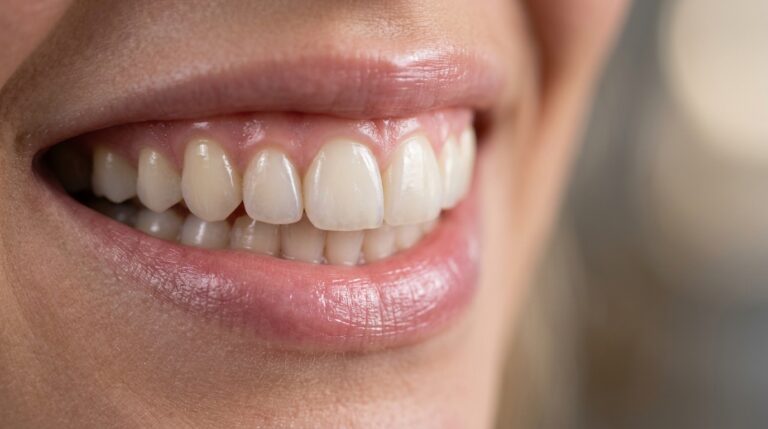
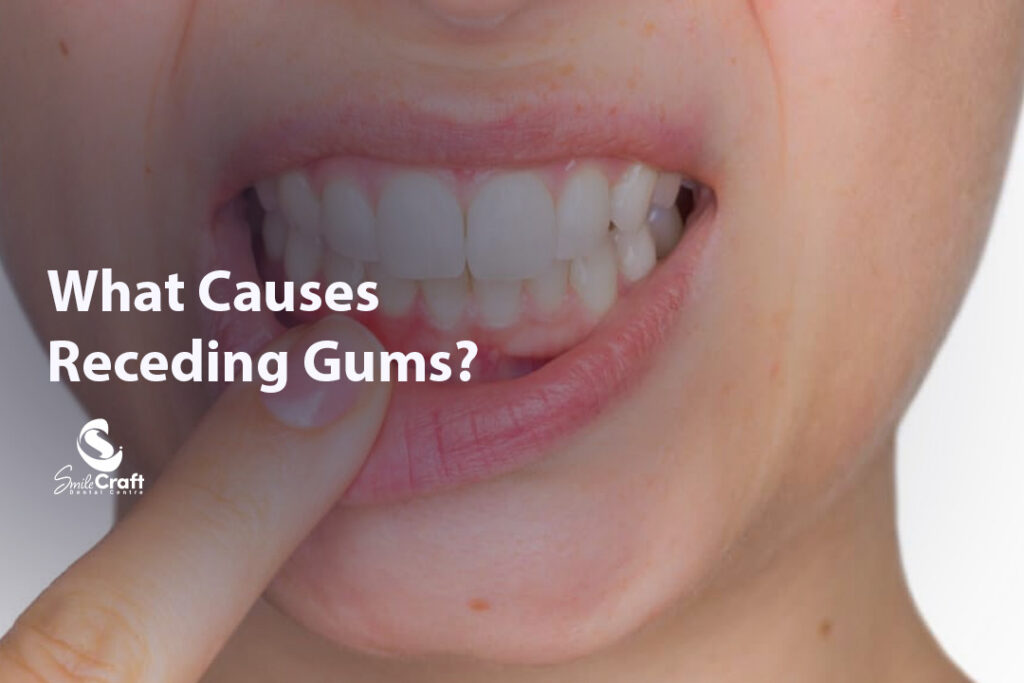
Receding gums, clinically known as gingival recession, is the progressive migration of the gum margin away from the crown of the tooth toward the root, exposing the cementum and dentin surfaces that are normally covered and protected by soft tissue. In a healthy mouth, a band of thick, keratinized gingiva forms a tight seal around each tooth, shielding the root and the underlying alveolar bone from bacterial invasion and mechanical trauma. When this tissue recedes, the protective seal is broken.
The exposed root surface is fundamentally different from the enamel-covered crown. Cementum is softer, thinner, and more porous than enamel, and it wears away quickly once exposed to the oral environment, leaving the even softer dentin underneath vulnerable. Dentin contains thousands of microscopic tubules that communicate directly with the nerve inside the tooth, which is why receding gums almost always produce sensitivity to cold, heat, touch, and sweet foods. The American Academy of Periodontology reports that gingival recession affects a significant percentage of the adult population and becomes increasingly prevalent with age, though it is by no means limited to older patients.
Gum recession is not a single disease but rather the visible outcome of multiple possible causes, some preventable, some genetic, and some related to the way your teeth are positioned in the bone. Identifying which cause or combination of causes is driving your specific recession is what determines whether the solution is a change in brushing technique, a periodontal treatment, a surgical graft, or a combination of approaches.
Causes of Gum Recession
Gum recession results from three broad categories of injury: mechanical forces that physically abrade or tear the tissue, occlusal forces that overload the tooth and its supporting structures, and biological factors that weaken or destroy the tissue from within.
Mechanical Trauma
Aggressive toothbrushing is the single most common mechanical cause of receding gums, and it is entirely preventable. Brushing with excessive force, a hard-bristled brush, or a vigorous horizontal scrubbing motion physically strips away the delicate gingival tissue over months and years. The damage is cumulative and typically most severe on the cheek-facing surfaces of the prominent teeth, particularly the canines and first premolars, which sit at the corner of the arch and receive the most direct brushing pressure. The cruel irony is that patients who brush hardest often do so out of a genuine desire for excellent oral hygiene, yet their effort is destroying the very tissue they are trying to protect.
The correct approach is a soft-bristled brush held with a light pencil grip, using short, gentle circular or modified Bass strokes angled at 45 degrees toward the gum line. An electric toothbrush with a built-in pressure sensor is an excellent investment for patients who struggle to moderate their manual force. The sensor alerts you when you are pressing too hard, retraining the habit over time.
Oral piercings, particularly tongue and lip studs, cause mechanical recession through chronic repetitive trauma. The metal jewelry rubs, clicks, and presses against the gum tissue on the tongue side of the lower front teeth or the cheek side of the lower posterior teeth with every swallowing motion, every speech sound, and every unconscious play habit.
The tissue has no opportunity to recover, and recession in these areas can progress rapidly. A study in the Journal of Periodontology documented significantly higher rates of gingival recession in individuals with oral piercings compared to non-pierced controls, with lip piercings being particularly destructive to the adjacent gum tissue.
Ill-fitting dental appliances, including partial dentures with clasps that impinge on the gum margin, orthodontic retainers that press against the tissue, and poorly contoured dental restorations that trap plaque or deflect food against the gum, can all cause localized recession at the site of chronic irritation.
Occlusal Trauma
Occlusal trauma occurs when a tooth or group of teeth receives bite forces that exceed the adaptive capacity of the supporting structures. This can happen because of a misaligned bite (malocclusion) that concentrates force on specific teeth, a high restoration that causes one tooth to contact prematurely before the others, or bruxism (clenching and grinding) that generates sustained forces far beyond normal chewing loads.
The mechanism linking occlusal trauma to gum recession involves the concept of “abfraction.” When excessive lateral or compressive forces are applied to a tooth, the enamel at the gum line, where the tooth is thinnest and least supported, flexes under stress. This micro-flexion causes enamel crystals to fracture and flake away, creating a wedge-shaped notch at the cervical area of the tooth.
The gum tissue overlying this progressively deepening notch loses its attachment and recedes. Abfraction lesions are most commonly seen on premolars and canines in patients with bruxism, and they frequently coexist with aggressive brushing damage, making it difficult to attribute the recession to a single cause.
Misaligned teeth also contribute to recession through positional vulnerability. A tooth that is tilted, rotated, or positioned buccally (toward the cheek) outside the normal arch form often has a thin or absent layer of bone on its outer surface.
This thin bony housing provides less support for the overlying gum tissue, which is inherently more vulnerable to recession from even normal brushing forces. This is one reason why orthodontic correction of crooked teeth can reduce long-term recession risk by positioning the teeth within the center of the bone where support is optimal. For patients exploring alignment options, treatments ranging from clear aligners to porcelain Emax Veneers can address both the positional vulnerability and the aesthetic concerns simultaneously.
Biological Factors
Periodontal disease (gum disease) is the most destructive biological cause of receding gums. The chronic bacterial infection that defines periodontitis triggers an inflammatory immune response that breaks down the collagen fibers attaching the gum to the tooth, dissolves the underlying alveolar bone, and causes the gum margin to migrate apically (toward the root tip) as the supporting structures collapse.
Unlike mechanical recession, which tends to affect individual teeth at specific sites, periodontal recession can be generalized, affecting multiple teeth across the entire mouth. The World Health Organization identifies severe periodontal disease as one of the most prevalent chronic conditions globally, and gum recession is one of its most visible consequences.
Genetics play a significant role in determining individual susceptibility to recession. Some patients inherit a thin gingival biotype, a tissue type characterized by delicate, translucent gum tissue and thin underlying bone, that is inherently more vulnerable to recession than the thick, strong biotype.
Research published in the Journal of Clinical Periodontology has demonstrated that thin-biotype patients experience higher rates of recession even with comparable oral hygiene and bite forces to thick-biotype patients. You cannot change your genetic tissue type, but knowing your biotype allows your dentist to implement more aggressive preventive strategies and monitor recession-prone areas more closely.
Tobacco use accelerates gum recession through multiple pathways. Smoking impairs blood flow to the gum tissue, suppresses the local immune response, accelerates periodontal bone loss, and masks the early warning sign of bleeding gums by constricting blood vessels, allowing disease to progress undetected. Smokeless tobacco placed directly against the gum tissue causes localized chemical and mechanical damage that produces severe recession at the site of habitual placement.
Hormonal changes during puberty, pregnancy, menopause, and with oral contraceptive use alter the sensitivity of gum tissue to bacterial plaque and can trigger or accelerate recession in susceptible individuals. Pregnancy gingivitis, characterized by swollen, inflamed, bleeding gums, can progress to attachment loss and recession if not managed with meticulous hygiene and professional care during pregnancy.
Frenum pull is a specific anatomical cause in which a thick, short labial or buccal frenum (the fold of tissue connecting the lip or cheek to the gum) inserts too close to the gum margin and physically pulls the tissue away from the tooth during lip and cheek movements. This constant traction prevents the gum from maintaining its attachment and causes progressive localized recession. A frenectomy, a minor surgical procedure to release or reposition the frenum, resolves the pulling force and allows the tissue to stabilize.
How Is Gum Recession Treated?
The treatment of receding gums depends on the severity of the recession, the underlying cause, and whether the goal is stabilization (preventing further recession) or restoration (recovering lost tissue).
For mild recession with no sensitivity, bone loss, or aesthetic concern, the treatment may be entirely non-surgical: identifying and eliminating the causative factor (switching to a soft brush, correcting brushing technique, adjusting a high bite, treating periodontal disease) and monitoring the area at regular intervals. If the cause is removed early enough, the recession stabilizes and no further intervention is needed.
For moderate to severe recession with exposed roots, sensitivity, aesthetic concerns, or progressive tissue loss, gum graft surgery is the definitive treatment. Three primary graft techniques exist. The connective tissue graft (CTG) harvests tissue from beneath the surface of the palate and tunnels it over the exposed root, achieving root coverage rates of 80 to 90 percent in published studies.
The free gingival graft (FGG) transplants surface tissue from the palate to increase the width of keratinized gum tissue in areas where it is critically thin. The allograft (AlloDerm) uses processed donor tissue matrix, eliminating the need for a palatal donor site while achieving root coverage rates of 65 to 85 percent. The Pinhole Surgical Technique (PST), a minimally invasive alternative, repositions existing gum tissue through a tiny pinhole incision without any scalpel cuts or sutures, offering significantly reduced recovery time.
For patients whose recession has progressed to the point where teeth are compromised beyond saving, restorative solutions including Dental Implants, All on 4, and All on 6 full-arch protocols replace lost teeth with permanent, implant-supported prosthetics that restore complete function and aesthetics. For teeth that remain structurally sound but show cosmetic effects of recession, Composite Bonding can cover exposed root surfaces to reduce sensitivity and improve appearance, while Dental Crowns provide full coverage for teeth with extensive damage.
Can Receding Gums Grow Back?
This is the question every patient with receding gums asks, and the honest answer is subtle. Gum tissue that has receded does not regenerate spontaneously. Unlike bone, which has some capacity for remodeling, and unlike the liver, which can regenerate significant tissue volume, the gingiva does not regrow on its own once the attachment to the tooth surface has been lost. No toothpaste, mouthwash, supplement, or home remedy can make receded gums grow back, despite the aggressive marketing claims of certain products.
However, professional surgical intervention can restore gum coverage over exposed roots with high predictability. Connective tissue grafts, the gold standard for root coverage, achieve complete root coverage in 50 to 80 percent of cases and significant partial coverage in the vast majority of the remainder. The grafted tissue integrates fully with the existing gum, becomes indistinguishable from the surrounding tissue once healed, and provides a durable, long-lasting restoration of the gum line. In this sense, the gum does “come back,” but it comes back through surgical transplantation rather than biological regrowth.
The critical message is that prevention is vastly preferable to treatment. Every millimeter of gum tissue preserved through proper brushing technique, periodontal maintenance, and early intervention for contributing factors is a millimeter that never needs to be surgically replaced. For patients who have already experienced recession, the priority is to stop the progression immediately and then determine whether surgical restoration is indicated.
How Can Gum Recession Be Prevented?
Preventing receding gums requires addressing the controllable risk factors while monitoring the uncontrollable ones. The following strategies, applied consistently, form a complete prevention plan.
Brushing technique is the single most impactful modifiable factor. Switch to a soft-bristled toothbrush and apply only gentle pressure, enough to feel the bristles flexing slightly against the tooth surface but not enough to blanch the gum tissue white. Use the modified Bass technique: angle the bristles at 45 degrees toward the gum line, make short vibrating strokes, and roll the brush away from the gum. An electric toothbrush with a pressure sensor automates force control and has been shown in clinical studies to reduce brushing-related recession risk. Replace your brush head every three months or when the bristles begin to splay.
Daily interdental cleaning with dental floss or interdental brushes removes the bacterial plaque from between the teeth and below the gum line that brushing alone cannot reach. Plaque left in these areas triggers the inflammatory cascade of periodontal disease, the most destructive biological pathway to recession. Flossing technique matters; guide the floss gently between the teeth using a sawing motion, curve it into a C-shape around each tooth, and slide it below the gum line before pulling it upward. Never snap the floss forcefully into the gum.
Professional cleaning and periodontal maintenance every six months allows your hygienist to remove calculus (tarite) from areas that home care cannot access, monitor probing depths for early signs of attachment loss, and identify recession in its earliest stages when intervention is simplest. Patients with a history of periodontal disease or a thin gingival biotype may benefit from three to four month recall intervals rather than the standard six months.
Bruxism management through a custom night guard distributes clenching and grinding forces evenly across the arch, protecting individual teeth and their supporting tissues from the concentrated loads that cause abfraction and recession. If you wake with jaw soreness, headaches, or tooth sensitivity, or if your partner reports grinding sounds during your sleep, ask your dentist to evaluate you for bruxism.
Smoking cessation eliminates one of the most significant accelerators of periodontal destruction and gum recession. The vascular impairment, immune suppression, and tissue-damaging effects of tobacco are reversible upon quitting, and former smokers progressively regain periodontal health over months and years.
Orthodontic correction of malpositioned teeth that sit outside the bony housing reduces their vulnerability to recession by moving them into a position with adequate bone and tissue support on all surfaces. This is particularly relevant for lower front teeth with buccal displacement and upper canines with prominent root eminences.
Regular dental evaluation of any restorations, including Emax Veneers, Dental Crowns, and implant-supported prosthetics, ensures that margins remain sealed, contours are not trapping plaque, and the surrounding gum tissue is healthy. A well-maintained restoration protects the gum line; a neglected one can accelerate its destruction.
FAQ
Does oil pulling help with receding gums?
Oil pulling, the practice of swishing coconut, sesame, or sunflower oil in the mouth for 15 to 20 minutes daily, has a long history in traditional Ayurvedic medicine. Some small studies suggest that oil pulling can reduce plaque and gingivitis indices modestly, likely through the mechanical action of prolonged swishing rather than any unique property of the oil. However, there is no scientific evidence that oil pulling can reverse or halt gum recession.
It does not remove calculus, it does not regenerate lost attachment, and it does not treat the underlying causes of recession. If you enjoy oil pulling as a supplement to your oral hygiene routine, it is unlikely to cause harm, but it should never replace brushing, flossing, or professional dental care. The American Dental Association does not endorse oil pulling as a treatment for any dental condition due to insufficient evidence.
Can Invisalign cause gum recession?
Orthodontic treatment, including clear aligner therapy such as Invisalign, involves moving teeth through bone by applying controlled forces. When these forces move a tooth outside the boundaries of the alveolar bone, particularly in a buccal (outward) direction, the thin bone on that side can be lost and the overlying gum tissue may recede.
This risk exists with any orthodontic system, whether braces or aligners, and is related to the specific tooth movements planned rather than the appliance type itself. Skilled orthodontic treatment that keeps teeth within the bony envelope does not cause recession. In fact, correcting malaligned teeth that already sit outside the bone into a more centered position within the arch can actually reduce future recession risk. If you are considering orthodontics, discuss the recession risk with your orthodontist, particularly for lower incisors and upper canines where the bony housing is naturally thin.
Why are my teeth sensitive to cold now?
New sensitivity to cold is one of the earliest and most reliable symptoms of gum recession. When the gum recedes, it exposes the root surface, which is covered by a thin layer of cementum rather than the thick enamel that protects the crown. This cementum wears away quickly, exposing the underlying dentin. Dentin contains thousands of microscopic tubules that run from the outer surface directly to the nerve inside the tooth.
When cold liquid or air contacts these open tubules, it creates a fluid shift inside the tubule that triggers the nerve, producing the sharp, shooting sensitivity you feel. Desensitizing toothpaste containing potassium nitrate or stannous fluoride can block these tubules over time and reduce sensitivity. Professional application of fluoride varnish or desensitizing agents provides faster relief. If the recession is significant, Composite Bonding over the exposed root surface or a gum graft to cover it surgically may be needed for lasting resolution.
Is gum recession just a sign of aging?
Gum recession does become more prevalent with age, and some degree of tissue migration is a natural part of oral aging. However, classifying recession as simply “a sign of aging” is misleading and potentially dangerous because it implies that the process is inevitable and not worth treating.
The reality is that the vast majority of recession is driven by identifiable, treatable, and often preventable causes: aggressive brushing, periodontal disease, bruxism, tobacco use, and anatomical factors. Aging may reduce tissue resilience and slow healing capacity, but healthy gums in a patient who has maintained excellent hygiene and received regular professional care can remain stable well into the eighth and ninth decades of life. Dismissing recession as “just aging” risks allowing a treatable condition to progress unchecked.
How much does a gum graft cost?
Gum graft costs vary by technique, the number of teeth treated, and geographic location:
| Scope | USA ($) | UK (£) | Turkey ($) |
| Single tooth (connective tissue graft) | 700 – 1,500 | 500 – 1,000 | 200 – 450 |
| Quadrant (3–5 teeth, CTG) | 1,500 – 3,500 | 1,000 – 2,500 | 500 – 1,200 |
| Single tooth (allograft / AlloDerm) | 800 – 2,000 | 600 – 1,200 | 250 – 550 |
Prices are for informational purposes only. Please consult your dentist or clinic for an exact quote.
Turkey offers savings of 60 to 75 percent on gum graft surgery compared to US and UK pricing, using the same surgical techniques and materials. At Clean Smiley Turkey, periodontal surgery can be combined with cosmetic treatments such as Emax Veneers, Dental Crowns, or a Hollywood Smile design within the same treatment visit, addressing gum health and smile aesthetics as one integrated plan.
All-inclusive packages include hotel accommodation at partner properties such as Kremlin Palace, Akra Barut, or Wise Hotel, airport transfer, and dedicated patient coordination.
Conclusion
What causes receding gums is rarely a single factor. In most patients, recession results from a convergence of mechanical trauma, biological disease, genetic predisposition, and occlusal stress, each contributing to the progressive loss of the tissue that protects your most vulnerable tooth surfaces. The good news is that every major cause of recession is either preventable, treatable, or both.
Switching to a soft brush and gentle technique prevents mechanical damage. Treating periodontal disease halts inflammatory destruction. Managing bruxism with a nightguard eliminates excessive force. Quitting tobacco removes a powerful accelerator of tissue breakdown. And for recession that has already occurred, modern gum grafting techniques can restore the tissue with predictable, lasting results.
Your gum line is the frame that defines your smile and the barrier that protects your teeth. Every millimeter matters, and every millimeter that is preserved today is one that does not need to be surgically replaced tomorrow.
To evaluate your gum health and explore treatment options for receding gums, from preventive periodontal care to surgical grafting to complete smile rehabilitation, contact Clean Smiley Turkey. Our specialist team in Antalya treats the gum foundation and the smile aesthetics as one integrated whole, ensuring that every restoration, from Dental Implants to Emax Veneers, is built on healthy, stable tissue. Request your free quote today and take the first step toward protecting the gum line your smile depends on.