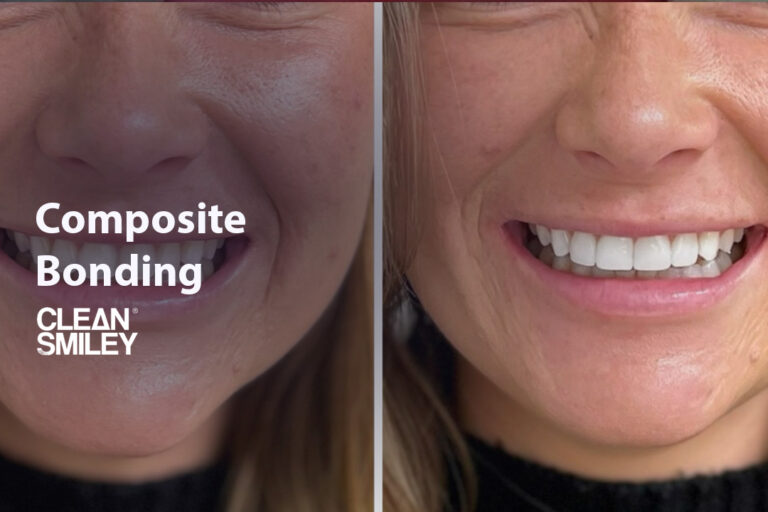
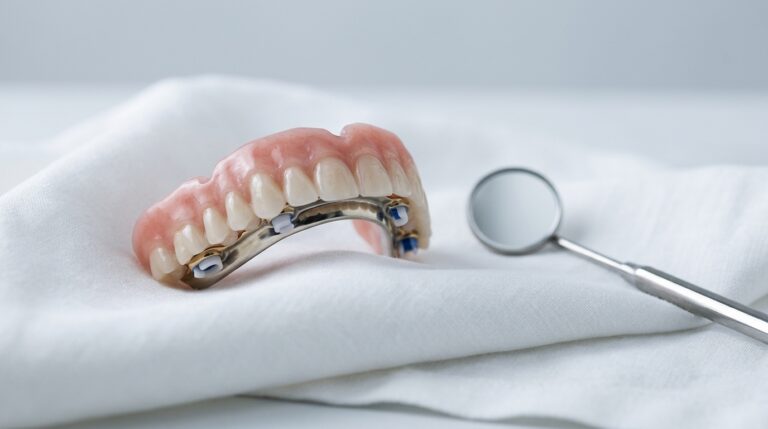
The greatest revolution in aesthetic dentistry over the last twenty years is, without a doubt, the transition from metal-supported porcelains to materials that transmit light and are indistinguishable from natural teeth. The standard-bearer of this revolution is the Zirconium Crown. In the past, one had to sacrifice aesthetics for durability, or durability for aesthetics; however, zirconium has fundamentally changed this equation. As Clean Smiley Dental Clinic, we detail the scientific background of this material—which can withstand chewing pressure on back teeth while meeting high aesthetic expectations on front teeth—and explain why it has become indispensable in modern dentistry.
What Exactly is a Zirconium (Zirconia) Crown?
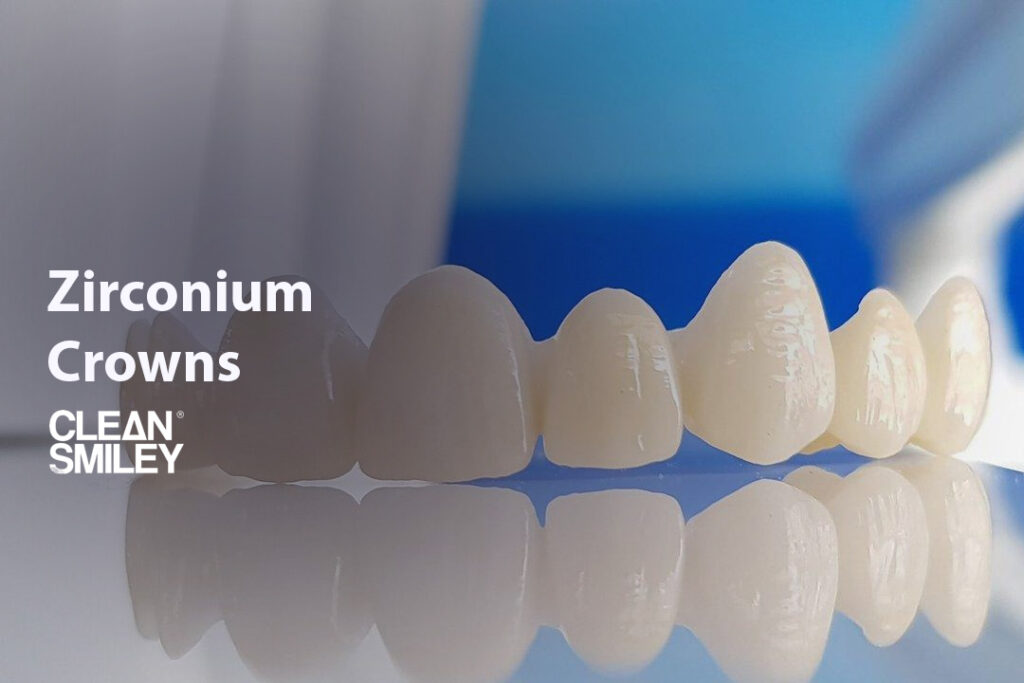
Unlike traditional porcelain crowns, zirconium crowns are a type of white, crystalline ceramic that does not contain metal in its substructure. Chemically known as Zirconium Dioxide, this material is obtained by combining the zirconium element found in nature with oxygen and stabilizing it. The result is a biocompatible restoration that is as resistant as metal but transmits light like a natural tooth. In Clean Smiley laboratories, these blocks are processed using computer-aided systems and transformed into personalized smile designs.
The Science of “Ceramic Steel”
It is not without reason that zirconium is called “Ceramic Steel” in the engineering world. Before dentistry, this material was used in the heat shields of space shuttles and in artificial hip joints. The resistance of a material capable of withstanding such harsh conditions against the chewing forces in the mouth is extraordinary. Zirconium’s crystal structure has the ability to absorb pressure and stop crack propagation. Thanks to this, the fragility of porcelain becomes a thing of the past, and our patients can continue their lives without worry while biting into apples or consuming hard foods.
Biocompatibility: Why Your Gums Love Zirconia
One of the biggest advantages of zirconium is that it is “tissue-friendly.” Some patients may develop allergic reactions or symptoms like bruising and redness in the gums due to metal-supported crowns. However, zirconium is a material that is fully accepted by the body, carries no risk of allergic reactions, and ensures perfect harmony with the gums. The gum adapts so well to the zirconium surface that it is almost impossible to notice the transition where the crown ends and the gum begins with the naked eye. This is a crucial factor for maintaining long-term gum health.
Key Benefits of Choosing Zirconium for Your Smile
The fundamental feature that distinguishes zirconium crowns from others is that they offer aesthetics and functionality together.
Natural Esthetics Without the “Dark Line”
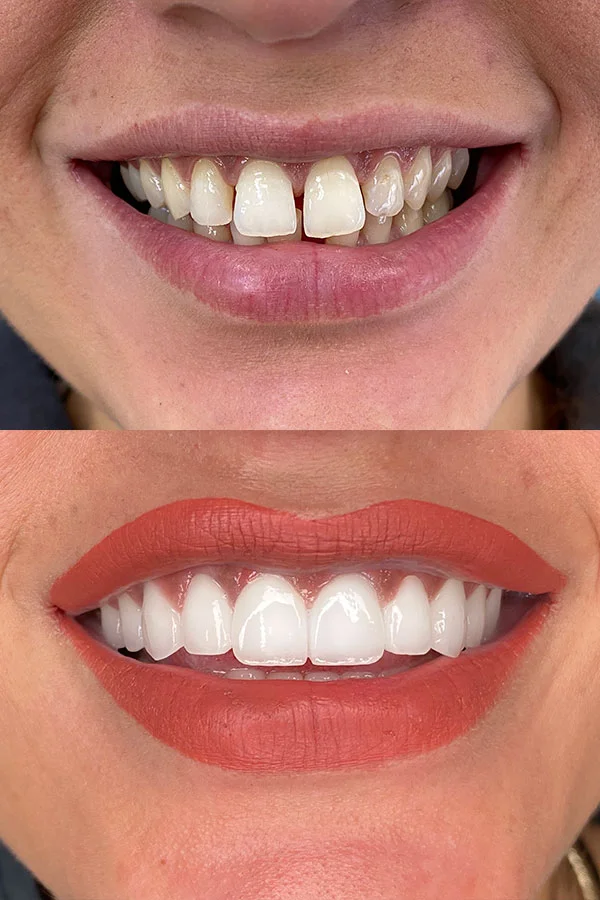
The biggest disadvantage of old-style metal-supported porcelain crowns is the thin gray-black metal reflection that appears at the gum line over time when gums recede or in patients with thin gum tissue. This “dark line” ruins the naturalness of the smile. Since zirconium has a completely white substructure, no metal reflection is seen from underneath even if the gums recede. Additionally, thanks to its light translucency, it exhibits a vibrant and deep appearance in flash photography or sunlight, rather than looking matte and opaque.
Exceptional Fracture Resistance
Aesthetic materials are usually fragile, but zirconium breaks this rule. The chewing force generated on posterior molars can reach hundreds of kilograms. Zirconium crowns easily withstand these forces with a flexural strength between 900 and 1200 MPa. Thanks to this feature, aesthetic white teeth can now be applied safely even in posterior regions where only metal crowns could be used in the past.
Types of Zirconium Crowns: Choosing the Right Match
Not all zirconium is the same; different types are preferred depending on the tooth’s location in the mouth.
Monolithic (Solid) Zirconia for Molars
For back teeth and areas with the highest chewing load, “Monolithic Zirconia” is used. in this method, the zirconium block is milled as a single piece, and no porcelain is layered over it. Since it is a single piece, the risk of porcelain chipping is zero. Although not as transparent as front teeth aesthetically, it is incredibly durable and is usually our first choice for the back teeth of patients with “bruxism” (teeth grinding).
Layered Zirconia for Anterior (Front) Teeth
Aesthetic expectations are higher for front teeth. Therefore, we use the “Layered Zirconia” technique. Here, zirconium is used as a strong framework, and aesthetic porcelain is layered over it by hand by our dental technician. This combines the strength of zirconium with the unique color transitions and translucency of feldspathic porcelain. The result is flawless front teeth that are indistinguishable from natural ones.
Comparison: Zirconia vs. E-max vs. PFM
The topic patients struggle with most when making a choice is material comparison.
When to Prioritize E-max Over Zirconia
E-max is a glass-ceramic based material, and its light transmittance is higher than zirconium. If the patient does not have a teeth-grinding problem and the issue involves the aesthetics of a single tooth in the front region (e.g., matching the adjacent natural tooth exactly), E-max may be one step ahead aesthetically. However, E-max is not as durable as zirconium and is not preferred for long-span bridges. Zirconium acts as the perfect balance between aesthetics and resistance.
Why PFM Crowns are Becoming Obsolete
Metal-supported porcelains (PFM) were the standard of dentistry for years but are now considered “old technology.” Because metal blocks light, causes discoloration in the gums, and lacks the tissue compatibility of zirconium, we at Clean Smiley almost never use this method in aesthetic zones. Zirconium has completely replaced metal in terms of price-performance and health.
The Step by Step Procedure: What to Expect
With the advancement of technology, the zirconium crown process has become both faster and more comfortable.
Digital Impressions and 3D Smile Design
We no longer have to put those nausea-inducing dough-like materials in your mouth. Using intraoral scanners, we take impressions of your teeth digitally in seconds. On this digital data, we design the final result before even touching your teeth and show it to you on the screen. While the margin of error drops to the micron level, your comfort is kept at the maximum.
CAD/CAM Fabrication and Sintering
The approved design is sent to the CAD/CAM (Computer-Aided Design and Manufacturing) devices in our laboratory. Zirconium blocks are milled with millimetric precision by robotic arms. They are then subjected to a “sintering” process at high temperatures in special furnaces to achieve their final hardness and color. Thanks to this process, you get your new teeth in a much shorter time instead of rehearsals that take days.
The Ideal Solution for Bruxism (Teeth Grinding)
Getting porcelain teeth has always been a risk for patients who clench or grind their teeth because porcelain can break.
Protecting Your Investment with a Night Guard
Monolithic zirconium is one of the rare aesthetic materials that can withstand teeth-grinding forces. The risk of fracture is very low. However, we still strongly recommend the use of a custom-made “Night Guard” at the end of the treatment to protect both your zirconium crowns and your opposing natural teeth, as well as to relax your jaw joint. This is the insurance policy for your smile investment.
Aftercare: How to Make Your Crowns Last 20+ Years
Zirconium crowns do not decay, but the tooth underneath can still decay. Therefore, maintenance should not be neglected.
Choosing the Right Non-Abrasive Toothpaste
The zirconium surface is smooth and polished, so it does not stain. However, whitening toothpastes containing large granules or hard brushes can scratch this polished surface over time. Choosing non-abrasive gel-form toothpastes and soft-bristled brushes for daily care ensures that your crowns retain their first-day shine for decades. Additionally, flossing is indispensable for gum health, which determines the lifespan of the crown.
Conclusion: Is a Zirconium Crown Right for You?
If you are looking for durability in your back teeth and aesthetics in your front teeth; if you want to avoid the risks of metal and dream of a tissue-friendly, long-lasting, and natural smile, zirconium crowns are the ideal solution for you. With Clean Smiley Dental Clinic’s expert medical staff and state-of-the-art laboratory, we are here to crown your smile with the brilliance of zirconium.