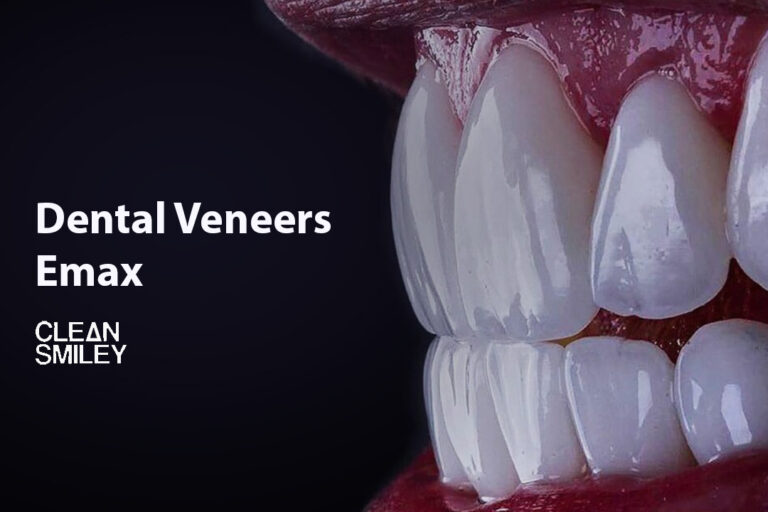
Choosing between a Dental Caps Versus Veneers is one of the most consequential decisions in restorative and cosmetic dentistry, yet it is also one of the most misunderstood. Both treatments improve the appearance of damaged or unsightly teeth, both involve laboratory-fabricated restorations bonded to natural tooth structure, and both can deliver stunning aesthetic results that last for years. But beneath these surface similarities lie fundamental differences in how much tooth is removed, how much protection is provided, how long the restoration lasts, and how much it costs.
Choosing the wrong option, a veneer where a crown is needed or a crown where a veneer would suffice, can mean either unnecessary removal of healthy tooth structure or premature failure of a restoration that was never designed for the forces it faces. This guide provides a clear, honest comparison of dental caps versus veneers so you can walk into your consultation informed, confident, and ready to make the right decision for your specific situation.
The Main Difference Between Dental Caps And Veneers
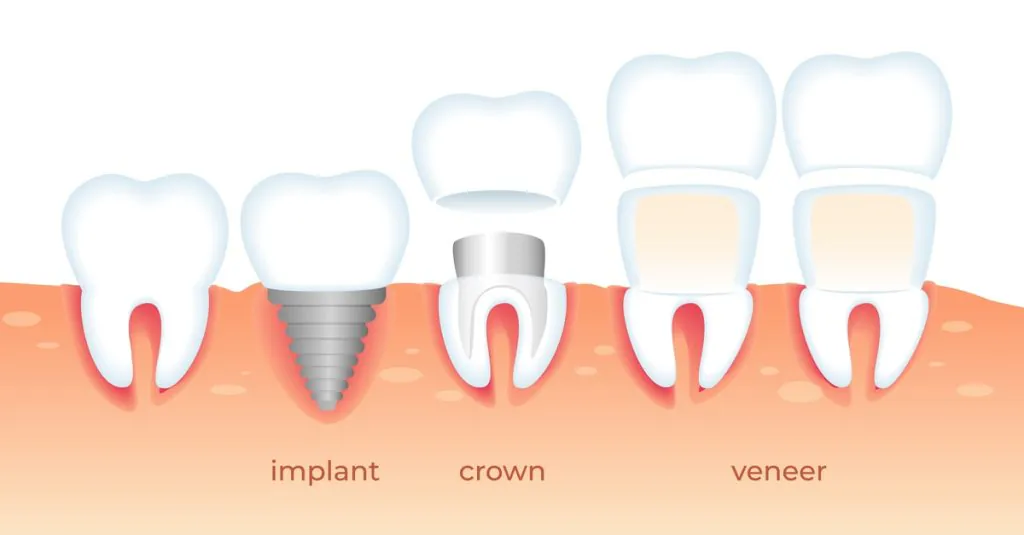
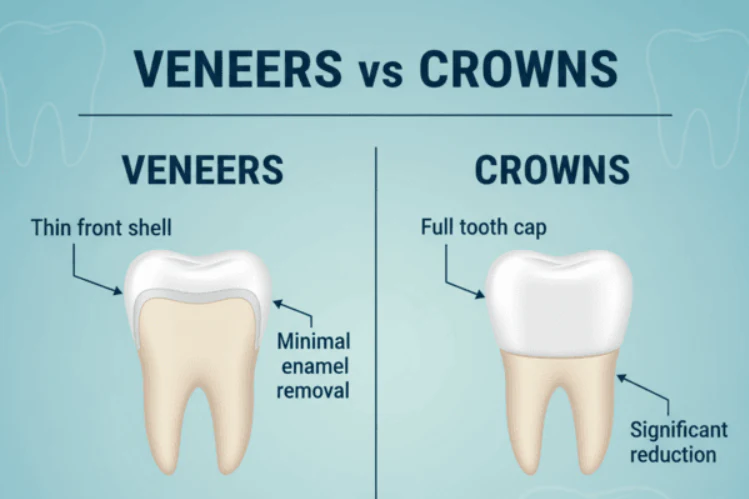
The core distinction between a dental cap (crown) and a veneer is coverage. A veneer covers only the front surface of the tooth. A crown covers the entire tooth, wrapping around all surfaces like a protective helmet. This difference in coverage dictates everything else: how much tooth must be prepared, what clinical situations each restoration is suited for, how much strength and protection it provides, and how it interacts with the opposing teeth during chewing.
What Is a Dental Veneer?
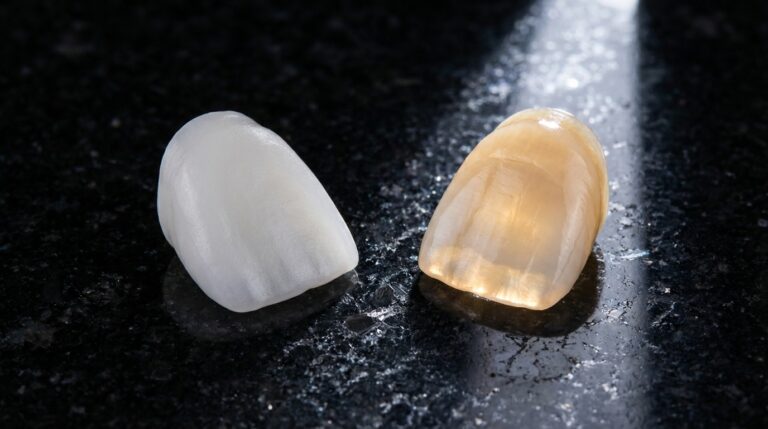
A dental veneer is a thin shell of porcelain or composite resin bonded to the labial (front-facing) surface of a tooth to alter its color, shape, size, or alignment. The veneer covers the visible face of the tooth and wraps slightly over the incisal edge and the interproximal margins, but the lingual (tongue-side) surface and the majority of the tooth structure remain untouched. This partial-coverage design makes veneers the most conservative option for transforming the appearance of teeth that are structurally sound but aesthetically compromised.
Emax Veneers, made from lithium disilicate glass-ceramic, have become the gold standard veneer material due to their extraordinary translucency, flexural strength of 400 to 500 MPa, and the ability to be applied in layers as thin as 0.3 to 0.5 millimeters. This thinness means that less enamel needs to be removed during preparation, preserving more of the natural tooth and maintaining a stronger adhesive bond. Veneers are the foundation of most Hollywood Smile transformations and are ideally suited for teeth that need cosmetic improvement but do not require structural reinforcement.
What Is a Dental Cap?
A dental cap, universally known in clinical terminology as a crown, is a full-coverage restoration that encases the entire visible portion of the tooth above the gum line. The crown replaces the outer shell of the tooth completely, providing both aesthetic transformation and structural reinforcement. Dental Crowns are fabricated from a variety of materials including monolithic zirconia, porcelain-fused-to-metal, porcelain-fused-to-zirconia, and lithium disilicate (Emax), each selected based on the location of the tooth, the functional demands it faces, and the aesthetic requirements of the case.
The full-coverage design of a crown makes it the appropriate choice for teeth that have been structurally compromised by large cavities, fractures, root canal treatment, or extensive wear. By enveloping the entire tooth, the crown redistributes chewing forces across the full circumference rather than concentrating them on any single weakened area. The American College of Prosthodontists classifies crowns as one of the most frequently prescribed fixed restorations in dentistry, with indications spanning both restorative necessity and aesthetic enhancement.
The Procedure: How Much Tooth Is Removed?
The amount of natural tooth structure removed during preparation is the most clinically significant difference between dental caps and veneers, and it is the factor that most directly affects the long-term health of the tooth underneath.
Veneer Prep (Conservative)
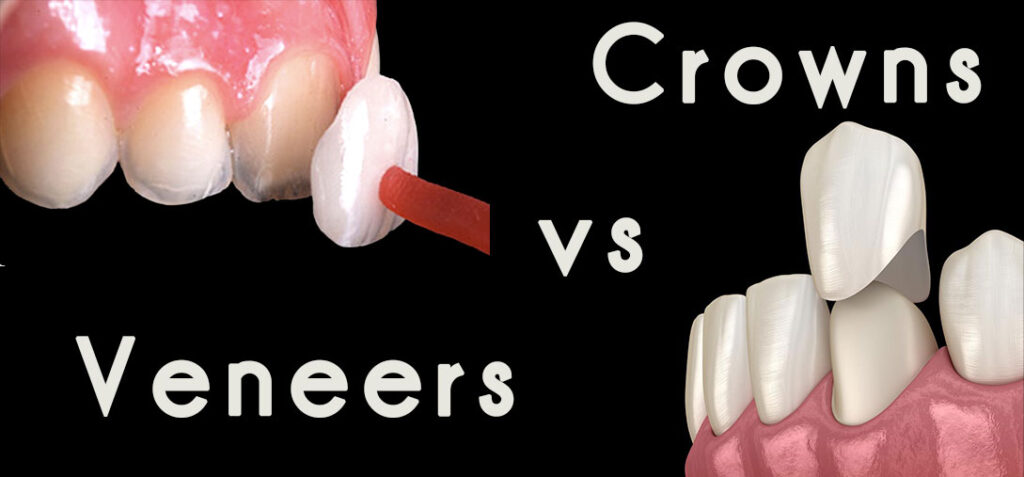
Veneer preparation is designed to be minimally invasive. The dentist removes a controlled thickness of enamel from the front surface of the tooth, typically 0.3 to 0.5 millimeters for Emax veneers and 0.5 to 0.7 millimeters for traditional feldspathic porcelain. The preparation is confined almost entirely to the enamel layer; the dentin beneath is exposed minimally or not at all. This enamel-only preparation is significant because the adhesive bond between porcelain and enamel is dramatically stronger than the bond between porcelain and dentin, meaning that veneers bonded to intact enamel have superior retention and longevity.
In carefully selected cases, “no-prep” or “minimal-prep” veneers can be placed with little to no tooth reduction at all. Ultra-thin porcelain shells of 0.2 to 0.3 millimeters are bonded directly to the unprepared enamel surface. This approach preserves the tooth entirely and is theoretically reversible, though it is suitable only for specific indications such as adding length to short teeth, closing minor gaps, or masking mild discoloration without altering tooth contour significantly.
The lingual surface, the interproximal contacts in most cases, and the core of the tooth remain completely untouched during veneer preparation. This conservation of structure means that if the veneer ever fails or needs replacement decades later, the underlying tooth retains enough healthy structure to support a new veneer or, if necessary, a transition to a full crown.
Crown Prep (Aggressive)
Crown preparation is substantially more invasive than veneer preparation because the restoration must cover all surfaces of the tooth. The dentist reduces the tooth circumferentially, removing approximately 1.0 to 2.0 millimeters of structure from the buccal, lingual, mesial, and distal surfaces, and 1.5 to 2.0 millimeters from the occlusal (biting) surface. This reduction creates space for the crown material to achieve adequate thickness for strength while maintaining a natural tooth contour and proper contact with adjacent and opposing teeth.
The total volume of tooth structure removed during crown preparation is roughly three to five times greater than during veneer preparation. This removal frequently extends through the enamel into the dentin, and in teeth with large existing fillings, the preparation may approach the pulp chamber. Crown preparation is irreversible; the tooth will require a restoration for the rest of its functional life. This is why the decision to place a crown should be based on genuine clinical need, either structural reinforcement of a compromised tooth or full-coverage protection following root canal treatment, rather than purely cosmetic desire when a veneer would accomplish the same aesthetic goal with far less tooth sacrifice.
| Parameter | Veneer Preparation | Crown Preparation |
| Surfaces reduced | Front (labial) only | All surfaces (360°) |
| Depth of reduction | 0.3 – 0.7 mm | 1.0 – 2.0 mm |
| Enamel preservation | High (mostly enamel-only) | Low (extends into dentin) |
| Tooth vitality risk | Very low | Moderate (pulp proximity) |
| Reversibility | Partially (with no-prep) | No |
| Structural reinforcement | Minimal | Significant |
When to Choose Which
The decision between a dental cap and a veneer should be driven by the clinical condition of the tooth, not by aesthetic preference alone. Each restoration has a clearly defined set of indications where it performs best, and misapplying either option leads to suboptimal outcomes.
Choose a veneer when the tooth is structurally healthy but aesthetically compromised. Ideal veneer candidates include teeth with surface stains that do not respond to professional Teeth Whitening, minor chips or irregularities at the incisal edge, slight rotations or positional imperfections that create an uneven smile line, small gaps (diastemas) between front teeth, and teeth that are slightly undersized or asymmetric relative to their neighbors. The key requirement is that the tooth has adequate enamel remaining for a strong adhesive bond and does not need structural reinforcement.
Choose a crown when the tooth has lost significant structure and requires protection to survive long-term function. Crown indications include teeth with large cavities or fillings that occupy more than 50 percent of the tooth’s surface area, teeth that have undergone root canal treatment and are now devitalized and more brittle, teeth with cracks or fractures that extend beyond what a veneer can cover, teeth with severe wear from bruxism or erosion that have lost their original height and shape, and teeth that serve as abutments for dental bridges. In these situations, a veneer’s partial coverage would leave the compromised areas unprotected, risking fracture, recurrent decay, or complete tooth failure.
For patients requiring both aesthetic transformation and structural rehabilitation across different teeth, a combined approach is common and often ideal. Emax Veneers are placed on healthy front teeth where aesthetics are essential, while zirconia Dental Crowns protect the compromised posterior teeth where chewing forces are greatest. This hybrid strategy is the foundation of many complete Hollywood Smile designs and full-mouth rehabilitation cases.
Comparison of Durability and Lifespan of Dental Caps and Veneers
Both dental caps and veneers are designed for long-term service, but their durability profiles differ based on material properties and the functional demands they face.
Strength & Material
The strength of a restoration is measured by its flexural strength, the force it can withstand before fracturing. The material determines this value:
| Material | Typical Use | Flexural Strength (MPa) |
| Emax lithium disilicate | Veneers, anterior crowns | 400 – 500 |
| Monolithic zirconia | Posterior crowns, full-arch bridges | 900 – 1,200 |
| Feldspathic porcelain | Traditional veneers | 60 – 120 |
| Porcelain-fused-to-zirconia | Anterior and posterior crowns | 900+ (substructure) |
| Composite resin | Direct bonding, temporary restorations | 120 – 180 |
Crowns benefit from their full-coverage design, which distributes forces across the entire circumference of the tooth. A monolithic zirconia crown on a molar is virtually indestructible under normal function and can withstand even the excessive forces generated by bruxism.
Veneers, being partial-coverage restorations bonded to only the front surface, are inherently more vulnerable to fracture from lateral or shear forces. However, when properly bonded to intact enamel and protected from parafunctional habits, Emax veneers demonstrate exceptional clinical durability on anterior teeth where the primary forces are incising rather than grinding.
Average Longevity
The lifespan of both restorations depends on the material, the quality of the preparation and bonding, and the patient’s maintenance and habits:
| Restoration | Average Lifespan | Key Longevity Factor |
| Emax porcelain veneer | 15 – 20+ years | Enamel bond quality, no bruxism |
| Composite veneer | 5 – 8 years | Stain accumulation, edge wear |
| Monolithic zirconia crown | 15 – 25+ years | Margin integrity, oral hygiene |
| Porcelain-fused-to-metal crown | 10 – 15 years | Metal margin exposure, porcelain chipping |
| Emax crown (anterior) | 15 – 20 years | Bite force management |
A systematic review published in the Journal of Dentistry reported annual failure rates below 2 percent for porcelain veneers over observation periods of up to 20 years. Zirconia crowns show similar or lower failure rates in posterior applications. The practical takeaway is that both dental caps and veneers, when indicated correctly and maintained properly, deliver comparable longevity measured in decades rather than years.
Cost & Insurance Reality
The cost of dental caps versus veneers varies by material, location, and the number of teeth treated. In general, crowns and veneers made from the same material (such as Emax) are priced similarly per unit, though the total cost of treatment differs based on how many teeth require full coverage versus partial coverage.
| Restoration (per tooth) | USA ($) | UK (£) | Turkey ($) |
| Emax porcelain veneer | 1,500 – 3,000 | 800 – 1,500 | 250 – 450 |
| Composite veneer | 300 – 800 | 150 – 400 | 60 – 150 |
| Monolithic zirconia crown | 1,200 – 2,500 | 600 – 1,200 | 200 – 400 |
| Porcelain-fused-to-zirconia crown | 1,000 – 2,200 | 500 – 1,100 | 180 – 350 |
| Emax crown | 1,500 – 3,000 | 800 – 1,500 | 250 – 450 |
Prices are for informational purposes only. Please consult your dentist or clinic for an exact quote.
The “Medical Necessity” Loophole
Insurance coverage is where dental caps and veneers diverge most sharply. Most dental insurance plans classify veneers as a cosmetic procedure and exclude them from coverage entirely. Crowns, however, are frequently classified as a restorative procedure when they are placed to protect a structurally compromised tooth, such as one weakened by a large filling, a fracture, or root canal treatment. In these cases, insurance may cover 50 to 80 percent of the crown cost, subject to annual maximum limits and plan-specific terms.
This “medical necessity” distinction means that a patient who needs aesthetic improvement on a tooth that also has a large filling may find that a crown is partially covered by insurance while a veneer on the same tooth would not be. This financial reality should be discussed openly with your dentist when evaluating dental caps versus veneers. However, for patients traveling to Turkey for treatment, the cost savings are so substantial that the insurance distinction becomes less relevant; a full set of Emax veneers in Turkey may cost less than the patient’s out-of-pocket share for a single crown in the United States.
Dental Caps And Veneers Turkey Cost
Turkey has established itself as one of the world’s premier destinations for both dental caps and veneers, offering international-standard treatment at prices that make complete smile transformations accessible to patients who would find the same treatment prohibitively expensive in their home countries.
The cost advantage is driven by lower operating costs, favorable exchange rates, and the competitive dynamics of Turkey’s thriving dental tourism sector rather than any reduction in material quality or clinical expertise. Clinics in Antalya, Istanbul, and Izmir use the same Emax, zirconia, and CAD/CAM systems found in top-tier Western practices, and many Turkish prosthodontists have trained or held fellowships in European and American institutions.
At Clean Smiley Turkey, treatment packages for dental caps and veneers include Digital Smile Design consultation, intraoral scanning, mock-up phase, laboratory fabrication using premium materials, final bonding and occlusion adjustment, all follow-up appointments, hotel accommodation at partner properties such as Kremlin Palace, Akra Barut, or Wise Hotel, and airport transfer services. Between appointments, patients can explore the Mediterranean coast through guided tours to Pamukkale, Aspendos and Side, or enjoy a luxury VIP Yacht Tour along the Antalya coastline. To receive a personalized quote based on your specific clinical needs, contact our team through the free quote page.
FAQ
Do crowns look as natural as veneers?
With modern materials, the aesthetic difference between a well-made crown and a well-made veneer has narrowed dramatically. An Emax crown on an anterior tooth achieves translucency and color depth that is virtually indistinguishable from an Emax veneer because the same lithium disilicate material is used in both restorations.
Monolithic zirconia crowns, while extremely strong, historically lagged behind in translucency for front teeth, but the latest generation of high-translucency zirconia has closed this gap considerably. The critical factor is the skill of the ceramist who fabricates the restoration and the quality of the shade matching performed in the clinic. In the hands of an experienced team, both dental caps and veneers can deliver results that are indistinguishable from natural teeth.
Is the procedure more painful for crowns?
Both veneer and crown preparation are performed under local anesthesia, so neither procedure should cause pain during treatment. However, crown preparation removes more tooth structure and approaches the dentin more extensively, which can result in slightly greater post-operative sensitivity to cold and pressure during the first one to two weeks.
Teeth that have had root canal treatment prior to crown placement have no nerve sensation at all, making the crown procedure completely sensitivity-free. For both treatments, any post-operative discomfort is typically mild and resolves quickly with desensitizing toothpaste and over-the-counter pain relief.
Can I get a cavity under a crown or veneer?
Yes. The junction where the restoration meets the natural tooth, known as the margin, is the most vulnerable area for bacterial infiltration and secondary decay. If plaque accumulates at this margin due to inadequate brushing or neglected flossing, the bacteria can penetrate beneath the restoration and cause decay on the underlying tooth structure.
This risk exists for both dental caps and veneers and is the primary reason why daily interproximal cleaning and professional check-ups every six months are non-negotiable for maintaining any bonded restoration. A cavity under a crown or veneer may not become symptomatic until it has progressed significantly, making regular radiographic monitoring essential.
Can I whiten my crowns or veneers later?
No. Porcelain and zirconia restorations do not respond to chemical whitening agents. Their color is determined permanently during the fabrication process and cannot be altered after bonding. If you plan to whiten your teeth, Teeth Whitening should always be completed before veneers or crowns are placed so that the restoration shade is matched to your whitest natural tooth color. If your natural teeth darken over time relative to your restorations, professional whitening of the natural teeth can restore color harmony without affecting the porcelain.
Why does my dentist recommend a crown instead of a veneer?
If your dentist recommends a crown over a veneer, it is almost certainly because the tooth requires the structural protection that only full coverage can provide. Common reasons include a large existing filling that occupies more than half the tooth surface, a crack or fracture that extends beyond the front face of the tooth, a root canal-treated tooth that has lost its internal blood supply and become more brittle, significant enamel loss from wear or erosion that would leave insufficient bonding surface for a veneer, or a tooth that serves as an abutment for a dental bridge. In these situations, placing a veneer would leave the compromised areas exposed and unprotected, risking fracture or failure. A crown is the conservative choice when the tooth’s structural integrity demands it, even though it requires more tooth reduction.
Conclusion
The choice between dental caps and veneers is not a matter of one being “better” than the other; it is a matter of matching the right restoration to the right clinical situation. Veneers excel when the tooth is healthy and the goal is aesthetic transformation with maximum conservation of natural structure.
Crowns excel when the tooth is compromised and requires full-coverage protection to survive long-term function. Using the wrong restoration in the wrong situation either sacrifices healthy tooth structure unnecessarily or leaves a damaged tooth inadequately protected.
Both restorations, when fabricated from premium materials like Emax lithium disilicate and monolithic zirconia and bonded by skilled clinicians, deliver decades of reliable, beautiful service. Both require the same daily maintenance: soft-bristled brushing, interproximal cleaning, alcohol-free mouthwash, and professional check-ups every six months. And both benefit from nightguard protection in patients with bruxism.
To determine whether dental caps, veneers, or a strategic combination of both is right for your smile, contact Clean Smiley Turkey. Our expert team in Antalya uses Digital Smile Design technology to plan every case with precision, ensuring that each tooth receives exactly the restoration it needs, no more and no less. Request your free quote today and take the first step toward a smile that is both beautiful and built to last.