Son güncelleme: 17 Ağustos 2026
“Could I be allergic to zirconia crowns?” This is one of the first questions we hear from patients who have had a bad experience with metal restorations before. The short version: a genuine zirconia crown allergy is exceptionally rare, far rarer than reactions to nickel-containing metal alloys. But “rare” isn’t “impossible,” and the honest answer has a few layers worth understanding.
Most people asking about zirconia crown allergy are really asking two different things at once. One is whether the ceramic material itself can trigger an immune reaction. The other is whether the symptoms they’re feeling in their mouth are caused by the crown at all. Those aren’t the same problem, and they don’t have the same answer.
Is zirconia the same as metal? Why this distinction matters
No, and this confusion is at the heart of most allergy worries. Zirconia crowns are made from zirconium dioxide (ZrO₂), a white ceramic. They are metal-free. The metal “zirconium” exists in nature, but in a dental crown it’s bound as a stable oxide ceramic, which behaves very differently from a reactive metal in your mouth.
Why does this matter so much? Because the people most worried about allergy are often those who reacted to older metal-based crowns, specifically nickel. Nickel allergy is genuinely common, affecting a meaningful share of the population, and porcelain-fused-to-metal (PFM) crowns can contain nickel in the substructure. So a patient feels swelling or irritation, blames “the crown,” and assumes any crown will do the same. Switching to a fully ceramic option like zirconia is often the recommendation precisely because it removes that metal trigger.
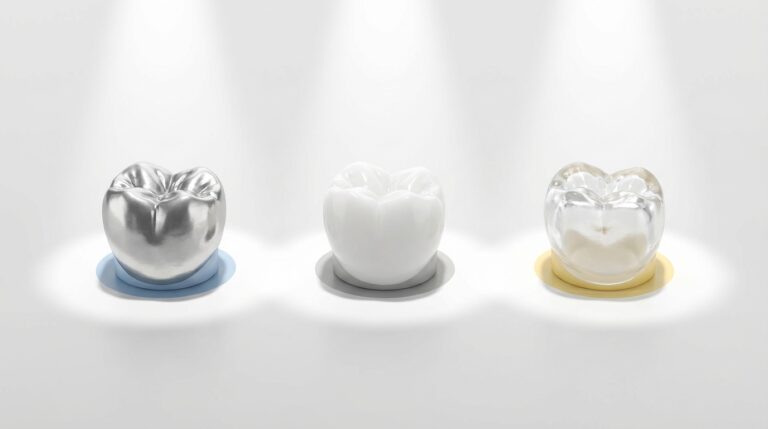
- PFM crown: ceramic over a metal core, which may contain nickel, cobalt, or chromium.
- Zirconia crown: solid ceramic, no metal substructure.
- E-max / glass-ceramic: another metal-free option, also used when biocompatibility is a priority.
What does “biocompatible” actually mean for zirconia?
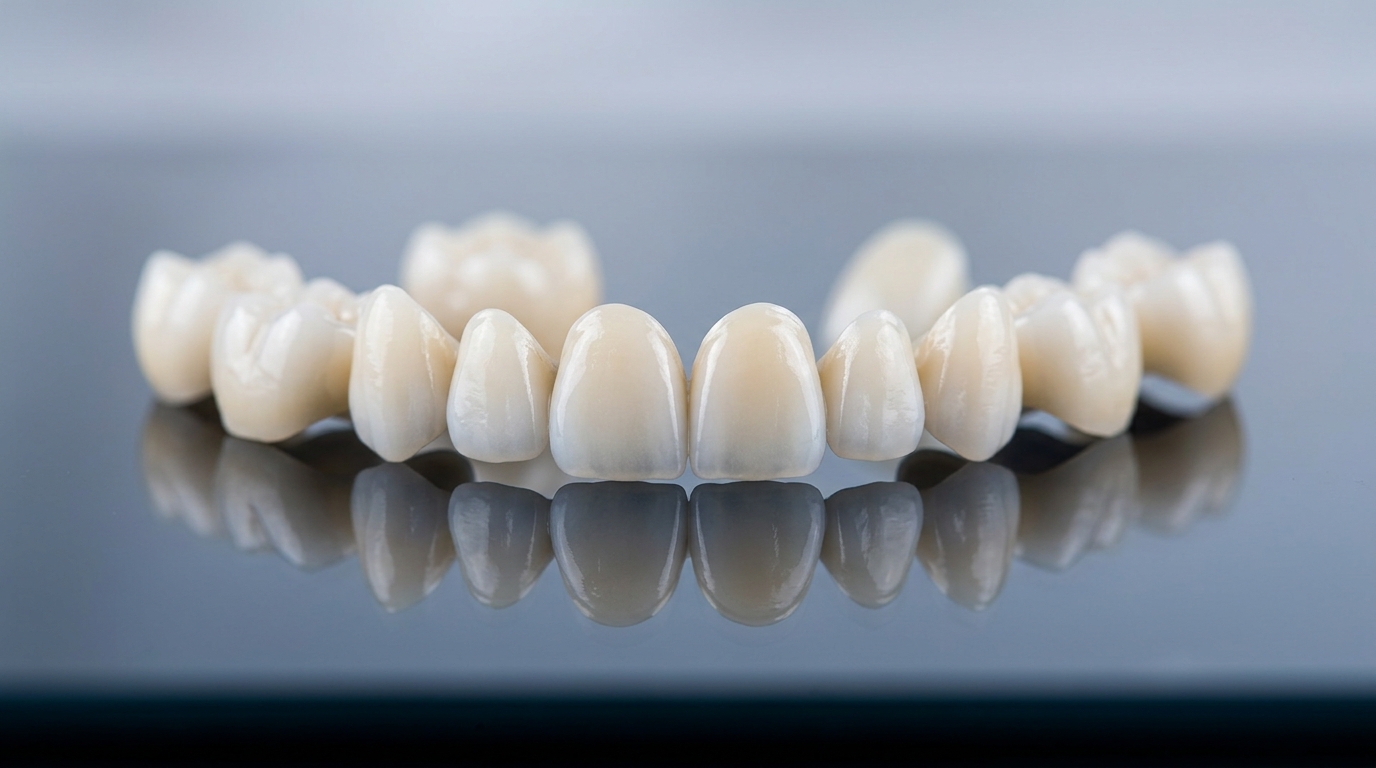
Biocompatibility describes how well a material coexists with living tissue without provoking an unwanted response. Zirconia scores high here, and that’s not marketing language, it’s why the same material is used in hip replacements and other medical implants where the body tolerates it for years.
A few properties make zirconium dioxide so well tolerated in the mouth:
- Chemical stability: the oxide ceramic doesn’t corrode or release metal ions the way some alloys can.
- Low plaque affinity: the smooth surface tends to gather less bacterial buildup, which can support healthier surrounding gum tissue.
- Inertness: it doesn’t readily react with saliva, food acids, or oral tissues.
Here’s the practical takeaway we give patients. When someone has a documented history of multiple metal sensitivities, a metal-free ceramic is usually the more comfortable path. We can’t promise zero reaction for anyone, because no honest clinician can. But the biological profile of zirconia is one reason it has become a common choice for sensitive patients.
Can you actually be allergic to a zirconia crown?
A true, immune-mediated allergy to zirconium dioxide is documented in the dental and medical literature only in a very small number of cases. It’s rare enough that when a patient describes “allergy” symptoms, the first job isn’t to confirm the allergy, it’s to rule out everything more likely first.
What gets mistaken for a zirconia allergy far more often:
- The cement or bonding agent, not the ceramic, causing a localized reaction.
- A high bite where the crown sits slightly tall, leading to soreness, pressure, and inflammation.
- Gum irritation from a margin that traps food or plaque.
- An underlying issue in the tooth itself, such as residual decay or a nerve problem under the crown.
- Temporary sensitivity in the days after the crown is placed, which often settles on its own.
Notice how many of these have nothing to do with allergy at all. That’s the point. If we jumped straight to “you’re allergic to zirconia,” we’d miss the far more common explanations that are actually fixable.
What symptoms might suggest a reaction, and what do they really mean?
Patients usually describe one of these: a metallic taste, gum redness or swelling near the crown, a burning sensation, or general mouth discomfort. We take all of it seriously. But each symptom points in several directions, and most of those directions aren’t an allergy.
| What you feel | More likely cause | Less likely (allergy) |
|---|---|---|
| Metallic taste | An older metal restoration elsewhere, or galvanic effect between metals | Reaction to crown material |
| Gum swelling at the margin | Plaque trap, cement excess, or crown fit | Local hypersensitivity |
| Pressure or soreness when biting | High bite / occlusion needing adjustment | Rarely allergy-related |
| Burning sensation | Oral mucosal condition, dryness, or irritation | Contact reaction |
So what does this mean for you? If something feels off after a crown, it’s worth getting checked, but don’t self-diagnose an allergy from a symptom list online. The same swelling can mean five different things, and only an in-person exam can tell them apart.
How is a zirconia or dental material sensitivity actually tested?
When a real material sensitivity is suspected, dentistry doesn’t guess. There are structured ways to investigate it, and we’d coordinate with the right specialists rather than improvise.
- Patch testing performed by a dermatologist or allergist, which can screen for reactions to specific dental materials and metals.
- A detailed history, what other metals or materials you’ve reacted to, jewelry sensitivity, prior dental complaints.
- Clinical examination to first exclude fit, bite, gum, and cement issues, the usual culprits.
One thing we want to be clear about: this article is informational, and nothing here replaces a proper assessment. A definitive answer about your own situation needs an examination, not an internet checklist.
If I’m worried about metal allergy, is zirconia a sensible option?
For many patients with a known nickel or general metal sensitivity, yes, a metal-free ceramic restoration is one of the options worth discussing. That’s a large part of why zirconia and other all-ceramic crowns are chosen so often when biocompatibility is a concern.
But it’s not automatic. The right choice depends on the tooth’s position, how much chewing force it takes, esthetic expectations, and your individual history. A front tooth and a back molar don’t always call for the same material. The way we approach it: confirm what you actually reacted to before, then match the material to both your biology and the mechanics of that specific tooth.
If you’ve already read our companion explainer on this topic, you can dig deeper into the basics in our piece on whether you could be allergic to a zirconia crown, which covers the foundations in more detail.
Reading this in German or Russian?
Many of the patients who ask us about zirconia and allergy concerns reach us from German-speaking and Russian-speaking regions. If you’d prefer this information in your own language, we’re expanding our coverage of zirconia oxide allergy symptoms (German: Zirkonoxid-Allergie Symptome; Russian: аллергия на диоксид циркония) so you can read about biocompatibility and possible reactions in the language you’re most comfortable with. Ask us during your consultation which language version best fits your needs.
Frequently Asked Questions
Is a zirconia crown allergy common?
No. Confirmed allergic reactions to zirconium dioxide are exceptionally rare in the dental literature. Discomfort after a zirconia crown is far more often linked to fit, bite, gum irritation, or the cement, rather than the ceramic itself.
Are zirconia crowns metal-free?
Yes. Zirconia crowns are made from zirconium dioxide, a white ceramic, with no metal substructure. This is different from porcelain-fused-to-metal crowns, which can contain nickel and other alloys that some people react to.
Why is zirconia considered biocompatible?
Zirconium dioxide is chemically stable, doesn’t corrode, and tends to gather less plaque on its smooth surface. The same material is used in medical implants, which is one reason it’s generally well tolerated by oral tissues.
How can I find out if I’m reacting to my crown?
Start with a dental examination to rule out the common causes such as a high bite or gum irritation. If a genuine material sensitivity is suspected, patch testing by a dermatologist or allergist may be recommended. A definitive answer requires an in-person evaluation.
I had a reaction to a metal crown. Is zirconia safer for me?
For many people with a known metal sensitivity, a metal-free ceramic option is worth discussing because it removes the metal trigger. Whether it’s right for you depends on your history and the specific tooth, so it should be decided after an assessment.
Can the cement cause a reaction even if the zirconia doesn’t?
Yes, this is one of the more common scenarios. The bonding or luting cement, rather than the ceramic crown, can sometimes be behind a localized reaction. That’s another reason a proper evaluation matters before assuming the crown material is the cause.
A final word
If you’re weighing a zirconia crown because past metal restorations gave you trouble, that instinct is reasonable, and you’re not overthinking it. The reassuring part is that the ceramic itself sits among the most well-tolerated materials we work with. The practical part is that “I feel something” rarely means “I’m allergic,” and the difference is something a real exam sorts out quickly.
If you have questions about your own case, reach out through our consultation form or WhatsApp and we’ll talk it through.
This content is for general information only and does not replace a clinical examination, diagnosis, or treatment by a qualified dental professional. A definitive evaluation of any symptom requires an in-person assessment.
Related Articles