Son güncelleme: 4 Ağustos 2026
The first question patients ask us after an extraction, an implant, or a wisdom tooth removal is rarely about pain. It’s about food. “What can I actually eat?” Most people leave the chair worried they’ll be stuck with plain yogurt for a week. You won’t be. The right soft food recipes after dental surgery can be warm, filling, and genuinely good — and they help the area heal instead of irritating it.
This is the menu we wish every patient walked out with. We’ve grouped it by day, by mealtime, and by texture, so you can plan ahead before you even sit down in the chair. A little prep beats a pantry raid at 9 p.m. when your jaw is sore and nothing in the fridge is soft enough.
What can you eat the first 24 hours after dental surgery?
For the first day, think cool to lukewarm and almost no chewing. Your mouth has a fresh wound, and a blood clot is forming over it. That clot is doing real work, so the goal is simple: feed yourself without disturbing it.
Good first-day choices:
- Plain or Greek yogurt — protein, easy to eat, soothing on the gums.
- Applesauce — no chewing, light on the stomach if you’re nauseous from anesthesia.
- Smooth cold soups like a blended cucumber or avocado soup, served cool rather than hot.
- Pudding or custard — gentle, and easy when your appetite is small.
- A protein smoothie, spooned or sipped from the cup (not a straw).
One rule we repeat at every consultation: no straws on day one. The suction can pull on that forming clot, and a dislodged clot is exactly what leads to a dry socket — one of the more painful complications after an extraction. Spoon it, or sip slowly from the rim.
What are the best soft food recipes after dental surgery?
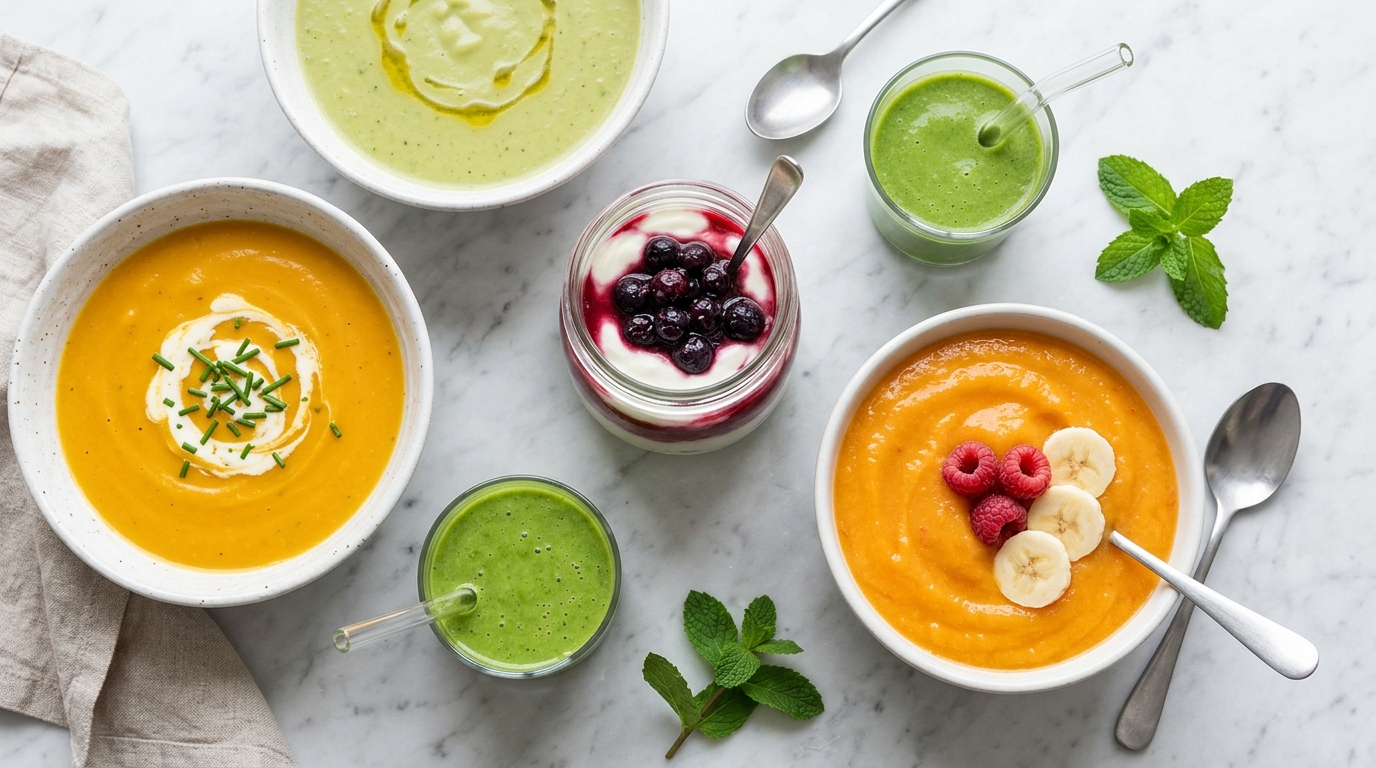
Short answer: the ones that pack in protein and vitamins without making you chew. Healing tissue needs fuel. Here are the soft food recipes after dental surgery that our patients come back and tell us actually got them through the week.
Healing protein smoothie
Blend one banana, a handful of frozen mango, half a cup of Greek yogurt, a scoop of plain protein powder, and milk (or a plant alternative) until completely smooth. No seeds, no granola on top — those small hard bits can lodge in the socket. Serve it cool, not ice-cold, if your teeth feel sensitive. Spoon it for the first day or two.
Creamy blended vegetable soup
Simmer carrots, potato, and a little onion until soft, then blend with vegetable stock until silky. Strain it if you want it perfectly smooth. Let it cool to lukewarm before eating — and we mean lukewarm. Soup that’s too hot can increase bleeding and irritate the wound in the early days. A splash of cream or a spoon of olive oil adds calories and helps you feel full.
Soft scrambled eggs
Eggs are one of the best things you can eat after surgery: soft, protein-rich, and ready in minutes. Cook them low and slow so they stay creamy, not rubbery. Skip the toast for now. If chewing is painful, you can even fold the eggs into a little warm broth to make them softer still.
Mashed avocado or guacamole (mild)
Mashed avocado is calorie-dense and full of healthy fats, which matters when your appetite is low and you’re not eating much. Keep it plain or very mildly seasoned — no chili, no chunky tomato, no crunchy chips alongside. A spoon and a soft mash is all you need.
Oatmeal or porridge
Cook oats until they’re soft and a little loose, then let them cool to warm. Stir in mashed banana, a spoon of nut butter, or a little honey for energy. Steel-cut oats can stay too firm, so rolled oats or finely ground oats sit easier on a healing mouth.
Planning beats improvising. Here’s a sample three-day menu you can adapt — the texture loosens up as you move from day one toward the end of the week. Always follow your own dentist’s timeline, since healing speed varies from person to person.
| Day | Breakfast | Lunch | Dinner | Snack |
|---|---|---|---|---|
| Day 1 (very soft, cool) | Greek yogurt + applesauce | Protein smoothie (spooned) | Cool blended cucumber soup | Pudding or custard |
| Day 2 (soft, lukewarm) | Soft scrambled eggs | Creamy vegetable soup | Mashed potato + soft cooked carrots | Mashed avocado |
| Day 3 (soft, slightly firmer) | Warm oatmeal + mashed banana | Blended lentil soup | Soft fish, flaked + mashed sweet potato | Smoothie or yogurt |
By the end of this stretch most people are ready to add slightly more texture — soft pasta, well-cooked rice, flaky fish, ripe soft fruit. Listen to the area. If something pulls or stings, it’s too soon; back off and give it another day.
What foods should you avoid after dental surgery?
The “avoid” list matters as much as the menu. A single popcorn kernel in the wrong spot can set your recovery back. Here’s what we tell people to keep out of reach for a while:
- Crunchy and hard foods — chips, nuts, crusty bread, raw carrots, popcorn. Hard bits get into the socket and disturb healing.
- Sticky foods — caramel, chewing gum, toffee. They pull at the wound and at any stitches.
- Spicy foods — chili and heavy spice can sting an open wound and increase discomfort.
- Very hot foods and drinks — heat can increase bleeding and dissolve the clot earlier than you want. Lukewarm is the rule for the first days.
- Small seeds and grains — sesame, poppy seeds, rice in the early days. They lodge in the socket easily.
- Alcohol and carbonated drinks — both can irritate the site and interfere with healing, and alcohol doesn’t mix well with prescribed pain medication.
And the one we underline twice: no straws, no smoking. Both create suction or irritation that can dislodge the clot and trigger a dry socket. If you’re a smoker, the first 48 to 72 hours are the ones that matter most.
How long do you need to eat soft foods after dental surgery?
It depends on what you had done. A simple filling? You might eat almost normally by the same evening, once the numbness wears off. A single extraction usually means soft foods for a few days. Wisdom teeth, multiple extractions, or implant surgery often call for a softer diet across the first week or more, easing back gradually.
There’s no single number that fits everyone, and that’s not us being vague — healing genuinely varies with age, the procedure, and how the area responds. The honest guide is your own mouth and your dentist’s instructions. If chewing on that side still hurts at day five, the tissue is telling you it needs more time.
For a fuller walk-through of meal ideas and the recovery timeline, see our main guide on delicious meals after dental surgery, which we keep updated with new recipes and patient-friendly swaps.
Tips that make soft-food days easier
A few small things from what we see in practice:
- Prep before surgery. Stock yogurt, eggs, ripe bananas, oats, and a couple of soups before your appointment. The day-of you will be grateful.
- Eat on the other side. Keep food away from the surgical site whenever you can.
- Don’t skip meals. Low appetite is normal, but your body heals on calories and protein. Even a smoothie counts.
- Rinse gently after eating — usually with warm salt water from the day after surgery, never vigorous swishing. Your dentist will tell you when to start.
- Stay hydrated with water, sipped from the cup. Hydration supports healing more than people expect.
Frequently asked questions
Can I eat ice cream after dental surgery?
Plain, soft ice cream can be soothing in the first day or two, and the cool temperature may ease swelling. Skip flavors with nuts, hard candy pieces, or crunchy cones, and don’t eat it straight from the freezer if your teeth are sensitive — let it soften slightly.
When can I drink coffee after dental surgery?
Hot coffee is best avoided in the first day or two, since heat can disturb the clot and increase bleeding. If you really want it, wait until it’s lukewarm and sip from the cup, not a straw. Many people find it more comfortable to wait a couple of days.
Are smoothies good after dental surgery?
Yes — a well-blended smoothie is one of the easiest ways to get protein and vitamins without chewing. Leave out seeds, granola, and anything that adds crunch, and spoon it rather than using a straw for the first 24 hours.
Can I eat pasta after dental surgery?
Soft, well-cooked pasta with a smooth sauce is usually fine after the first couple of days, once gentle chewing feels comfortable. Cook it a little softer than al dente and keep it away from the surgical site.
What soft foods are high in protein after dental surgery?
Greek yogurt, scrambled eggs, blended lentil or bean soups, protein smoothies, soft tofu, and flaked soft fish all deliver protein without heavy chewing. Protein is one of the building blocks your body uses to heal, so it’s worth prioritizing.
How do I know if I’m healing well?
Gradual improvement is the sign to look for — less soreness day by day, no heavy bleeding, no worsening swelling after the first 48 to 72 hours. If pain suddenly increases around day three or four, or you notice a bad taste and an empty-looking socket, contact your dentist; these can point to a dry socket, and an in-person check is the only way to be sure.
A gentle close
Recovery food doesn’t have to be sad. With a little prep, the first days after dental surgery can be warm soups, creamy oatmeal, and smoothies that actually taste like something. Keep it soft, keep it lukewarm, protect that clot, and let your mouth set the pace.
This article is for general information only and isn’t a substitute for professional advice. Healing varies from person to person — for guidance specific to your treatment, an examination and your dentist’s instructions come first.
Related Articles