A dental crown is one of the most versatile and frequently performed restorations in all of dentistry. Whether a tooth has been shattered by trauma, hollowed out by decay, weakened by root canal treatment, or simply worn down by decades of use, a crown restores its original shape, strength, and appearance by encasing the entire visible portion above the gum line in a custom-fabricated cap of ceramic, metal, or a combination of both. Millions of dental crowns are placed worldwide every year, yet many patients arrive at their appointment unsure of what the procedure involves, which material is best for their situation, or how long the result will actually last. This guide answers every question you need to make a confident, informed decision about your dental crown treatment.
What Is a Dental Crown?
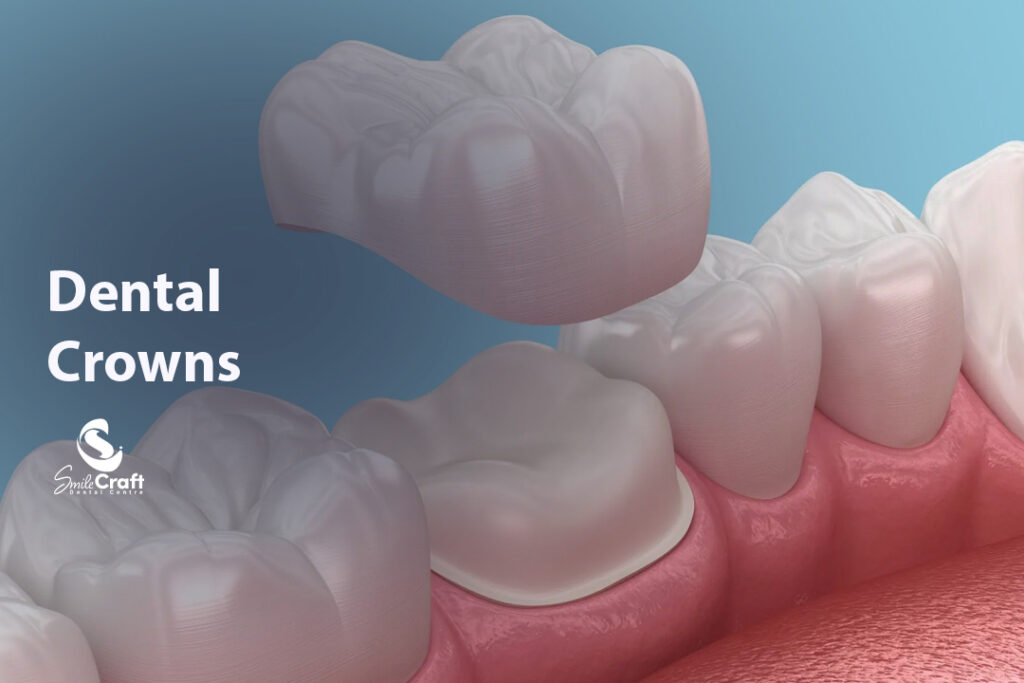
A dental crown is an indirect, full-coverage restoration that completely caps a prepared tooth, replacing the entire external surface from the gum line to the biting edge. Unlike a filling that restores a portion of the tooth from within, a crown surrounds and protects the tooth from the outside, functioning as an artificial suit of armor that absorbs chewing forces and shields the weakened structure underneath from further damage.
Dental crowns are indicated in a wide range of clinical scenarios: teeth that have lost more than 50 percent of their structure to decay or fracture, teeth that have undergone root canal treatment and lost their internal blood supply (making them brittle), teeth with large failing fillings that can no longer be replaced with a direct restoration, teeth that are severely worn or eroded, and teeth that serve as abutments for dental bridges. Crowns are also placed on top of Dental Implants to replace missing teeth, completing the implant restoration with a visible, functional tooth form. The American College of Prosthodontists recognizes the dental crown as a cornerstone of restorative dentistry, essential for preserving compromised teeth and maintaining long-term oral function.
The crown is fabricated outside the mouth in a dental laboratory or milled chairside using CAD/CAM technology, based on a precise impression or digital scan of the prepared tooth. Once completed, it is cemented or adhesively bonded onto the prepared tooth, becoming a permanent part of the dentition that looks, feels, and functions like a natural tooth.
How To Make Dental Crown?
The fabrication of a dental crown is a precision-engineered process that bridges clinical dentistry and laboratory craftsmanship. Understanding how your crown is made helps you appreciate why material selection, impression quality, and laboratory expertise all influence the final result.
The process begins after the dentist has prepared the tooth by reducing its external dimensions by approximately 1.0 to 2.0 millimeters on all surfaces, creating a uniform space for the crown material while preserving as much healthy tooth structure as possible. A precise record of this prepared tooth must then be captured, either through a traditional physical impression using silicone or polyvinyl siloxane material, or through an intraoral digital scan that creates a three-dimensional virtual model.
In the conventional laboratory workflow, the impression is poured in dental stone to create a physical model, and a skilled ceramist builds the crown layer by layer on this model. For zirconia crowns, the digital scan file is imported directly into CAD (computer-aided design) software, where the crown is designed on screen with precise margin adaptation, occlusal anatomy, and contact points. The digital design is then sent to a CAM (computer-aided manufacturing) milling machine that carves the crown from a solid block of zirconia or lithium disilicate. After milling, the crown undergoes sintering (for zirconia) or crystallization (for lithium disilicate) in a high-temperature oven, which transforms the material to its final density, strength, and shade.
For the most aesthetically demanding cases, particularly on front teeth, the milled substructure receives hand-layered porcelain applied by an experienced ceramist who replicates the color gradients, translucency variations, and surface characterizations of natural enamel. This combination of digital precision and artisanal skill produces crowns that are both structurally excellent and visually indistinguishable from the surrounding natural teeth. The completed crown is returned to the dental clinic, tried in the patient’s mouth for fit and aesthetics, and permanently cemented or bonded.
Which Dental Crown Is Suitable for Whom?
Choosing the right dental crown material is one of the most consequential decisions in restorative dentistry. Each material offers a distinct balance of strength, aesthetics, biocompatibility, and cost, and the best choice depends on the tooth’s location, the patient’s bite forces, aesthetic expectations, and any relevant allergies or sensitivities.
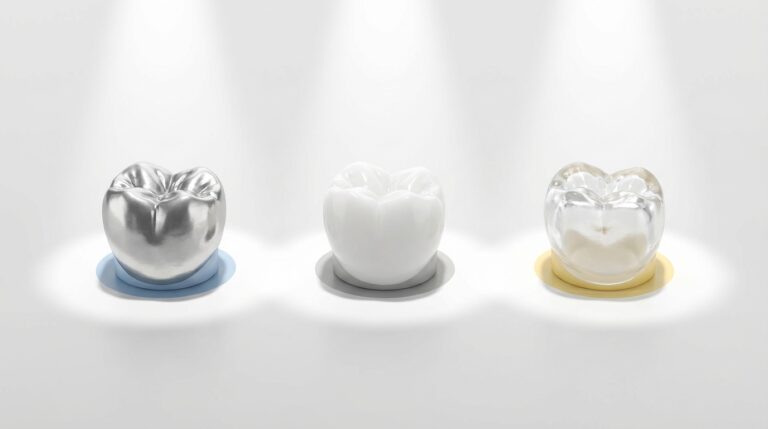
Zirconia
Zirconia (zirconium dioxide) crowns have become the dominant choice in modern prosthodontics, and for good reason. With a flexural strength of 900 to 1200 MPa, zirconia is the strongest ceramic material available in dentistry, earning it the nickname “ceramic steel.” This extraordinary strength makes zirconia the ideal material for posterior teeth (molars and premolars) where chewing forces are greatest, for patients with bruxism who generate excessive bite loads, and for long-span bridges where the framework must resist bending forces across an unsupported span.
Zirconia is completely metal-free and biocompatible, making it safe for patients with metal allergies or sensitivities. It does not produce the gray-purple discoloration at the gum margin that is commonly seen with metal-containing crowns. The latest generation of high-translucency and multi-layered zirconia materials have dramatically improved the aesthetic capabilities of monolithic zirconia, narrowing the gap with glass ceramics. However, for the most critical anterior aesthetic cases, zirconia still falls slightly behind lithium disilicate in replicating the natural light transmittance of enamel.
E-max / Lithium Disilicate
E-max (lithium disilicate glass-ceramic by Ivoclar Vivadent) is the aesthetic gold standard for dental crowns on front teeth. With a flexural strength of 400 to 500 MPa, it is three to four times stronger than traditional feldspathic porcelain while offering light transmittance that is nearly identical to natural tooth enamel. This combination of strength and translucency makes E-max the material of choice when the crown must blend seamlessly with adjacent natural teeth under all lighting conditions.
E-max crowns can be fabricated as thin as 0.5 to 1.0 millimeters, allowing more conservative tooth preparation than some alternatives. They are ideal for anterior teeth (incisors and canines), premolars that are visible in the smile, and any situation where aesthetic perfection is the priority. For patients considering Emax Veneers on some teeth and crowns on others, using the same lithium disilicate material for both ensures perfect color and translucency matching across the entire smile.
Porcelain-Fused-to-Metal (PFM)
PFM crowns consist of a cast metal substructure (typically a base metal alloy or a noble metal alloy) covered with layered porcelain. For decades, PFM was the default crown type worldwide, and it still offers a reliable combination of strength and acceptable aesthetics. The metal substructure provides excellent marginal fit and resistance to fracture, while the porcelain layer delivers a tooth-colored appearance.
However, PFM has several well-documented drawbacks that have led to its decline in favor of all-ceramic options. The metal substructure blocks light transmission, making the crown appear more opaque than a natural tooth, particularly at the gum margin where a dark line may become visible as the gum recedes with age. Porcelain chipping off the metal substructure is a known failure mode. Metal allergies, though uncommon, can cause chronic inflammation of the surrounding gum tissue. In 2026, PFM crowns are primarily used in specific situations where their proven track record and lower cost make them the practical choice, but all-ceramic alternatives have largely overtaken them in both anterior and posterior applications.
Gold & Metal Alloys
Gold alloy crowns represent the longest-standing and most clinically proven crown material in the history of dentistry. Gold is exceptionally kind to the opposing tooth, wearing at a rate similar to natural enamel rather than abrading it. It adapts to the tooth margin with unmatched precision, it does not fracture, and it has documented clinical lifespans exceeding 30 years. The obvious limitation is aesthetics: gold is visible and unmistakably metallic.
For this reason, gold crowns are now primarily used on second and third molars in the far back of the mouth where they are invisible during normal smiling and speaking. Patients who prioritize absolute longevity and functional performance over aesthetics, particularly those with severe bruxism, may find gold to be the most durable option available.
| Material | Flexural Strength | Best For | Aesthetics | Average Lifespan | Metal-Free |
| Zirconia | 900 – 1200 MPa | Posterior teeth, bruxism, bridges | Good to excellent | 15 – 25+ years | Yes |
| E-max (lithium disilicate) | 400 – 500 MPa | Anterior teeth, smile zone | Exceptional | 15 – 20+ years | Yes |
| PFM | Varies by metal | All positions (declining use) | Moderate to good | 10 – 15 years | No |
| Gold alloy | Very high (ductile) | Posterior teeth, heavy grinders | Poor (metallic) | 20 – 30+ years | No |
Dental Crown Procedure
The dental crown procedure is a systematic process that typically requires two appointments separated by one to two weeks, though same-day CAD/CAM technology can condense the process into a single visit in select clinics.
During the first appointment, the tooth is assessed clinically and radiographically to confirm that it is suitable for a crown. Local anesthesia is administered, and the dentist reduces the tooth on all surfaces, removing approximately 1.0 to 2.0 millimeters of structure to create uniform space for the crown material. If the tooth has lost significant structure, a core buildup using composite resin or glass ionomer is placed to recreate the ideal preparation form. Once the preparation is complete, a digital scan or physical impression captures every detail of the prepared tooth, the adjacent teeth, and the opposing arch. This record is sent to the dental laboratory along with the selected shade. A temporary crown, fabricated from acrylic or composite, is cemented over the prepared tooth to protect it and maintain aesthetics and function during the fabrication period.
During the second appointment, the temporary crown is removed, the permanent dental crown is tried in, and the fit, marginal integrity, occlusal contacts, proximal contacts, and aesthetics are verified. The patient is given a mirror and an opportunity to assess the color and shape in natural light. Once both the clinician and the patient are satisfied, the crown is permanently cemented or adhesively bonded. The bite is checked one final time with articulating paper, and any necessary micro-adjustments are made. A final polish completes the procedure.
At Clean Smiley Turkey partner clinics, the use of intraoral scanners and CAD/CAM workflows ensures that the transition from preparation to final crown delivery is both precise and efficient, minimizing the number of appointments and maximizing the accuracy of the final restoration.
Cost of Dental Crowns (2026)
Dental crown costs vary significantly based on the material, the complexity of the case, the number of crowns needed, and the geographic location of the clinic. The following table provides average per-crown prices as of 2026:
| Crown Material | USA ($) | UK (£) | Germany (€) | Turkey ($) |
| Zirconia (monolithic) | 1,200 – 2,500 | 600 – 1,200 | 500 – 1,000 | 200 – 450 |
| E-max (lithium disilicate) | 1,500 – 3,000 | 800 – 1,500 | 700 – 1,200 | 250 – 500 |
| PFM | 800 – 1,500 | 400 – 900 | 350 – 700 | 150 – 300 |
| Gold alloy | 1,500 – 3,000 | 800 – 1,800 | 700 – 1,500 | 350 – 700 |
Prices are for informational purposes only. Please consult your dentist or clinic for an exact quote.
For patients requiring multiple crowns, the per-unit savings become substantial when choosing treatment abroad. A full-mouth rehabilitation involving 20 or more crowns can easily reach a considerable sum in the United States, while the same treatment in Turkey, using identical premium materials and digital workflows, is significantly more affordable, with the final cost assessed individually depending on the material and case complexity.
Dental Crown Treatment and Prices in Turkey
Turkey has established itself as one of the top global destinations for dental crown treatment, combining internationally accredited clinical quality with prices that are 60 to 80 percent lower than those in Western Europe and North America. The cost advantage is driven by lower operating costs, favorable exchange rates, and the intensely competitive dental tourism market rather than any compromise in material quality or clinical expertise.
At Clean Smiley Turkey, dental crown packages are designed to deliver a smooth experience for international patients. A typical package includes:
- Initial consultation with panoramic X-ray and digital scan
- Tooth preparation and core buildup if needed
- Intraoral digital impression transmitted directly to the partner laboratory
- Premium zirconia or E-max crown fabrication using CAD/CAM technology
- Crown try-in, adjustment, and permanent cementation
- All follow-up appointments during the treatment visit
- Hotel accommodation at partner properties such as Kremlin Palace, Akra Barut, or Wise Hotel
- Airport transfer and dedicated patient coordinator
Between appointments, patients can explore the Mediterranean coast through guided tours to Aspendos and Side, the ancient ruins of Phaselis and Olympos, or the travertine terraces of Pamukkale. For those who prefer leisure, a VIP Yacht Tour along the Antalya coastline or a VIP Photo Shoot with your new smile makes the experience truly memorable. To receive a personalized treatment plan with transparent pricing, request a free quote.
Common Problems and Solutions for Dental Crowns
Even the best dental crowns can encounter issues over their functional lifespan. Knowing what to watch for and how to respond prevents small problems from escalating into costly complications.
Sensitivity after cementation is the most common short-term complaint. The prepared tooth may react to cold, heat, or biting pressure for one to four weeks following crown placement. This sensitivity results from the preparation process exposing dentin tubules and irritating the pulp, and it resolves on its own in the vast majority of cases as the tooth lays down secondary dentin. Desensitizing toothpaste containing potassium nitrate accelerates the resolution. If sensitivity persists beyond six weeks or worsens, the tooth may require further evaluation for possible pulpitis or a high bite that is placing excessive force on the crown.
Crown loosening or debonding occurs when the cement seal between the crown and the prepared tooth fails. This can result from cement washout over many years, a preparation that lacks adequate retention form, or repeated thermal cycling and mechanical stress. If a crown feels loose or you notice a change in the way it feels when you bite, contact your dentist promptly. A loose crown can often be recemented if the tooth underneath is undamaged; delay allows bacteria to infiltrate beneath the crown and initiate decay on the unprotected prepared tooth.
Porcelain chipping is a recognized failure mode in PFM and layered zirconia crowns where a veneer layer of porcelain is applied over a substructure. Minor chips can sometimes be repaired chairside with composite resin, while larger fractures may require crown replacement. Monolithic zirconia and monolithic E-max crowns virtually eliminate the chipping risk because there is no separate porcelain layer to delaminate.
Gum recession around a crown exposes the crown margin over time, creating a visible line and potentially a dark shadow if the crown contains metal. This is a cosmetic issue that does not necessarily indicate crown failure, but significant recession may require crown replacement with a longer restoration that covers the newly exposed root surface. Maintaining excellent gum health through daily flossing and regular professional cleaning minimizes recession risk.
Dental Crown Maintenance & Longevity
The lifespan of a dental crown depends as much on post-placement care as it does on material quality and clinical technique. With proper maintenance, zirconia and E-max crowns can function for 15 to 25 years, while neglected crowns may fail in under a decade.
Daily care requires a soft-bristled toothbrush and a non-abrasive toothpaste. The crown itself cannot decay, but the natural tooth structure beneath and around the crown margins is fully susceptible to caries. Plaque accumulation at the crown-tooth junction is the primary cause of secondary decay, which is the most common reason for crown failure. Thorough interproximal cleaning with dental floss is essential; slide the floss down between the crown and the adjacent tooth, curve it against the crown margin, and clean the sulcus gently. A water flosser provides excellent supplementary cleaning around crown margins and is particularly valuable for patients with multiple crowns or bridge restorations.
Alcohol-based mouthwashes should be avoided in the long term, as alcohol can degrade the resin cement used to bond all-ceramic crowns. Professional cleaning every six months allows the hygienist to remove calculus from around crown margins, monitor the integrity of the cement seal, and detect early signs of secondary decay or gum recession before they become serious.
For patients with bruxism, a custom-made night guard is essential. Clenching and grinding generate forces that exceed 600 Newtons, and even the strongest zirconia can be stressed beyond its fatigue limit under years of sustained nocturnal loading. The same protective philosophy applies to patients with Emax Veneers, Hollywood Smile restorations, and implant-supported prosthetics such as All on 4 and All on 6 bridges.
FAQ
Does getting a crown hurt?
The dental crown preparation procedure is performed under local anesthesia, so the tooth is completely numb and you feel no pain during the process. You may feel pressure and vibration from the handpiece, but no sharp sensations. After the anesthesia wears off, mild sensitivity and gum tenderness around the prepared tooth are normal for a few days and are easily managed with over-the-counter pain relief. The second appointment for crown cementation is typically quick and painless, requiring no anesthesia in most cases.
Can I get a cavity under a crown?
Yes, and this is one of the most important facts for every crown patient to understand. The crown itself is impervious to decay, but the natural tooth structure beneath it is not. If plaque is allowed to accumulate at the junction where the crown meets the tooth, bacteria can penetrate this interface and create secondary decay on the root or dentin surface underneath the crown. This decay can progress undetected because the crown masks it from visual inspection; it is typically discovered during routine radiographic examination at dental check-ups. Daily flossing around crown margins and professional cleaning every six months are the most effective defenses against under-crown decay.
How long does a crown actually last?
The longevity of a dental crown depends on the material, the quality of the preparation and cementation, and the patient’s maintenance habits. Average lifespans by material are approximately 15 to 25 years for zirconia, 15 to 20 years for E-max, 10 to 15 years for PFM, and 20 to 30 years for gold. These are averages; individual crowns can last significantly longer with excellent care or significantly shorter with neglect. A study in the Journal of Dental Research reported that all-ceramic crowns demonstrated survival rates above 90 percent at the 10-year mark across multiple clinical trials, confirming the long-term reliability of modern ceramic materials.
What happens if I swallow my crown?
Accidentally swallowing a dislodged dental crown is more common than patients expect, and in the vast majority of cases it passes harmlessly through the digestive tract within 24 to 72 hours. Dental crown materials, whether ceramic, metal, or a combination, are inert and non-toxic. If you swallow your crown, contact your dentist to discuss replacement and monitor your digestive function. In rare cases, a swallowed crown may become lodged; if you experience abdominal pain, difficulty swallowing, or any unusual symptoms, seek medical attention. To prevent swallowing during the try-in phase, some dentists use a safety thread or floss tied to the crown.
Can you whiten a dental crown?
No. Dental crowns made from porcelain, zirconia, or E-max do not respond to chemical whitening agents. The color of the crown is determined during fabrication and remains stable throughout its lifespan, which is actually one of the material’s advantages. If you are considering Teeth Whitening alongside crown treatment, the whitening should always be completed first so that the crown shade can be matched to your whitened natural teeth. If existing crowns appear darker than your natural teeth after whitening, the crowns would need to be replaced to achieve a uniform shade.
Conclusion
The dental crown remains one of the most reliable, versatile, and transformative restorations available in modern dentistry. Whether you need to protect a weakened tooth from fracture, restore a tooth after root canal treatment, complete a dental implant, or rebuild a smile that has suffered years of wear and damage, the right crown material, placed with precision and maintained with care, delivers decades of function and aesthetics.
Zirconia dominates the posterior region with unmatched strength. E-max leads the anterior zone with unparalleled natural translucency. The choice between them, and the many nuances of preparation, shade selection, and laboratory craftsmanship, is what separates a good crown from an exceptional one. An experienced prosthodontist who understands both the science and the artistry of crown restoration is your most valuable asset in this process.
To explore your dental crown options with experienced specialists and take advantage of internationally competitive pricing, contact Clean Smiley Turkey. From single-tooth crowns to complete full-mouth restorations, from Emax Veneers to All on 4 full-arch solutions, our expert team in Antalya delivers world-class results within all-inclusive packages designed for international patients. Request your free quote today and invest in the restoration your teeth deserve.