Last updated: October 8, 2026
Invisalign with crowns is possible for most adults, because aligners move the root of a tooth through the bone and a well-cemented crown simply travels with it. Suitability depends on the health of the tooth under the crown, the type of restoration and how attachments will be bonded.
Invisalign with crowns gets more involved when bridges, veneers or implants sit in the same arch, since each restoration responds differently to aligner pressure. At Clean Smiley Turkey in Antalya, we check every crowned tooth with X-rays and a 3D scan before an aligner plan is drawn up, so the restorative work and the tooth movement are planned together.
Can you get Invisalign with crowns?
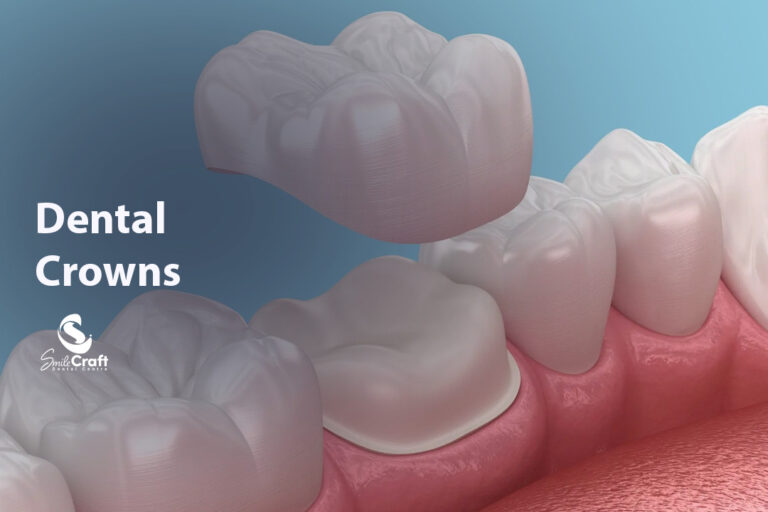
Yes, you can get Invisalign with crowns in most cases, and the crown itself is rarely the deciding factor. A crown is cemented onto the natural tooth, and orthodontic movement happens at the root, where the periodontal ligament and the surrounding bone remodel under steady, light pressure. As long as the root, the bone and the crown’s seal are healthy, a crowned tooth moves much like its neighbors.
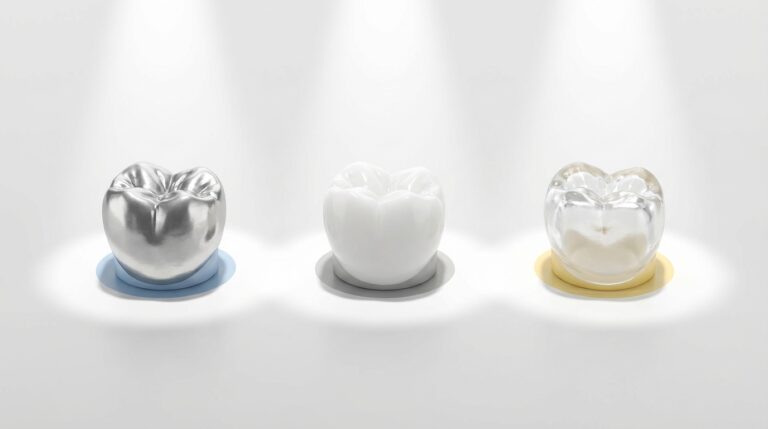
The question comes up because a crown looks like a separate object sitting on the tooth. During alignment it behaves as part of the tooth. Porcelain, zirconia, lithium disilicate (often known by the E.max name) and metal-ceramic crowns all pass the aligner’s force down to the root in the same way enamel does. The crown material matters more for attachments and finishing than for the movement itself.
Crowns and other restorations tend to change the plan rather than rule it out. The table gives a quick overview before the details.
| Restoration | Can it move with aligners? | What the plan has to account for |
|---|---|---|
| Single crown on a natural tooth | Yes, together with the root | Attachment bonding and the health of the tooth under the crown |
| Crown on a root-canal-treated tooth | Yes, if the root filling and bone are healthy | A recent X-ray of the root tip |
| Fixed bridge | Only as one rigid unit | Whether the supporting teeth need to move in different directions |
| Implant crown | No | Acts as a fixed point while the other teeth move around it |
| Porcelain veneer | Yes, together with the tooth | Veneer shape may suit the old position rather than the new one |
| Temporary crown | Yes, together with the root | Softer cement may let it come off with the aligner |
How do aligners move a tooth that has a crown?
Aligners move a crowned tooth exactly as they move a natural one, because the crown is fixed to the tooth and goes wherever the root goes. Each tray is shaped slightly differently from the current tooth position, and its light, constant pressure passes through the crown to the root. Bone gives way on the pressure side and rebuilds on the other, so the tooth shifts gradually, typically up to about 0.25 mm per aligner stage.
Each set of aligners is usually worn for one to two weeks, for about 20 to 22 hours a day, and the software maps every step in advance. A digital plan is useful when crowns are involved. Your dentist can mark which teeth carry restorations, limit how much movement is assigned to a heavily restored tooth and spread the force across several teeth instead of loading one.
The crown material does not resist movement. Zirconia is harder than enamel, but hardness affects wear and bonding, not the way the root responds. What matters at this stage is the cement seal. If cement has washed out under an old crown, clipping the aligner in and out several times a day can work it loose, which is one reason crowns are checked before treatment rather than during it.

Can Invisalign attachments be bonded to crowns?
Attachments can be bonded to crowns, but they hold less reliably than on natural enamel. Glazed porcelain and zirconia do not etch the way enamel does, so the surface is first prepared with light roughening or gentle air abrasion and a primer matched to the material. After that, the small composite shape is added, and the occasional attachment may need rebonding.
Attachments are small tooth-colored bumps that give the aligner something to push against. Rotations, extrusions and root movements depend on them. On a crowned tooth, your dentist has two options: prepare the crown surface carefully and bond the attachment there, or place attachments on the neighboring natural teeth and plan the movement so the crowned tooth needs less grip.
| Crown material | How the surface is usually prepared | What to expect |
|---|---|---|
| Lithium disilicate or feldspathic porcelain | Etching or light roughening, then a silane primer | Bonds fairly well, with occasional rebonding |
| Zirconia | Gentle air abrasion, then a primer made for zirconia | Harder to bond, so attachments come off more often |
| Porcelain fused to metal | Ceramic surface treated like porcelain | Care is taken not to expose the metal layer |
| Full metal or gold | Air abrasion and a metal primer | Least predictable, so attachments often go on other teeth |
| Temporary crown | Composite bonds readily to the acrylic surface | The crown itself may come off with the aligner |
When treatment ends, attachments are removed with a fine finishing bur and the area is polished. On ceramic, the original factory glaze cannot be fully recreated in the mouth, so careful polishing matters and a slight loss of shine on a small spot is possible. If you have zirconia crowns and want to know more about the material itself, our article on whether you could be allergic to a zirconia crown looks at it in more detail.
What is checked under a crown before aligner treatment?
Before aligners start, every crowned tooth needs a recent X-ray and a clinical check of the crown margin. Your dentist looks for decay at the edge of the crown, infection at the root tip, the quality of any root canal filling, the bone level around the root and the root length. A tooth with a hidden problem is treated first, not moved.
A crown can look perfect from the outside while decay spreads under its edge. Moving that tooth does not cause the decay, but it adds stress to a tooth that is already weakened, and a repair halfway through means pausing the aligners and rescanning. Periapical X-rays give a close view of individual crowned teeth, a panoramic X-ray shows the whole mouth, and a cone beam CT scan (a 3D X-ray) is sometimes added when root shape or bone thickness is unclear.
The crown-to-root ratio also matters. A long crown on a short root, or a tooth that has lost bone through gum disease, needs gentler movement and closer follow-up. Active gum disease is treated and stabilized before any orthodontic force is applied, whether the tooth is crowned or not. Depending on what the check finds, the outcome usually falls into one of four groups:
- Sound crown and healthy tooth: treatment goes ahead as planned
- Open margin, recurrent decay or a poor fit: the crown is replaced first
- Failing root canal filling: retreatment, then a healing period before movement
- Tooth that cannot be kept: extraction, with the space managed inside the aligner plan
Is Invisalign with crowns on front teeth any different?
Invisalign with crowns on front teeth follows the same biology, but appearance plays a bigger part. Front crowns are often shaped to hide crowding or a twisted tooth, so once the teeth are straight, a crown may look too wide, too narrow or slightly angled. For that reason, a front crown is often replaced after alignment rather than before.
Attachments on front crowns are tooth-colored and fairly discreet, but they are visible up close, and on a glossy ceramic surface they can reflect light a little differently. Your dentist may choose smaller or fewer attachments on the front crowns and rely more on the natural teeth beside them.
Creating space is another point. Aligner plans often use interproximal reduction (IPR), where a fraction of a millimeter is polished from between teeth to make room. On a crown, the same polishing can thin the ceramic or expose the core material at the edge, so IPR is usually planned on natural teeth where possible. If a front crown has to be reshaped, the work makes more sense once the final position is known.
Shade is the third consideration. Whitening gels lighten natural enamel but do not change the color of a crown. If you want whiter teeth as well as straighter ones, the usual order is aligners, then whitening, then a new front crown matched to the whitened shade.
Can you have Invisalign with bridges?
Invisalign with bridges is possible, with one firm limit: a fixed bridge joins two or more teeth into one rigid unit, so those teeth can only move together. If the plan needs the supporting teeth to move as a block in the same direction, aligners can work around it. If they need to move independently, the bridge has to be changed.
A traditional bridge has a crown on each supporting tooth (the abutments) and a false tooth (the pontic) between them. The aligner fits over the whole unit, and the pontic can even help it grip. Problems start when the plan asks one abutment to rotate or tip while the other stays put. A rigid bridge cannot do that, and forcing it would strain the cement and the supporting roots.
There are three common ways to handle a bridge. Your dentist may plan the movement around it and accept a small compromise in that area. The bridge may be sectioned, meaning cut between units, with temporary crowns on the abutments during treatment and a new bridge or individual restorations made afterward. Or, when the bridge is already due for replacement, it may be removed before aligners start and the missing-tooth space handled in the plan.
Resin-bonded bridges, sometimes called Maryland bridges, use thin metal or ceramic wings glued to the back of the neighboring teeth. The wings can debond when aligners are clipped in and out, so they are checked closely and a different temporary solution may be suggested for the treatment period.
How does Invisalign with crowns and implants work?
Invisalign with crowns and implants works by moving the natural and crowned teeth while the implants stay exactly where they are. An implant is fused directly to the jawbone and has no periodontal ligament, so aligner pressure cannot move it at all. The plan treats each implant as a fixed point and positions the other teeth around it.
A fixed point can be useful. An implant can act as anchorage, giving the aligner a stable surface to push against while neighboring teeth move. The downside is that an implant in a slightly wrong position stays where it is. Aligners can improve the teeth around it, but correcting the implant itself would mean a new crown or abutment on the same implant, or in rare cases removing and replacing the implant.
Timing matters when both treatments are still ahead of you. The general approach is to finish aligner treatment first and then place the implant in a space that has been opened or held in the right place. While you wait, a tooth-colored pontic can be built into the aligner to fill the gap visually. If an extraction is planned as well, the tooth extraction and implant timeline sets out the stages between removing the tooth and fitting the final implant crown.
An existing implant crown also needs a check before treatment. A crown that has started to rotate or feel loose on its screw should be fixed first, since the aligners will press against it many times a day. Our guide to the symptoms of a loose dental implant crown lists the warning signs worth knowing.
Can you combine Invisalign with crowns and veneers?
Invisalign with crowns and veneers can be combined, because a well-bonded porcelain veneer moves with the tooth just as a crown does. Aligner forces are light, and veneers bonded with current adhesive techniques rarely come off from tooth movement alone. Attachments can sit on veneers using the same surface preparation that is used for porcelain crowns.
The bigger question is how the veneers will look afterward. Veneers are designed for the tooth positions they were made on, and some were shaped to disguise crowding. Once the teeth are aligned, edges that used to line up may sit at a different height or angle. Sometimes the veneers still look right in the new position. In other cases, a few are replaced so their shape suits the new arch.
If you have not had veneers yet and are considering both treatments, aligning first often means less enamel has to be prepared later, because the veneers no longer need to hide crooked teeth. Our page on laminate teeth veneers covers the veneer procedure itself, and it is worth reading how long dental veneers really last before deciding whether to keep older ones through aligner treatment.
Should new crowns be made before or after aligner treatment?
New crowns are usually made after aligner treatment, once the teeth are in their final position, unless an existing crown is failing. A leaking, decayed or broken crown is dealt with before aligners start, while purely cosmetic crown changes wait until the movement is finished and the bite has had time to settle.
| Situation | Usual order | Reason |
|---|---|---|
| Crown with decay, an open margin or infection under it | Treat or replace before aligners | A compromised tooth should not be moved |
| Sound crown you would like to change for appearance | Keep it during aligners, replace it afterward | The new crown is shaped to the final position |
| Missing tooth planned for an implant | Aligners first, implant afterward | An implant cannot be repositioned later |
| Bridge that blocks a needed movement | Section it before, new restoration afterward | The supporting teeth can then move independently |
| Veneers planned but not yet placed | Aligners first, veneers afterward | Less tooth preparation is often needed |
| Whitening planned along with a new crown | Aligners, then whitening, then the crown | Crowns do not change shade with whitening |
Final crowns are normally made once retainers are in place and the teeth have had a short settling period. Your dentist and the person planning the aligners agree on that timing together, so the new crown is shaped for a stable position rather than one that is still shifting.
What happens at the consultation and during treatment?
A consultation for Invisalign with crowns combines an orthodontic assessment with a restorative one, so the same visit covers tooth movement and the condition of each restoration. Expect a full clinical exam, X-rays of every crowned tooth, a 3D intraoral scan and questions about when and why each crown was placed. The digital simulation built from the scan shows how each tooth, crowned or natural, is planned to move.
Your dental history helps here. Knowing that a crown is twenty years old, sits on a root-canal-treated tooth or has come off before changes how attachments and force are planned for that tooth. If you have previous X-rays, treatment notes or the name of the crown material, bring them along.
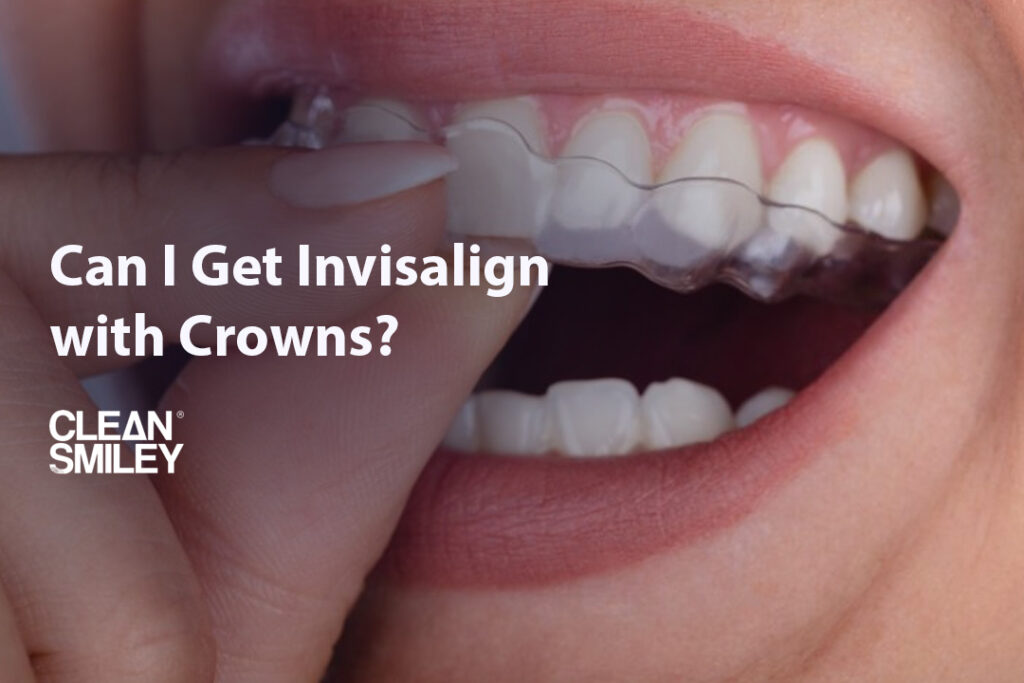
Once the plan is approved, attachments are bonded, any IPR is carried out and the first aligners are fitted. Follow-up visits check that the trays seat fully over the crowns, that the attachments are intact and that the teeth are tracking the plan. Aligner treatment runs over months, so if you are traveling to Antalya for it, agree on the visit schedule and how progress will be checked between trips before treatment starts. At Clean Smiley Turkey, recent X-rays can be reviewed before you travel, which helps flag a crown that needs attention early.
After the last aligner, retainers hold the result. Teeth tend to drift back toward their old positions, and teeth with a long crown on a short root or reduced bone support may need closer monitoring. Removable clear retainers fit over crowns without any change. A bonded wire retainer behind the front teeth can be attached to crowns too, though bonding to ceramic is less predictable than to enamel, so a removable option may be suggested instead.
Frequently Asked Questions
Can Invisalign loosen a crown?
Aligners can loosen a crown whose cement seal has already weakened, because the trays are clipped in and out several times a day. A crown with a sound seal rarely comes loose from aligner wear. Checking older crowns before treatment, and recementing or replacing any that rock or leak, keeps the risk low. Contact your dentist if a crown moves, feels high or leaves a bad taste at its edge.
Do old crowns have to be replaced before starting aligners?
No, age alone is not a reason to replace a crown. A crown that fits well, has a sealed margin and sits on a healthy tooth can stay in place throughout treatment. Replacement before aligners is usually advised only when there is decay, an open margin, a crack or a root problem. Crowns you want to change for appearance are normally replaced after alignment.
What if I need a new crown in the middle of treatment?
A crown that breaks or comes off mid-treatment can be handled without starting over. A temporary crown is usually shaped to fit the current aligner, and the permanent crown is made later. If the new crown changes the shape of the tooth, a fresh scan may be needed so the remaining aligners still seat properly. Elective crown work is better planned for before or after the aligner series.
What happens if an attachment comes off a crown?
An attachment coming off a crown is a minor issue and happens more often on ceramic than on enamel. Keep wearing your aligners and let your dentist know, since the tray may grip that tooth less firmly until the attachment is replaced. It is rebonded at the next visit, sometimes with a different surface preparation, and the plan allows for this from the start.
Can a tooth with a root canal and a crown be moved with aligners?
Yes, a root-canal-treated tooth with a crown can usually be moved with aligners. Research on orthodontic movement of root-filled teeth suggests they respond in a similar way to teeth with a living nerve, as long as the root filling is sound and there is no infection at the root tip. A recent X-ray confirms this before treatment begins.
Does having crowns make aligner treatment take longer?
Crowns on their own rarely add much time. Treatment length depends mainly on how far the teeth need to move. Extra time can come from steps around the restorations, such as treating a problem under a crown first, rebonding attachments or sectioning a bridge. Adult aligner treatment commonly runs from several months to around two years, and your own plan gives a personal estimate.
Can aligners fix a crown that looks crooked?
It depends on why the crown looks crooked. If the tooth underneath is rotated or tipped, aligners can move it and the crown straightens with it. If the crown itself was made at an angle to hide crowding, moving the tooth will not correct its shape, and a new crown is usually made once the teeth reach their final position. The 3D scan shows which situation applies.
Crowns, bridges, veneers and implants all change the details of an aligner plan, but in most mouths they do not close the door on straighter teeth. At Clean Smiley Turkey in Antalya, we start with X-rays and a scan of every restoration, so you know before treatment which crowns can stay, which need attention and how implants or bridges will shape the result. See a dentist promptly if a crown feels loose, the gum around it swells or bleeds, you notice a bad taste at its edge, or an aligner suddenly stops seating over a crowned tooth.
This article is for general information and does not replace a dental examination or personal medical advice.
Related Articles