The most common shade conversation we have in our chair at Clean Smiley Turkey goes like this. The patient shows us a Pinterest photo of teeth they love. We pull out the VITA Classical shade guide. They scan through the strips, settle on one in the white range, and ask the same question every time: “Is A1 the right choice, or should I go whiter?” This piece is built around that question — and around what real patients tell us in the months after they chose A1 for veneers, crowns or whitening.
If you are weighing tooth shade options for veneers, crowns, or even teeth whitening, the goal of this article is to give you a clinic-honest view of what A1 actually looks like in real mouths, what patients say after they live with it, and where it sits next to the brighter shades.
What A1 tooth shade actually is
A1 is the lightest shade in the A group of the VITA Classical shade system. The VITA Classical scale is the most widely used colour reference in dentistry worldwide, with shades grouped by hue family — A (red-brown), B (red-yellow), C (grey), D (red-grey) — and lightness rated within each group.
Within this scale, A1 carries a subtle warm undertone, slightly yellowish-beige rather than a stark cool white. It sits at the brighter end of the natural tooth range. The cooler, brighter equivalents — B1 in the same VITA Classical system, or BL1 / OM1 in the bleached-shade extensions — go progressively whiter and progressively further from any naturally occurring tooth colour.
Practically: A1 is “the lightest natural white.” B1 is “the brightest natural white.” Anything beyond B1 is a bleached shade designed for cosmetic dentistry rather than to mimic a natural tooth.
What patients say about choosing A1
Three motivations come up over and over when patients select A1.
“I want bright but not fake.” This is the dominant motivation. The patient wants a noticeable improvement on their starting shade — often A3 or A3.5 — but is not chasing a Hollywood-bright result. A1 lifts the smile clearly without crossing into the bleached-look territory. The aesthetic outcome is professional and natural.
“I want it to match the rest of my face.” Patients in their thirties, forties and beyond often tell us they tried imagining themselves with BL1 or OM1 shades and concluded the contrast against their skin tone and facial features would look out of place. A1 matches what their face suggests a healthy smile would look like.
“I want it to age gracefully.” Bleached shades start to look more obvious as the surrounding face ages. A1’s warm undertone reads as natural for longer. Patients who plan veneers in their forties often choose A1 with this longer time horizon in mind.
What A1 looks like in real mouths — the patterns we see
Sitting on the shade guide, A1 looks slightly warm and clearly bright. In a real mouth, the same shade can read three different ways depending on context.
- In someone whose starting shade was A3 or A3.5, A1 reads as a significant lift. The smile looks fresh, clean and clearly improved. Friends and family notice without being able to say exactly what changed.
- In someone whose starting shade was already A2 or B2, A1 is a more subtle improvement — half a step rather than a full step. Some patients in this category later wish they had gone to B1 or BL3 for a more visible difference.
- In someone with a darker skin tone, A1 reads brighter than the same shade in lighter skin tones because of the contrast effect. This is one reason the shade decision is always done with the shade guide held against the patient’s face, not just against the existing teeth.
A1 versus B1: the most common decision patients face
The two shades that come up most often in our consultations are A1 and B1. They are both at the white end of the VITA Classical scale, but the experience of living with each is different.
B1 is a brighter, slightly cooler version of the same lightness band. It looks slightly more “white” in photographs and under cool light. It pairs well with skin tones that lean cool. Some patients describe it as the “barely visible warmth” version of a white shade.
A1 is warmer and reads as marginally more natural in most mouths. Under warm light — incandescent bulbs, candlelight, sunset photography — A1 looks slightly more inviting. Under cool light or harsh camera flash, B1 looks slightly brighter while A1 still reads as light.
The honest answer when patients ask which to pick: try both shades against your own teeth with the dentist holding a mirror, in two different lighting conditions, before deciding. The shade that looks right in both lighting settings is the one to choose.
A1 in different treatment contexts
A1 for porcelain veneers
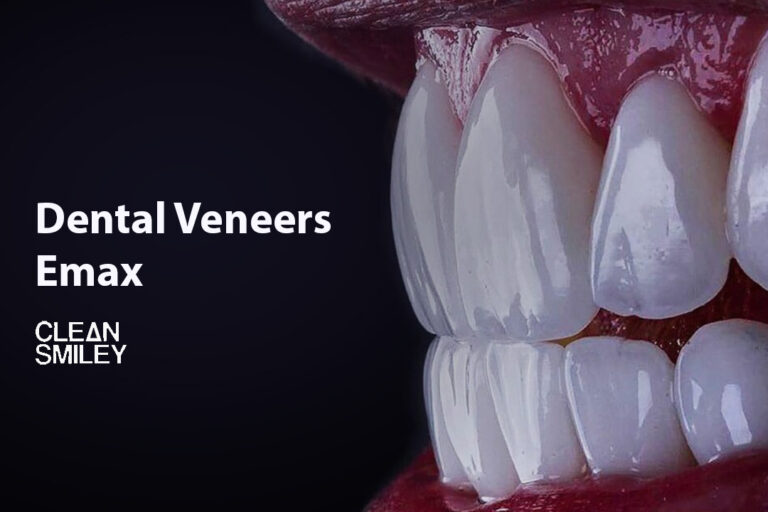
For laminate or e-max veneers, A1 is one of the most-requested shades. It gives a noticeable lift to the smile without producing the heavily bleached look that is increasingly read as “veneer-obvious” in social media. Most patients who chose A1 veneers tell us at the one-year follow-up that they are happy they did not push for BL shades.
A1 for zirconium crowns
For zirconium crowns, especially in single-tooth replacements next to natural teeth, A1 has to be discussed in relation to the surrounding teeth. A bright A1 crown next to an A3 natural tooth will not look natural — it will look like a bright crown next to a natural tooth. In single-crown cases the more common discussion is whether to match the existing teeth (better blending) or to plan a wider smile makeover with veneers to bring everything up to A1 together.
A1 as a teeth-whitening goal
For in-office or at-home teeth whitening, A1 is often the realistic ceiling for natural teeth without going into bleached-shade extensions. Some patients reach a true A1 with one or two whitening cycles. Others stop at A2 or B2 because their tooth structure does not lift further with peroxide-based whitening alone. Patients whose natural maximum is A2 or B2 and who still want A1-or-brighter usually consider veneers or composite bonding.
A1 for Hollywood Smile makeovers
In full Hollywood Smile makeovers — 8 to 20 veneers across the upper and lower arches — A1 is the upper-natural choice. Patients who go for BL1 or OM1 are choosing the bleached-cosmetic look. The decision should be made looking at the patient’s face shape, age, lip line, and lifestyle, not from a shade strip alone.
What patients tell us a year after choosing A1
The most consistent feedback at the 6-month and 12-month follow-up is some version of “I still like it.” Patients describe the smile as bright but not obvious. Friends comment on it without immediately saying “veneers.” Photographs look natural under most lighting.
A smaller group expresses retrospective regret — about 5-10% of our A1 veneer patients at one year. The regret falls into two patterns. Either the patient wishes they had gone slightly brighter (usually to B1) for a more visible change, or the patient wishes they had gone slightly warmer (A2) to match better with the rest of their face. In both cases the lesson is the same: more time in the chair with the shade guide before the impressions are taken would have helped.
The patients who are most settled with A1 long-term tend to be the ones who tried multiple shade options against their face in different lighting before deciding. The shade tab on its own is not enough — the trial process matters.
When patients say A1 was the wrong choice
Two scenarios produce more retrospective regret with A1 than others.
The first is a patient with darker natural teeth (A3.5 or A4) choosing A1 in a small number of front veneers without addressing the rest of the smile. The bright A1 veneers stand out against the surrounding natural teeth, especially in photographs. The fix in these cases is usually to extend the veneer plan to include more teeth, or to combine with whitening of the adjacent natural teeth.
The second is a patient with a lifestyle that includes regular smoking, daily red wine or strong coffee. Veneer porcelain itself does not stain in the same way as natural enamel, but the natural teeth around the veneers do. Over two to three years the gap between A1 veneers and slowly darkening natural teeth becomes more obvious.
Practical tips for choosing your shade
- Look at the shade tab in two lighting conditions — natural daylight near a window and a normal indoor warm bulb. The shade that looks right in both is the safer choice.
- Hold the shade against your face, not only against your teeth. Skin tone, eye colour and hair colour all affect how a tooth shade reads.
- Take a photo of yourself with the shade tab in your mouth. Photos reveal a different version of the colour than the bathroom mirror.
- Ask to see existing patient cases at that shade. Anonymised before-and-after images at the same shade do not predict your case exactly, but they show what the shade tends to look like in real mouths.
- Consider longevity. A shade you like at 32 may not be the shade you want at 52. A1’s warmer undertone ages more gracefully than the bleached extensions.
- Sleep on it. A shade decision that holds up overnight is more reliable than one made under the chair-side lighting in a single visit.
Frequently asked questions about A1 tooth shade
What is A1 tooth shade?
A1 is the lightest shade in the A group of the VITA Classical shade system — the most widely used dental colour reference. It has a subtle warm undertone and is considered the “lightest natural white” among the standard shade options, sitting between brighter shades like B1 and the noticeably bleached BL/OM extensions.
Is A1 the whitest natural tooth shade?
Within the VITA Classical scale, A1 is among the lightest natural shades. B1 is technically the brightest natural shade and reads slightly cooler. Anything brighter — BL1, BL2, BL3, OM1 — is a bleached cosmetic shade rather than a naturally occurring tooth colour.
Is A1 too white for veneers?
For most patients no. A1 is generally read as a noticeable, professional brightening rather than a bleached look. The “too white” line is usually crossed at BL2 or OM1, not at A1. The exception is a patient with darker natural teeth choosing A1 only on a few front veneers — the contrast can read as obvious.
Should I choose A1 or B1 for porcelain veneers?
A1 has a warmer undertone and reads as marginally more natural in most mouths. B1 is brighter, cooler and slightly more “white” in photographs. The reliable way to decide is trying both against your own teeth in two different lighting conditions, with the dentist holding a mirror, and choosing the shade that looks right in both.
Can teeth whitening alone reach A1?
Sometimes yes, sometimes no. The natural maximum lightness of an individual tooth depends on dentin colour and enamel thickness. Some patients reach a true A1 with one or two whitening cycles. Others stop at A2 or B2. Patients whose natural ceiling is A2 or darker and still want A1 usually consider veneers or composite bonding.
Will A1 still look right in five or ten years?
A1’s warmer undertone ages more gracefully against changes in skin, hair and overall face than the bleached cosmetic shades. Veneer porcelain itself does not darken — but the natural teeth around veneers can, so consistent dental hygiene and avoiding heavy staining habits help keep the shade match stable over years.
How we approach shade choice in our clinic
Our standard approach treats shade as a planning decision, not a chair-side guess. We trial multiple shades against your face in different lighting. We take a photo with the shade tab in the mouth. We sleep on it when the case allows and confirm the decision in writing before the technician cuts a single veneer. For full smile makeovers, the shade plan covers not just the upper front teeth but the visible lower teeth, the canines, and the overall harmony with face shape and skin tone.
If you are weighing A1 against another shade for veneers, crowns, or a Hollywood Smile plan, the most useful next step is bringing a few reference photos of smiles you like to a consultation. We will hold them against your face, hold the matching shade tabs against your teeth, and walk you through the realistic options. You can reach us through the contact form or WhatsApp to start the conversation.