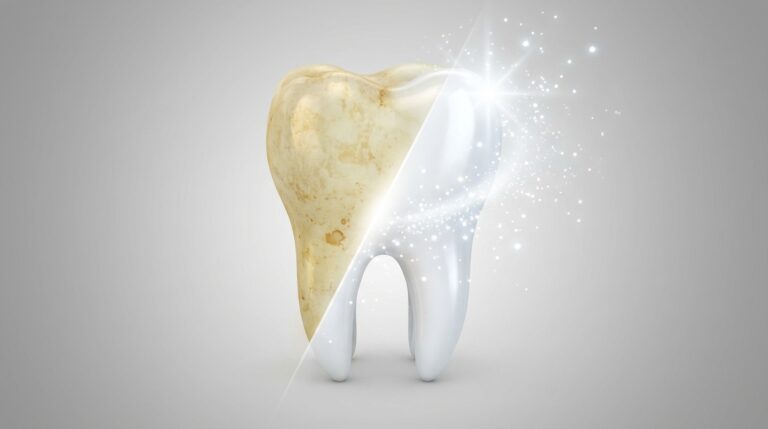
“Bone-coloured yellow teeth” is one of those descriptions patients land on when their teeth look duller and yellower than they want, but not in the classic brown-stained way. The shade reads as creamy off-white with subtle yellow undertones — closer to bone than to bright enamel. The question that always follows: can these teeth be whitened, and what actually works on this type of yellowing?
This piece is built around that question. Bone-coloured yellow teeth have specific causes, and not all whitening methods are equally effective on them. What works for surface coffee stains is different from what works for deep dentine-driven yellowing. The patients in our chair at Clean Smiley Turkey ask about this often, and the realistic answers depend on what is actually making the teeth that colour in the first place.
What “bone-coloured yellow” actually means
When patients describe their teeth as bone-coloured yellow, they usually mean one of three things:
- Naturally darker dentine showing through thinning enamel. Dentine — the layer of tooth under the enamel — is naturally yellower than enamel. As enamel thins with age, the dentine shows through and the tooth reads warmer and yellower.
- Inherited tooth shade with strong A-group undertones. Some people genetically have teeth that sit in the A3 or A3.5 range — warm, yellow-beige, healthy but not bright. This is a starting shade, not a sign of damage.
- A combination of subtle staining from food, drink and habit, layered on top of a darker natural shade. Coffee, tea, red wine, smoking and curry-based foods slowly deepen the warm undertones over years.
The treatment route depends on which of these is the dominant cause. For more on what “bone color” means in dentistry, our piece on bone color in dentistry covers the wider context.
Why bone-coloured yellow is harder to whiten than brown staining
Most over-the-counter whitening products are designed to tackle surface staining — the brown and tan layers on top of the enamel that come from coffee, tea, smoking and similar daily exposures. These respond well to mild bleaching agents because the stain itself is shallow and reactive.
Bone-coloured yellow is different. The yellow tone usually comes from the dentine layer underneath the enamel, or from a genuine intrinsic shade of the tooth. Surface bleaching cannot reach this deeper layer effectively. This is why patients who used drugstore whitening strips for weeks often report a small lift but not the dramatic change they wanted.
The honest summary: brown stains lift with mild whitening. Bone-coloured yellow needs stronger methods, multiple sessions, or a different approach entirely.
What actually works on bone-coloured yellow teeth
Based on what we see in our follow-ups, the realistic methods fall into four tiers — from least invasive to most invasive.
Tier 1: Professional in-office whitening
An in-clinic whitening session uses a stronger peroxide-based gel than at-home products, often activated by a controlled light source. For bone-coloured yellow teeth, this is the first method that usually produces a visible change. A single session can lift the shade by 2-4 levels on the VITA Classical scale. For deeper yellowing, two or three sessions spaced over weeks are common.
Patient feedback on this tier focuses on three points: the result is immediate, sensitivity is temporary (24-72 hours), and the change is real but not unlimited — there is a ceiling determined by the natural tooth structure.
Tier 2: Combination treatment (in-office + at-home)
The most effective realistic approach for bone-coloured yellow teeth in many patients. An in-office session lifts the visible shade quickly, then custom-made take-home trays with a milder professional gel maintain and deepen the result over 2-3 weeks of nightly wear. This combination reaches more of the dentine effect than either method alone.
Patients tell us at the 3-month follow-up that this method produced the best long-term satisfaction for naturally yellow teeth. The result is gradual enough to look natural and significant enough to be visibly worth the time.
Tier 3: Internal whitening (for individual darkened teeth)
For single teeth that have darkened after trauma or root canal treatment — the classic “this one tooth is yellower than the others” situation — internal whitening through the back of the tooth is the targeted option. It works because the bleaching agent reaches the dentine layer directly from inside.
Patients with one bone-coloured yellow tooth among otherwise normal teeth often have this option discussed first because external whitening alone rarely fixes a single dark tooth.
Tier 4: Veneers or composite bonding
For teeth that do not respond enough to whitening — usually because of strong intrinsic shade, tetracycline staining, fluorosis, or simply a starting shade that whitening cannot reach — porcelain veneers or composite bonding cover the visible surface with a chosen shade. This is the most predictable way to achieve a specific shade target like A1 or B1 on teeth that started in the A3.5 or darker range.
Veneers are the most permanent option. Composite bonding is reversible and lower-cost but needs replacement more often. Our piece on A1 tooth shade reviews covers the appearance considerations of choosing a specific shade target.
What patients say about each method’s real-world results
At our follow-up visits, patients consistently rank the methods in a specific order based on impact-vs-effort for bone-coloured yellow teeth.
At-home strips and gels alone. Mild improvement on surface staining, minimal change on the underlying yellow. Most patients tell us this method is useful for maintenance, not for changing a baseline shade.
In-office whitening alone. Visible, sometimes dramatic improvement in a single session. Some patients describe the result as “the change I had been wanting for years.” Others describe it as a good lift but short of the brightness they pictured. The variation depends on starting shade.
Combination in-office + at-home. The method most patients describe as “worth the time investment.” Results at week 4-6 are usually significantly better than in-office alone.
Internal whitening for a single dark tooth. When the issue is one tooth, this is the method that addresses it. Whole-mouth whitening cannot fix a single internally darkened tooth.
Veneers. The method that produces the most certain shade target. Patients describe veneers as “the only method that got me where I wanted.” This certainty comes at the cost of being a permanent change to the underlying tooth structure.
What sensitivity to expect during whitening
Whitening sensitivity is the topic patients ask about most often in advance. The realistic picture from our follow-ups:
- About 60-70% of patients experience some sensitivity — usually cold sensitivity for 24-72 hours after a session.
- Sensitivity is usually mild to moderate — uncomfortable rather than severe, manageable with over-the-counter pain relief if needed.
- Sensitivity peaks the night of the session and the morning after. By 48-72 hours it has usually subsided.
- Sensitivity toothpaste used for a week before and after reduces the reaction noticeably. Most clinics recommend starting this protocol in the run-up to whitening.
- Patients with naturally sensitive teeth sometimes prefer the combination approach with milder at-home gel to spread the load over weeks rather than concentrating it in single sessions.
What does not work on bone-coloured yellow teeth
Honest feedback also covers the methods patients tried before arriving in our chair, which did not produce the result they wanted.
Charcoal toothpaste. Most patients report no meaningful shade change. The abrasive nature can wear enamel over time, which arguably makes the yellowing worse by exposing more dentine.
Baking soda and lemon juice DIY mixes. Mild surface effect at best, with the same enamel-wear risk. The acidity from lemon is particularly hard on enamel.
Oil pulling. Useful as part of an oral hygiene routine for some, but no meaningful effect on intrinsic tooth shade.
UV light at-home devices without professional gel. The blue LEDs in cheap at-home devices do not contribute much to whitening. The real action is in the gel concentration, which over-the-counter formulations cap below professional levels.
Maintaining a whitened shade long-term
After reaching the target shade, real-user feedback on maintenance falls into a consistent pattern. The methods that keep the shade stable over years:
- Daily good oral hygiene — brushing twice, flossing, and avoiding letting staining drinks sit on the teeth.
- Touch-up at-home trays a few times a year. Custom trays from the original whitening case can be reused with a milder gel for a few nights every 6-12 months to maintain.
- Professional cleaning every 6 months. Removes the surface staining layer before it accumulates.
- Lifestyle awareness. Drinking coffee through a straw, rinsing after red wine, and not smoking all slow re-staining.
The patients who report stable shade at year 1 and year 2 are the ones who built one or two of these habits. The patients who returned to heavy coffee and red wine without touch-ups described the shade drifting back toward the original baseline within 18-24 months.
What international patients in Antalya tell us about whitening yellow teeth
For international patients, whitening fits into a trip in two main ways. The first is as a stand-alone treatment — a short stay of 3-5 days for one or two in-office sessions and the option to take custom trays home. The second is as a step inside a wider plan — whitening at the start of the trip so subsequent veneers or implant crowns can be matched to the lighter shade.
The reviews from this group focus on three points. Trip length matters — too short and there is no time for the post-session sensitivity to settle before flying. Combination treatment works particularly well for international patients because the at-home trays continue the work after they return. And the result of whitening alone is often “enough” — many patients arrive thinking they need veneers and leave with whitening only, because the underlying tooth structure responded better than they expected.
Frequently asked questions about whitening bone-coloured yellow teeth
Why are my teeth bone-coloured yellow rather than white?
The most common causes are dentine — the layer under enamel — showing through thinning enamel, an inherited shade that sits in the A3/A3.5 warm range, or a combination of these with subtle staining from coffee, tea, red wine and smoking over the years.
Can professional whitening lift bone-coloured yellow teeth?
Yes — a single in-office session can lift the shade by 2-4 levels on the VITA Classical scale. For deeper yellowing, two or three sessions, or a combination of in-office with at-home tray top-ups, produces the best long-term result.
Do at-home strips work on bone-coloured yellow teeth?
Mildly. Over-the-counter strips lift surface staining well but do not reach the deeper dentine layer that produces the bone-coloured tone. Most patients who used them alone reported a small improvement and a desire for stronger methods.
When are veneers a better option than whitening for yellow teeth?
When the teeth do not respond enough to professional whitening — usually because of strong intrinsic shade, tetracycline staining, fluorosis, or a baseline darker than the whitening method can reach. Veneers cover the surface with a chosen shade like A1 or B1 and produce the most predictable shade target.
How long does whitening last on bone-coloured yellow teeth?
Most patients maintain the new shade for 1-3 years with good hygiene, occasional at-home touch-ups, and reduced staining habits. Heavy coffee, red wine and smoking shorten the durability. Custom take-home trays from the original whitening case make maintenance straightforward.
Is one dark yellow tooth among normal-coloured teeth treatable?
Yes — usually with internal whitening through the back of the tooth, which addresses the dentine darkening that external whitening alone cannot reach. This is the standard option for teeth that darkened after trauma or root canal treatment. The treatment plan is decided after imaging and clinical examination.
How we plan whitening for bone-coloured yellow teeth in our clinic
Our approach starts with diagnosis of the cause — not every yellow tooth has the same source. We assess for enamel thickness, dentine showthrough, surface staining, intrinsic shade, and any individual dark teeth. The treatment plan recommends the method that fits the cause, the realistic shade target, and the trip length for international patients. After whitening, we provide custom take-home trays for maintenance and a written plan for the next 12-24 months.
For more on the full range of whitening options available, our overview of teeth whitening in Antalya covers methods, sensitivity management and longer-term outcomes. If you are considering whitening for bone-coloured yellow teeth and want a second opinion on what will actually work for your case, you can reach us through the contact form or WhatsApp.