Last updated: October 19, 2026
White spots on teeth after whitening are usually chalky patches caused by temporary dehydration of the enamel, and most fade within a few hours to about three days as saliva rehydrates the tooth. Spots that are still clearly visible after one to two weeks were usually present before whitening and have simply become easier to see.
White spots on teeth after whitening can also point to fluorosis, early decay, marks left by braces or uneven gel contact from strips, and each of these behaves differently. At Clean Smiley Turkey in Antalya, the enamel is checked for existing spots before any whitening, because knowing what was there beforehand makes it much easier to judge what appears afterwards.
Are white spots after whitening normal?
White spots after whitening are common and, in most cases, a normal short-term reaction rather than a sign of damage. The whitening gel draws water out of the enamel for a while, and areas that dry out faster turn chalky and opaque. Once saliva rehydrates the enamel, these patches usually blend back into the rest of the tooth.
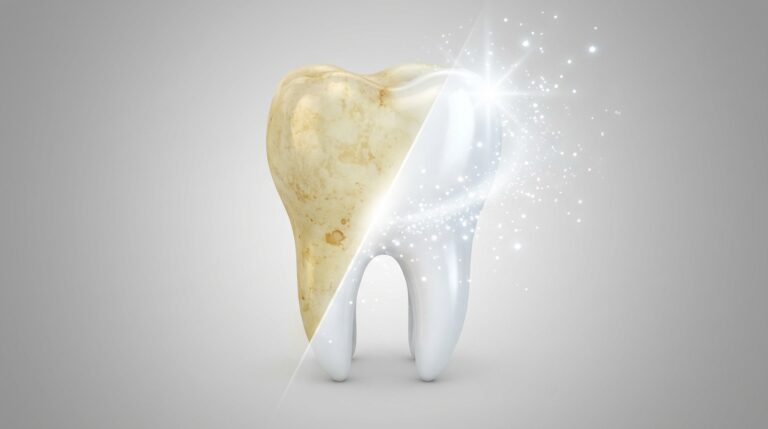
Whitening gels are based on hydrogen peroxide or carbamide peroxide, which breaks down into hydrogen peroxide in the mouth. The peroxide travels through the tiny pores of the enamel and breaks apart the stain molecules sitting inside the tooth. Along the way, it also pulls out some of the water that normally fills those pores. Hydrated enamel is slightly translucent, but dry enamel scatters light and looks whiter and flatter, a bit like a wet pebble that pales as it dries in the sun.
Not every white spot belongs in the harmless category, though. Some spots were there before the whitening and only became obvious once the surrounding tooth got lighter. Others are early signs of mineral loss that need attention. How long a spot takes to fade, where it sits on the tooth and whether it looks the same on both sides of the mouth are the most useful clues for telling them apart.
Why do white spots appear on teeth after whitening?
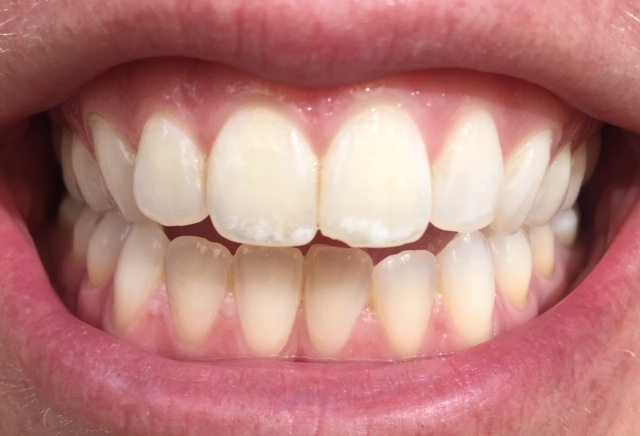
White spots appear on teeth after whitening for four main reasons: temporary dehydration of the enamel, weaker areas of enamel that were already there, fluorosis from childhood, and uneven contact between the gel and the tooth surface. Dehydration is by far the most frequent cause, and it is the only one that reliably disappears without any treatment.
Temporary dehydration of the enamel
During a whitening session the teeth are exposed to peroxide and, in an in-office treatment, also kept dry with a cheek retractor and suction for a long stretch. Enamel loses water unevenly. Parts that are naturally more porous, such as the thin biting edges and small developmental flecks, dry out first and look chalky. Spots of this kind tend to be soft-edged and scattered, and they usually show up within minutes to hours of the session.
Pre-existing hypomineralisation or decalcification
Some areas of enamel contain less mineral than the rest. Dentists call the developmental version hypomineralisation, meaning the tooth formed with softer, more porous enamel in that spot, and the acquired version demineralisation or decalcification, meaning mineral was lost later, usually because of plaque acids. Before whitening, a darker or more yellow tooth can camouflage these patches. Peroxide moves through porous areas more easily, so they lighten faster than the healthy enamel around them and the contrast suddenly increases. Spots that were faint before can look bright and obvious afterwards.
Fluorosis
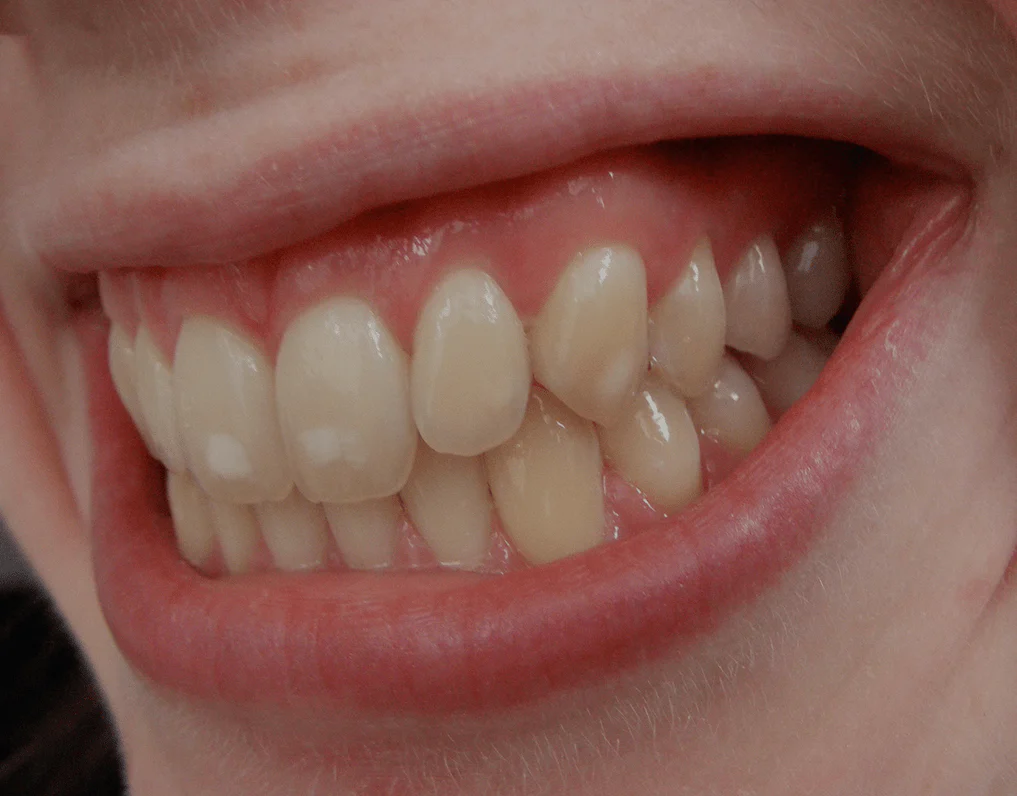
Fluorosis develops when a child takes in more fluoride than needed while the permanent teeth are still forming, mainly in the first eight years of life. Mild fluorosis shows up as fine white lines, flecks or cloudy patches, usually in a symmetrical pattern on matching teeth on the left and right. The marks are part of the enamel structure, so they do not fade after whitening and may look more pronounced until the rest of the tooth catches up.
Uneven gel contact
Gel only whitens the surface it touches. Crowded, rotated or overlapping teeth, a strip that slips, or too much gel pooling in one place can leave some areas with heavier exposure than others. Heavier exposure means more dehydration and faster lightening in those zones, which shows up as bands, wavy lines or patches with sharp borders.
How long do white spots on teeth last after whitening?
Dehydration spots usually last a few hours to about two or three days, because saliva gradually rehydrates the enamel and restores its normal translucency. Spots that are still clearly visible after one to two weeks are unlikely to be dehydration. They are more likely to be pre-existing hypomineralisation, fluorosis or decalcification that the whitening has made easier to notice.
The timeline depends partly on the method. In-office whitening, with the mouth held open and dried for a long period, tends to cause more noticeable dehydration at first, and the teeth can look very bright and chalky when you leave the chair. At-home trays and strips cause milder dehydration with each use, but repeated daily sessions can keep the enamel slightly dry for the whole course. Most people find that the shade settles and looks more natural during the first two days after the last session.
| Type of spot | Likely cause | Typical course |
|---|---|---|
| Chalky, soft-edged patches that appear right after a session | Temporary dehydration of the enamel | Fade over a few hours to about two or three days as saliva rehydrates the tooth |
| Brighter, more opaque biting edges | Thin enamel at the edges drying out faster than the rest of the tooth | Usually settle within a few days |
| Bands or wavy lines after strips | Uneven gel contact on crowded or curved teeth, plus dehydration | Contrast often softens as the teeth rehydrate, uneven shade may remain until evened out |
| A spot that was faint before and now stands out | Pre-existing hypomineralisation or demineralisation | Contrast may soften slightly after rehydration, but the spot itself stays |
| Matching flecks or streaks on the same teeth on both sides | Fluorosis from childhood fluoride intake | Permanent, does not fade on its own |
| Chalky band near the gum line or a square outline where a bracket sat | Decalcification from plaque acids, early decay or post-braces marks | Stays, and can progress if plaque is not controlled, so a dental check is needed |
A practical rule is to judge the result only once the teeth have had time to rehydrate. Looking in the mirror straight after a session gives a misleading picture, both of the overall shade and of any spots. Photos taken in the same light about a week later give a much fairer comparison.
Why do white spots show up after whitening strips?
White spots after whitening strips usually come from a mix of dehydration and uneven contact, because a flat strip cannot follow every curve, overlap and gap between the teeth. Areas pressed firmly against the gel lighten and dry out more, while recessed areas whiten less, so white patches after whitening strips often appear as bands or wavy lines across the front teeth.
Strips also tend to concentrate gel on the most prominent part of each tooth and along the biting edges, where the enamel is thinnest. On crowded lower front teeth, one tooth can sit slightly in front of its neighbour and take most of the gel. Wearing strips for longer than the instructions say, or using them more often than directed, adds to dehydration and sensitivity without improving the final shade. Timing your oral care around strips matters as well, and our article on whether to brush your teeth before or after whitening strips walks through the reasons.
White patches on the gums are a separate issue. If the gum edge turns white or sore after strips or trays, the gel has irritated the soft tissue rather than the tooth. Mild irritation of this kind usually settles within hours to a couple of days, and the steps in how to treat burned gums after whitening explain how to care for it. Spots on the teeth themselves follow the timelines described above.
For most healthy teeth, strips used as directed are a reasonable option, but they are a one-size-fits-all product. Anyone with crowded teeth, existing white marks, exposed roots or sensitive teeth tends to get less even results from them. Our article asking are teeth whitening strips bad for your teeth looks at the wider pros and cons.
How can you get rid of white spots after whitening?
Temporary white spots after whitening usually go away on their own as the enamel rehydrates, so the most effective steps are time, normal saliva flow and a pause from further whitening until the shade settles. Persistent spots need a dental assessment, because home remedies cannot rebuild missing mineral or remove fluorosis from the enamel.
For the first two to three days, a simple routine helps the enamel recover:
- Wait 48 to 72 hours before judging the shade
- Sip water regularly and keep the mouth moist
- Pause any further whitening sessions
- Brush gently with a soft brush and a fluoride toothpaste
- Limit coffee, tea and red wine for a day or two
Saliva is what rehydrates enamel, so anything that keeps the mouth moist supports the process. Avoiding long stretches of mouth breathing, where possible, helps too. Further whitening on top of dehydrated enamel only adds to the chalkiness, which is why a break of a few days is sensible before deciding whether to continue a course. In some cases, once the teeth have rehydrated and the course is completed, the rest of the tooth lightens enough for the contrast to soften, but a dentist should judge whether continuing makes sense.
A dentist may suggest a remineralising toothpaste or a fluoride varnish if spots linger or if the teeth feel sensitive. Products of this kind support the mineral balance of the enamel surface and can help early decalcification harden, although they work slowly and do not erase spots that are part of the enamel structure. Sensitivity after whitening is common and usually short-lived. If it is sharp or lasts more than a few days, the tips in how to stop sensitive teeth pain immediately can help until you see a dentist.
Some popular home remedies do more harm than good. Scrubbing with baking soda, charcoal powders or lemon juice can wear or soften enamel, and whitening toothpaste only polishes away surface stains. None of them can put mineral back into a hypomineralised spot.
What if the white spots do not go away?
White spots that do not go away within one to two weeks usually reflect a structural difference in the enamel, so they need a dental examination rather than more waiting. A dentist will look at the size, depth and cause of each spot and then discuss options that range from remineralising care to microabrasion, resin infiltration, bonding or, for widespread defects, veneers.
The examination usually includes a careful look at the teeth in good light, drying the surface to see how the spot changes, checking whether it feels rough, and sometimes X-rays if decay is suspected. Treatments that involve bonding materials are generally planned for about two weeks after the last whitening session. Freshly whitened enamel bonds less reliably, and the shade needs time to stabilise so that any repair can be matched to the final colour. If you whitened your teeth while travelling, a dentist at home can carry out this check, as long as they know when and how the whitening was done.
| Option | What it is | When it is considered |
|---|---|---|
| Monitoring | Waiting and rechecking the spot in good light after the teeth have fully rehydrated | Spots that are fading, faint or not bothering you |
| Remineralising care | Fluoride varnish applied by the dentist and a remineralising toothpaste used at home as advised | Early, shallow decalcification, spots near the gum line, marks soon after braces |
| Enamel microabrasion | A mild acid combined with a fine abrasive paste removes a very thin outer layer of enamel | Superficial spots and mild fluorosis close to the surface |
| Resin infiltration | The porous spot is gently conditioned and filled with a clear, flowable resin that reflects light much like healthy enamel, without drilling | Non-cavitated white spot lesions, post-braces marks, some mild to moderate fluorosis |
| Composite bonding | Tooth-coloured resin is shaped over the spot after minimal preparation | Deeper defects or spots that do not respond to infiltration |
| Veneers | Thin shells bonded to the front surface of the tooth | Deep or widespread defects on several teeth, often when shape or colour also needs changing |
Results from these options vary with the type and depth of the spot. Shallow post-braces marks and mild fluorosis often respond well to the less invasive methods, while deep developmental defects may need a covering restoration. A dentist can explain what is realistic for each tooth before anything is started, and the least invasive option that meets your goal is usually discussed first.
When are white spots a sign of something else?
White spots are a sign of something other than whitening when they sit along the gum line, outline the place where brace brackets used to be, feel rough or sticky, or slowly turn yellow or brown. Each of those features points to decalcification or early decay, which can progress if the plaque that caused it stays in place.
Early decay starts as a chalky, matte white area where plaque collects, most often near the gum line and between teeth. At that stage the surface is usually still intact, and the lesion can often be stopped with better cleaning, fluoride and fewer sugary snacks and drinks. If it keeps losing mineral, the surface can break down into a cavity that needs a filling.
Decalcification near braces follows the edges of where the brackets were bonded, leaving a square or crescent-shaped white mark. Plaque collects easily around brackets, and the acids it produces dissolve some of the mineral underneath. Whitening after braces can make these marks stand out, which is a good reason to have them checked before starting.
Other developmental conditions can look similar. Molar incisor hypomineralisation (MIH) produces creamy white or yellow-brown patches on the first permanent molars and front teeth, and an injury or infection in a baby tooth can leave a single marked spot on the adult tooth that replaced it. Neither condition is caused by whitening, but both tend to become more obvious after it.
How can you lower the chance of white spots next time?
The chance of noticeable white spots after the next whitening drops when existing spots are identified first, the gel is applied evenly and for the recommended time, and the teeth are given rest days if they start to look chalky. A dental check and professional cleaning before whitening make the result more even and more predictable.
Before whitening at Clean Smiley Turkey, the teeth are examined and any white marks already present are pointed out, so you know they may become more visible for a while. Plaque and tartar are removed so the gel reaches the enamel evenly. In an in-office session the gums are protected with a barrier, the gel is applied in an even layer, and the exposure time can be adjusted if the enamel shows heavy dehydration. Custom trays for home use follow the shape of your teeth more closely than a flat strip.
Not every colour problem responds in the same way to peroxide. Teeth with a deep yellow or bone-coloured base shade often need a longer or combined plan, which is the subject of our article on how to whiten bone-coloured yellow teeth. Whitening also does not change the colour of crowns, veneers or fillings, which matters if you plan to whiten before having white spots repaired.
When should you see a dentist about white spots after whitening?
You should see a dentist about white spots after whitening if they are still clearly visible after one to two weeks, if they feel rough or change colour, or if they come with pain or sensitivity that lasts longer than a few days. A dentist can tell dehydration, fluorosis and early decay apart and explain which spots need treatment.
Warning signs worth booking a check for include:
- Spots still obvious one to two weeks after the last session
- A rough, sticky or pitted surface on the spot
- Spots turning yellow, brown or grey
- White bands along the gum line or around former bracket sites
- Sensitivity or pain lasting more than a few days
- Sore white patches on the gums that are not settling
Bring the whitening product or your treatment notes if you have them, and mention how long and how often you used it. With that information, the dentist can judge whether the spots are related to the whitening or to something that was already there.
Frequently Asked Questions
Do white spots after whitening mean my enamel is damaged?
In most cases, no. Dehydration spots reflect a temporary loss of water from the enamel, not a loss of tooth structure, and they fade as saliva rehydrates the teeth. Whitening used as directed does not usually harm healthy enamel. Spots that persist were usually present before, and a dentist can check them if you are unsure.
Can I drink coffee or tea while white spots are fading?
Freshly whitened enamel is slightly more porous for a day or two, so strongly coloured drinks and foods can stain it more easily. Many dentists suggest limiting coffee, tea, red wine and dark sauces for the first 24 to 48 hours. Drinking through a straw and rinsing with water afterwards can also help keep the shade even.
Can white spots come back after they fade?
Dehydration spots can reappear briefly whenever the enamel dries out again, for example after another whitening session, a long dental appointment or a night of mouth breathing. They fade again once the teeth rehydrate. If the same spots return in exactly the same places every time, they are likely to be weaker areas of enamel worth showing to a dentist.
Will whitening toothpaste remove white spots?
Whitening toothpaste mainly polishes away surface stains from food and drinks, so it cannot remove white spots caused by fluorosis, hypomineralisation or decalcification. Highly abrasive pastes combined with hard brushing can even wear the enamel over time. A remineralising toothpaste recommended by a dentist is a more suitable choice when spots are linked to early mineral loss.
Do crowns, veneers or fillings get white spots after whitening?
No. Whitening gel does not change the colour of porcelain, zirconia or composite restorations, so white spots appear only on natural enamel. After whitening, older fillings or crowns may look slightly darker than the teeth around them. If restorations need replacing to match, dentists usually wait around two weeks so the new shade can settle first.
Is it safe to whiten teeth that already have white spots?
Whitening is generally possible with existing white spots, but the spots may look brighter at first because they lighten faster than the surrounding enamel. A dental examination beforehand helps identify the cause. In many treatment plans the whitening is done first, followed by a pause of about two weeks before resin infiltration or bonding, so the repair can be matched to the new shade.
Does drinking more water make white spots fade faster?
Drinking water keeps the mouth moist and supports saliva flow, which is what rehydrates the enamel, so it can help dehydration spots settle a little sooner. It will not make them vanish within minutes, though. Spots that are still there after one to two weeks are unlikely to be caused by dehydration, and extra water will not change them.
White spots that appear straight after whitening are usually a passing stage, and giving the teeth a few days to rehydrate is the most useful first step. At Clean Smiley Turkey in Antalya, white spots are assessed by their pattern, texture and history before any further whitening or repair is planned. If a spot is still visible after one to two weeks, feels rough, sits along the gum line or comes with lasting sensitivity, book a dental examination rather than trying another round of whitening.
This article is for general information and does not replace a dental examination or personal medical advice.
Related Articles