Patients considering a snap-on denture almost always have the same first concern: what will it look like? They have read about the comfort and the implant support and the chewing power, but the visible question — will it look like teeth, or will it look like a denture — is the one that brings them to the consultation. This piece is built around that question, with the answers our snap-on denture patients in Antalya give us six months and a year into wearing one.
If you are weighing a snap-on denture against a traditional removable denture or a full-arch fixed bridge, the appearance of each option matters as much as the cost or the procedure. We will walk through what the snap-on denture actually looks like in real mouths, where the visible cues are, and what patients say about how it reads to other people.
What a snap-on denture actually is
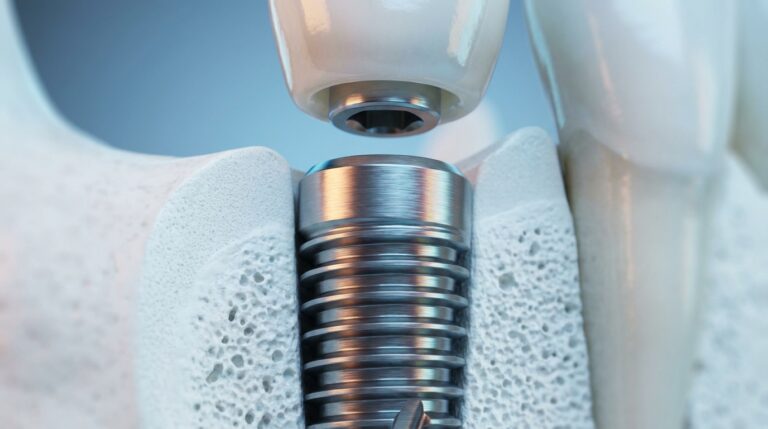
A snap-on denture — sometimes called an overdenture or implant-retained denture — is a removable denture that clips onto two to four dental implants placed in the jaw. The implants stay in the bone permanently. The denture itself clicks into place over them, held firmly by precision attachments, and can be removed for cleaning at night.
The combination gives the patient something between a traditional removable denture and a fully fixed bridge. The denture is removable, but in daily use it does not move, lift or shift the way a traditional denture can. This stability changes both the function and the appearance in important ways.
What does a snap-on denture look like in the mouth?
The visible question can be answered in three layers, because all three matter for the final appearance.
The tooth row. Modern snap-on dentures use the same kind of denture teeth used in traditional removable dentures and fixed prosthetic bridges. Acrylic or composite teeth, shaped and shaded to match the patient’s face. From normal conversational distance, the visible teeth look like teeth.
The gum-coloured base. The pink acrylic base that holds the teeth is the part that can give a denture away if it is too thick, too pink, or visible in the smile line. A well-designed snap-on denture uses a slimmer, more anatomically shaped base than a traditional removable denture because the implants do the retention work. The base does not need to extend across the entire palate or hook around the back of the mouth.
The gum line transition. Where the denture meets the natural gum tissue is the most-scrutinised area in any appearance review. In snap-on dentures, the transition can be made very natural because the base is thinner and the attachments hold it firmly against the gum surface, leaving no visible gap.
The biggest appearance difference vs traditional dentures
Patients who have worn both a traditional removable denture and a snap-on denture describe the difference in three consistent terms.
“It does not move when I smile or laugh.” Traditional removable dentures lift slightly during big smiles or laughs, revealing the gum line transition and producing the small movement most people associate with dentures. Snap-on dentures stay locked in place. The smile reads as natural because the row of teeth is stable.
“My speech sounds normal.” Less palate coverage means less interference with tongue position during speech. The slight lisp many traditional denture wearers describe in the first weeks is much shorter — or absent — with snap-on dentures.
“My face does not look ‘set’ anymore.” A traditional removable denture sometimes pushes the lip out slightly when held in place, especially for upper dentures. A snap-on denture, with its slimmer base, gives a more natural lip-and-cheek shape.
Upper vs lower snap-on denture appearance
The two arches behave differently in terms of appearance.
Upper snap-on dentures. The biggest appearance gain over traditional upper dentures is the option to leave most of the palate uncovered. Traditional upper dentures cover the roof of the mouth in a U-shape that affects speech, taste and the feel of food on the tongue. With sufficient implants, a snap-on upper denture can be palateless — a thin band that holds the teeth without covering the palate. The visible smile is similar to a traditional upper denture; the daily feel is closer to natural teeth.
Lower snap-on dentures. The bigger visible gain on the lower arch is stability. Lower traditional dentures are notoriously hard to keep in place because there is less surface area to support them. A lower snap-on denture stays where it should. The visible smile is stable, the lower lip moves naturally, and the chin profile is supported.
What patients say at the six-month appearance check
By six months most snap-on denture users have settled into their daily routine and can give an honest assessment of how the appearance is reading day to day. The recurring themes:
- “Friends and family stopped asking about it.” The early-weeks comments from those closest to the patient — “Did you have something done?” — usually faded by month three. By month six the new smile is the baseline.
- “Photos look natural.” The flash test is the one many patients mention. Traditional dentures sometimes catch light differently than natural gum tissue under flash photography. Modern snap-on materials produce photographs that look like teeth in any lighting.
- “My side profile changed less than I worried about.” Some patients arrive concerned that an implant-supported denture will look too “full” or change their facial shape. The well-designed version supports the lip and cheek to a natural degree without overcorrection.
- “It does not shift when I eat in front of others.” The single biggest social comfort gain. Eating in public stops being a source of small anxieties.
What gives a snap-on denture away — if anything
Honest feedback also includes the cues that someone close to the patient — a partner, a sibling, a child — might pick up on.
The gum-tissue colour at the very edge. Even slim snap-on bases have an edge where the acrylic meets the natural gum. In strong daylight at close range this edge can be visible, particularly if the colour match was not finely tuned. Most patients tell us this is the one thing only they notice — others rarely do.
The arch of the teeth. The shape of the row of teeth in a snap-on denture is a design choice. If the original natural teeth were narrow and the patient asks for a wider, more “Hollywood Smile” shape, the change is visible. Many patients want this. Some want a row that matches what they had before. The conversation in the planning stage decides this.
The “removed” state. Anyone who sees the patient at night when the denture is out will see the implant abutments — small attachment points sticking up from the gum. This is not a daytime appearance issue because the denture covers them entirely. It is part of the honest conversation about what living with a snap-on denture looks like in the most private moments.
Designing the appearance: what patients say matters most
Reviewing what patients tell us was the most-impactful planning decision for the final appearance, three things appear consistently.
1. Tooth shade choice. Patients who chose a bright but natural shade like A1 or B1 (see our piece on A1 tooth shade) describe their result as “a clear upgrade that does not look fake.” Patients who pushed for bleached cosmetic shades on a snap-on denture sometimes tell us they wish they had stayed in the natural range.
2. Tooth shape and size. A wider, squarer tooth shape reads as more masculine; a softer, more rounded shape reads as more feminine. Younger-style teeth are more uniform; older-style teeth show small natural variations. Choosing what matches the patient’s face produces the most natural result.
3. Gum-base colour and contour. The pink acrylic comes in several shades. Matching it to the natural gum tone, and shaping it to suggest a natural gum profile, removes the most common appearance giveaway. A flat, uniformly pink base reads as denture-like. A shaded, contoured base reads as natural.
What patients wish they had asked about appearance before the procedure
“I wish I had brought reference photos of smiles I liked.” Tooth shape and arch design are easier to discuss with visual examples than with words. Patients who arrived with three or four smile photos felt more confident about their final result.
“I wish I had asked to see the wax try-in stage closely.” Most snap-on denture cases include a wax try-in where the teeth are arranged in wax for review before the final denture is made. Patients who used this opportunity to give detailed feedback about shape and shade were happier with the final result.
“I wish I had asked about the lip-and-cheek support.” Snap-on dentures support the lip and cheek by their shape. A subtle change at the design stage affects how the face reads. Looking in a mirror at the try-in stage and giving direct feedback matters.
“I wish I had asked about long-term colour stability.” Acrylic denture teeth can pick up subtle stains over years from coffee, tea, red wine and smoking. Asking about cleaning routines and colour stability before the procedure helps with long-term satisfaction.
What international patients in Antalya tell us about snap-on denture appearance
For international patients, the appearance question is often more pressing because there is less time for back-and-forth with the dental team. The reviews from this group share two patterns.
The first is the value of a longer trip. A snap-on denture fitting typically needs multiple appointments — implant placement (if not already done), impression, wax try-in, fit and adjustments. International patients who planned 10-14 days for this phase reported better appearance outcomes than those who tried to compress it.
The second is the role of photographs. Patients who took selfies during the wax try-in stage, looked at the photos later at the hotel, and brought specific feedback back to the next appointment were more settled with the final result than those who relied on the in-clinic mirror alone.
The third is the planning conversation before the trip. The most-prepared patients arrived with reference smile photos, an idea of the shade they wanted, and a clear sense of whether they wanted to match their original smile or upgrade it. This made the design process faster and more accurate.
Frequently asked questions about snap-on denture appearance
Does a snap-on denture look like a real denture or like real teeth?
From normal conversational distance, a well-designed snap-on denture reads as natural teeth. The biggest difference from a traditional removable denture is stability — the snap-on version does not lift during smiling or laughing, which removes the most common visual giveaway. Close-range inspection by family members may still detect subtle cues at the gum edge.
Will my smile change with a snap-on denture?
The visible smile is fully customisable during planning. Patients can choose to match their original tooth shape and shade or upgrade to a brighter, more uniform smile. Reference photos and feedback at the wax try-in stage are the most useful tools for getting the look right.
Can people tell I have a snap-on denture?
From a normal conversational distance most observers cannot. Friends and family who saw the patient before the procedure may notice the improvement but rarely identify the cause specifically. By month three to six the new smile becomes the baseline and conversation about it stops.
Does the gum-coloured base of the denture show?
A well-designed snap-on denture uses a slimmer base than a traditional removable denture, with shaded acrylic chosen to match the natural gum tone. The base meets the natural gum tissue at a transition that can be made very natural. The base itself is rarely visible during normal smiling — though close-range inspection in strong light can sometimes show the edge.
How long does it take for the appearance to feel natural to me?
Most patients describe a 1-3 month adjustment to seeing their new smile. The first week is the strangest because the changes are fresh. By month three the new smile feels like “my smile.” By month six most patients stop thinking about the appearance at all.
Will my snap-on denture look as good in five years as it does on day one?
The acrylic teeth and gum base can pick up subtle stains over years from coffee, tea, red wine and smoking, similar to natural tooth staining. Daily cleaning, regular professional check-ups and avoidance of heavy staining habits keep the appearance stable. A planned replacement of the denture itself every 7-10 years restores the original look.
How we approach the appearance design in our clinic
Our approach treats appearance as part of the treatment plan, not an afterthought. The planning stage includes shade selection from a guide held against the face, tooth shape choice with reference photos, base colour matching to the patient’s natural gum tone, and an in-mouth wax try-in where the patient can speak, smile and assess the look before the final denture is made.
For international patients, we add photographs at each stage so the patient can review them at the hotel and return with detailed feedback. For all patients, the final adjustment appointment is dedicated to fine-tuning what the mirror shows.
If you are weighing a snap-on denture and want to understand what the appearance will look like for your specific case, you can reach us through the contact form or WhatsApp. Bring reference photos of smiles you like — that conversation is where the design starts. Our overview of implant-supported solutions covers the wider range of options alongside the snap-on choice.