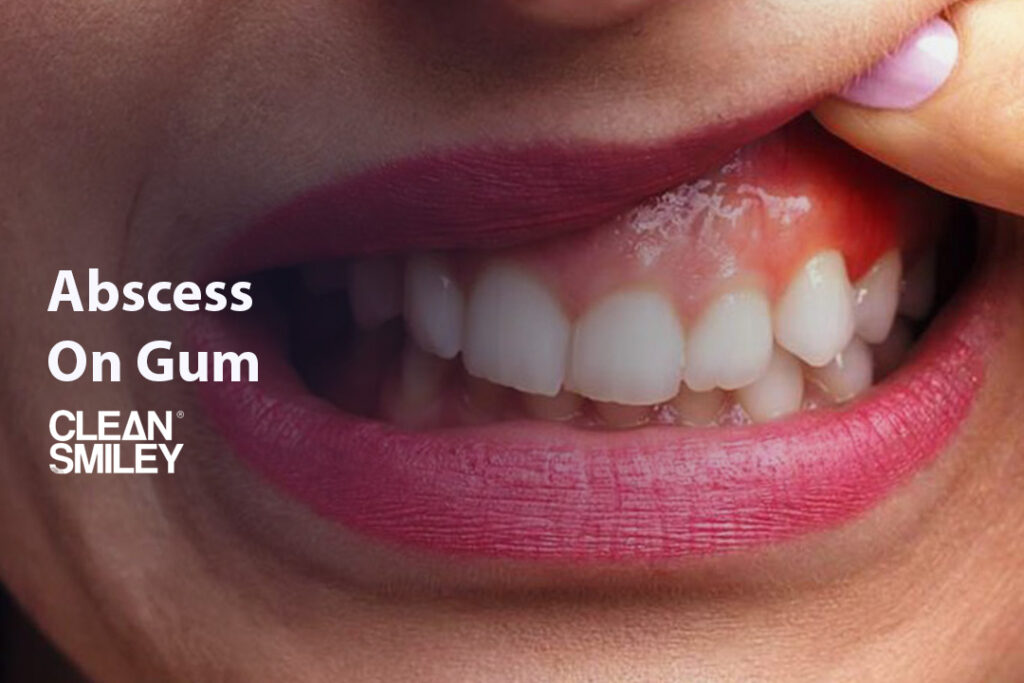
While a toothache is annoying enough, that throbbing swelling that suddenly appears on your gum and hurts when you touch it can instantly send your anxiety levels through the roof. If you look in the mirror and see a pimple-like red bump or a swelling spread over a wider area on your gum, your body is giving you a signal that “there is a serious infection here.” As Clean Smiley Dental Clinic, we explain the condition of “Abscess on Gum,” its causes, types, and most importantly, how you can safely get rid of this painful situation, with scientific facts stripped of internet misinformation.
What Exactly is a Gum Abscess?
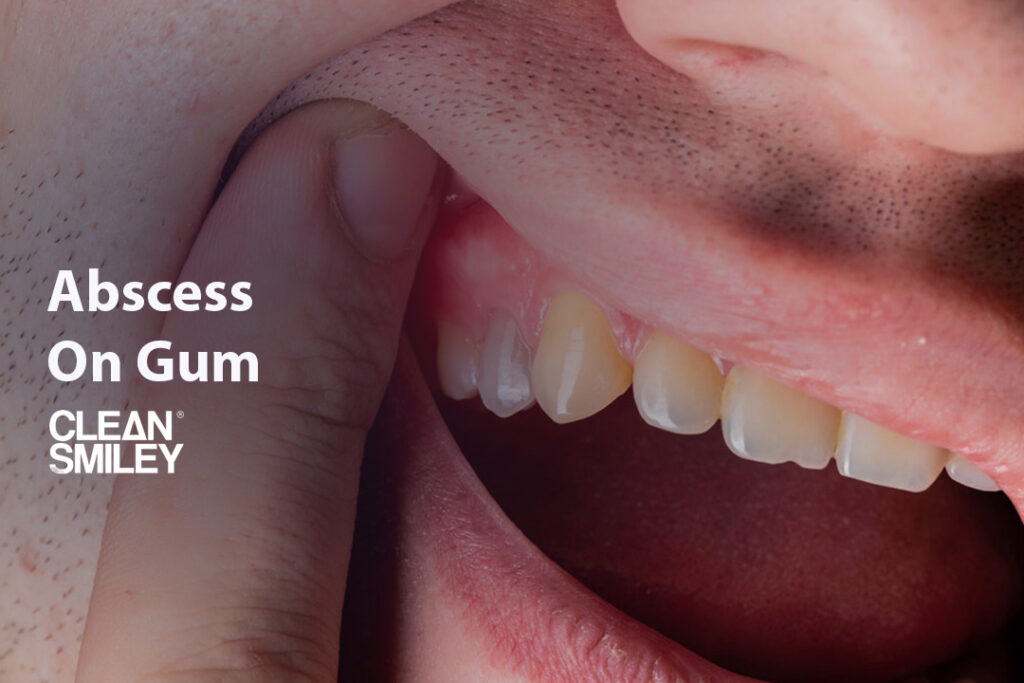
In its simplest form, a gum abscess is a pocket filled with pus that accumulates in the gums or around the tooth root. When our body encounters a bacterial infection, it sends white blood cells to that area to establish a defense line. As a result of this battle, dead cells, bacteria, and tissue debris accumulate to form the fluid we call “pus.” If this pus cannot find a way to flow out, it creates pressure within the tissue, swells, and causes that famous throbbing pain. This is not just a simple swelling; it is an active infection that can spread to the jawbone and surrounding tissues if left untreated.
The 4 Main Types of Dental Abscesses
Our patients often think every swelling is the same, but for us dentists, “where” the abscess starts is the most important factor determining the course of treatment. A correct diagnosis is half the cure.
Gingival Abscess (Gum Tissue Only)
This type generally affects only the gum tissue, independent of the tooth. The scenario we encounter most frequently is a foreign object, like a popcorn hull or a hard fruit seed, getting stuck in the gum and staying there to create an infection. The tooth itself is usually healthy; the problem is only in the soft tissue in that area.
Periodontal Abscess (Deep Gum Pocket)
Seen in individuals with gum disease (periodontitis), this type occurs when the infection is trapped in the depths of the gum pocket. Tartar and bacteria progress along the root surface; when the mouth of the pocket closes for any reason, the infection remaining inside cannot exit and turns into an abscess. This situation can cause the rapid melting of the bone supporting the tooth.
Periapical Abscess (The Tooth Root)
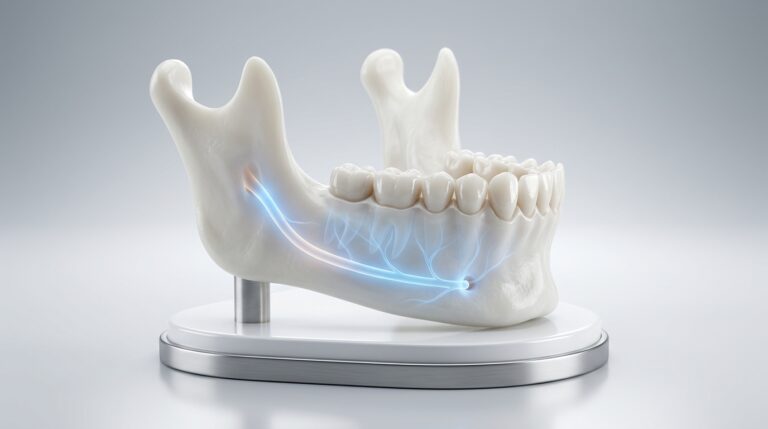
The most severe pain is usually seen in this type. When the living part of the tooth we call the “pulp” (nerve package) dies as a result of deep decay or trauma, bacteria progress through the root canal and reach the very tip of the root. Inflammation accumulating at the root tip creates pressure inside the bone. This is actually a problem originating from the tooth reflecting onto the gum.
Pericoronal Abscess (Wisdom Teeth)
Usually, while wisdom teeth are erupting, food debris and bacteria fill between the tooth and the gum hood (operculum) covering the tooth. Infection developing in this area, which is difficult to clean, can cause difficulty in swallowing and pain spreading to the neck.
Symptoms: How to Tell if it’s a Medical Emergency
It is almost impossible not to feel the presence of an abscess, but the severity of the symptoms indicates the urgency of the situation.
Local Symptoms (Pain, Swelling, Bad Taste)
The first thing you will notice is a constant and throbbing pain in that area; this pain usually increases during chewing. A red, shiny, and touch-sensitive swelling forms on the gum. If the abscess bursts on its own, you will suddenly feel a salty and bad-tasting fluid (pus) filling your mouth, and the pain will decrease somewhat. Additionally, hot-cold sensitivity and the feeling that the tooth has elongated are common symptoms.
Systemic Warning Signs (Fever, Swollen Nodes)
If the swelling is spreading towards your face or neck, if your fever has risen, if you have difficulty opening your jaw (trismus), or if you are experiencing difficulty swallowing/breathing, this is no longer just a dental problem, but a systemic emergency. Since there is a risk of the infection entering the bloodstream or threatening the airway, you must apply to the nearest health institution without wasting time.
Common Causes and Risk Factors
So, why did this painful process happen to you? Although the culprit is usually bacteria, the factors that open the door to them are various.
Poor Hygiene & Sugar Consumption
Insufficient oral care prepares the ground for the accumulation of plaque and tartar. Sugary and acidic foods are the favorite food source of bacteria. When this duo combines, it becomes inevitable for bacteria to multiply and break the gum’s defense mechanism.
Dental Trauma & Cracked Teeth
Teeth grinding habits, biting a hard object, or a blow to the face can create cracks in the tooth enamel invisible to the naked eye. Bacteria leak through these micro-cracks to reach the most protected center of the tooth, the pulp, where they multiply silently and prepare the ground for an abscess.
Professional Treatment: What to Expect at the Dentist
When you come to Clean Smiley Dental Clinic, our priority is to soothe your pain and bring the infection under control.
Incision and Drainage (Instant Relief)
In most cases, the first intervention is the controlled drainage of the abscess. Under local anesthesia, a small cut is made on the abscess to drain the accumulated pus. Since this procedure instantly lowers the pressure within the tissue, the patient feels immense relief as soon as they get up from the chair. The area is then washed and cleaned with saline solution.
Root Canal Therapy vs. Extraction
If the abscess originates from the tooth (Periapical), just draining the pus is not enough; the source must be dried out. If the tooth is in a savable condition, infected nerves are cleaned with Root Canal Treatment, and the tooth is kept in the mouth. However, if the tooth has suffered too much destruction or bone support is completely lost, tooth extraction may be the only remedy to prevent the infection from spreading to the body.
Antibiotics: When Are They Actually Needed?
Contrary to popular belief, antibiotics are not used for every abscess. If the infection is limited only to the abscess area, drainage and root canal treatment are sufficient. We prescribe antibiotics only if the infection has spread to surrounding tissues, if the patient has a fever, or if the immune system is suppressed. Unnecessary antibiotic use causes resistance development, so it must be managed carefully.
Home Remedies: Safe Relief vs. Dangerous Myths
There are things you can do and things you should never do in the time until you go to your dentist.
Safe Relief: Salt Water and Cold Compresses
Gargling with warm salt water regulates blood flow in the area and provides relief with its mild antiseptic effect. A cold compress applied from the outside of your cheek controls swelling and alleviates pain.
Warning: Never Apply Aspirin to the Gums
Putting aspirin on the aching tooth, which is common among the public, is an extremely dangerous mistake. Since aspirin is acidic, it causes serious chemical burns on the gum and adds a wound pain to your existing pain. You should use the painkiller by swallowing it.
Why You Should Never “Pop” an Abscess at Home
Trying to pierce or squeeze the abscessed area with a needle is the biggest mistake you can make. This procedure, performed in a non-sterile environment, can lead to the infection entering the bloodstream (sepsis) or being pushed deeper into the jawbone. The drainage process must absolutely be done under sterile clinical conditions.
Recovery Timeline: Life After Treatment
Healing after professional intervention is surprisingly fast. Pain and swelling usually decrease significantly within 24-48 hours. while the closing of the drained area takes a few days, the complete healing of the bone tissue can take 3-6 months depending on the size of the infection.
Conclusion: Protecting Your Smile Long-Term
A gum abscess is a harsh warning your body gives you. The way to avoid experiencing this again is not to neglect regular dentist check-ups and to show maximum care for oral hygiene. As Clean Smiley Dental Clinic, we are always with you not only when problems arise, but also to protect your healthy smile. Early diagnosis protects you from both pain and tooth loss.