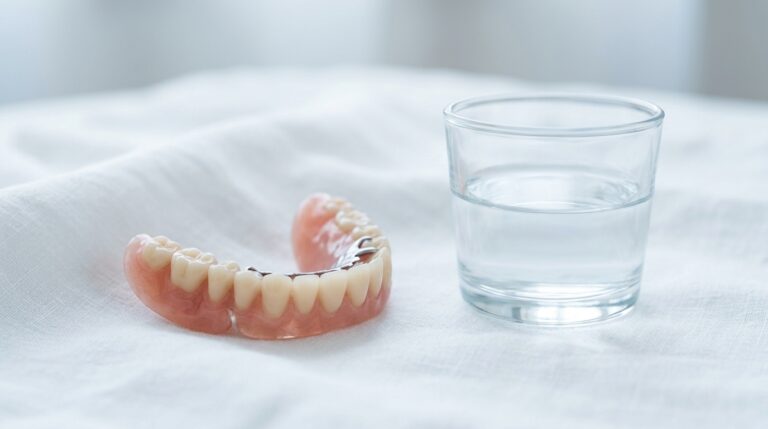
Gum disease is the most common chronic oral infection on the planet, yet the majority of people who have it do not know it until significant damage has already occurred. The condition progresses through distinct gum disease stages, each with its own set of symptoms, consequences, and treatment options. What begins as mild inflammation that you might dismiss as “normal” bleeding during brushing can silently advance into irreversible bone destruction and tooth loss if left untreated.
The World Health Organization identifies severe periodontal disease as affecting roughly 19 percent of the global adult population, making it one of the most prevalent diseases in human history. Understanding the stages of gum disease, recognizing the early warning signs, and acting before the damage becomes permanent is one of the most valuable investments you can make in your long-term health.
What Is Periodontal Disease?
Periodontal disease, commonly referred to as gum disease, is a chronic bacterial infection that targets the supporting structures of the teeth: the gingiva (gum tissue), the periodontal ligament (the fibrous connection between root and bone), the cementum (the thin layer covering the root surface), and the alveolar bone (the jawbone that houses the tooth roots). The term “periodontal” derives from the Greek words “peri” (around) and “odont” (tooth), literally describing a disease of the structures around the tooth.
The process begins when bacterial plaque, a sticky biofilm that forms continuously on tooth surfaces, accumulates along and beneath the gum line. Specific pathogenic bacteria within this biofilm, including Porphyromonas gingivalis, Tannerella forsythia, and Treponema denticola, produce toxins that trigger the body’s inflammatory immune response.
In a cruel biological irony, it is this immune response, not the bacteria themselves, that causes the majority of tissue destruction. The inflammatory mediators released by the body’s own defense cells break down collagen fibers, dissolve bone, and detach the gum from the tooth surface, creating ever-deepening pockets that harbor even more bacteria. This self-perpetuating cycle is what makes periodontal disease progressive and, in its advanced stages, irreversible without professional intervention.
The American Academy of Periodontology classifies periodontal disease using a staging and grading system that evaluates the severity of tissue destruction (staging) and the rate of disease progression (grading). This classification guides clinicians in selecting the most appropriate treatment strategy for each patient’s unique situation.
What Are The Stages of Gum Disease?
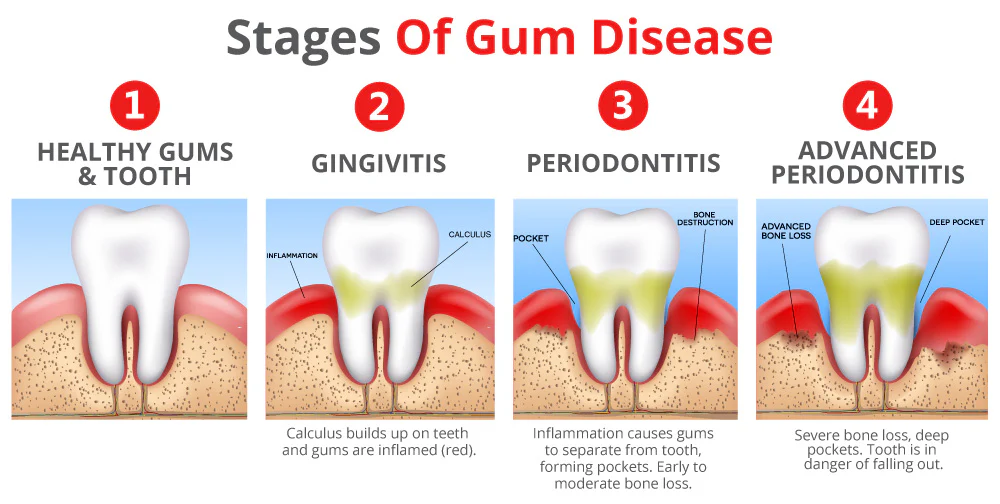
Gum disease progresses through a predictable sequence of stages, each representing an escalation in tissue damage, symptom severity, and treatment complexity. Recognizing which stage you are in determines both the urgency and the scope of the intervention required.
| Stage | Clinical Name | Pocket Depth | Bone Loss | Reversible? | Primary Treatment |
| Stage 0 | Healthy gums | 1 – 3 mm | None | N/A | Routine hygiene |
| Stage 1 | Gingivitis | 1 – 3 mm | None | Yes, fully | Professional cleaning + improved home care |
| Stage 2 | Early periodontitis | 4 – 5 mm | Up to 15% | Bone loss is permanent; inflammation is reversible | Scaling and root planing |
| Stage 3 | Moderate periodontitis | 5 – 7 mm | 15 – 33% | No (manageable) | Scaling/root planing, possible surgery |
| Stage 4 | Advanced periodontitis | 7+ mm | Over 33% | No (stabilizable) | Surgery, regeneration, extractions, implants |
Gingivitis is the earliest and only fully reversible stage of gum disease. The gum tissue becomes red, swollen, and bleeds easily during brushing or flossing, but no permanent damage has occurred to the bone or periodontal ligament. At this stage, the sulcus depth remains within the normal range of one to three millimeters, and radiographs show no bone loss. With professional cleaning and a consistent daily hygiene routine, gingivitis resolves completely and the gum tissue returns to a healthy, firm, pink state.
Early periodontitis marks the critical transition from reversible inflammation to irreversible structural damage. The bacterial infection penetrates beneath the gum line, and the body’s inflammatory response begins destroying the collagen fibers that attach the gum to the tooth. Pocket depths increase to four to five millimeters, and early radiographic bone loss becomes detectable.
The patient may notice occasional bleeding, mild gum tenderness, and perhaps slight recession, but pain is typically absent at this stage. Early periodontitis can be effectively managed with scaling and root planing (deep cleaning) and meticulous home care, but the bone that has already been lost will not regenerate spontaneously.
Moderate periodontitis represents a significant escalation. Pocket depths reach five to seven millimeters, bone loss progresses to 15 to 33 percent of the root length, and teeth may begin to show early signs of mobility. The gum tissue may visibly recede, exposing root surfaces and creating aesthetic concerns alongside functional ones.
Pus discharge from the pockets, persistent bad breath, and a bad taste in the mouth are common symptoms at this stage. Treatment requires thorough scaling and root planing, often performed under local anesthesia over multiple sessions, and may include adjunctive antibiotic therapy. Some cases require surgical intervention to access and clean deep pockets that non-surgical instruments cannot reach.
Advanced periodontitis is the final and most destructive stage of gum disease. Bone loss exceeds one-third of the root length, pockets deepen beyond seven millimeters, and teeth become noticeably loose. Spontaneous tooth loss becomes a real possibility, and the remaining teeth may shift position as the supporting structures collapse around them.
Abscess formation, severe pain, difficulty chewing, and significant gum recession are hallmarks of this stage. Treatment at this point involves a combination of surgical pocket reduction, guided tissue regeneration where possible, extraction of hopeless teeth, and prosthetic replacement with Dental Implants, All on 4, or All on 6 full-arch solutions when multiple teeth are lost. Even at this advanced stage, stabilization is possible with aggressive treatment, but the goal shifts from cure to damage control and functional rehabilitation.
Warning Signs You Might Miss
The most dangerous characteristic of gum disease is its ability to progress without obvious symptoms. Many patients arrive at a dental appointment with moderate or even advanced periodontitis having experienced no significant pain along the way. However, subtle warning signs are almost always present for those who know what to look for.
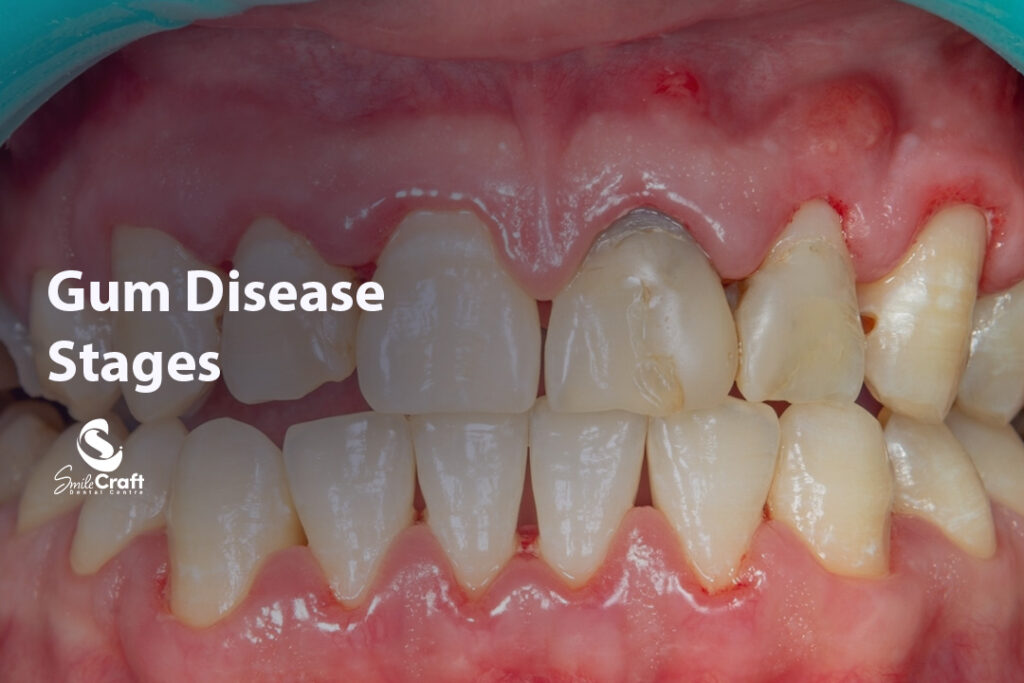
Bleeding during brushing or flossing is the earliest and most reliable indicator of gingival inflammation. Healthy gums do not bleed when cleaned with appropriate technique and pressure. Many patients dismiss this bleeding as “normal” or blame it on brushing too hard, but in the vast majority of cases it signals gingivitis, the first stage of gum disease. Persistent bad breath that does not resolve with brushing, flossing, and tongue cleaning suggests bacterial accumulation in periodontal pockets that home care alone cannot reach.
A receding gum line that makes teeth appear longer than they used to be indicates tissue attachment loss, a hallmark of progressing periodontitis. Teeth that feel loose, shift position, or create new gaps where none existed before reflect underlying bone destruction that has compromised the tooth’s anchorage.
Swollen, puffy, or tender gums that appear darker red or purplish rather than healthy coral pink are visual cues that inflammation is active. A change in the way your teeth fit together when you bite, or a change in the fit of a partial denture, can indicate that teeth are migrating due to bone loss. Any of these signs warrant prompt professional evaluation.
Early detection at the gingivitis or early periodontitis stage keeps treatment simple, affordable, and highly effective. Ignoring the signs until advanced periodontitis develops transforms a manageable condition into a complex and costly reconstruction challenge.
Causes and Risk Factors
Gum disease is fundamentally a bacterial infection, but its development and progression are influenced by a constellation of risk factors that determine why some patients develop severe disease while others with similar plaque levels remain relatively healthy.
Inadequate oral hygiene is the foundational cause. Without daily brushing and flossing, bacterial plaque accumulates and matures into a pathogenic biofilm that triggers the inflammatory cascade. Plaque that is not removed within 48 to 72 hours mineralizes into calculus (tartar), which cannot be removed by brushing and provides a rough surface for further bacterial colonization.
Smoking and tobacco use are the strongest modifiable risk factors after oral hygiene; tobacco impairs blood flow to the gums, suppresses the immune response, and dramatically accelerates bone loss. Smokers are two to six times more likely to develop severe periodontitis than non-smokers according to the Centers for Disease Control and Prevention.
Genetic susceptibility plays a significant role in determining individual vulnerability. Research suggests that up to 30 percent of the population may be genetically predisposed to periodontal disease regardless of their hygiene practices. Systemic conditions such as diabetes, cardiovascular disease, rheumatoid arthritis, and immune deficiencies create a bidirectional relationship with gum disease; uncontrolled diabetes worsens periodontal destruction, and active periodontitis makes blood sugar control more difficult. Hormonal changes during pregnancy, puberty, and menopause increase gum sensitivity to plaque and can trigger pregnancy gingivitis or accelerate existing disease.
Medications that cause dry mouth, including antihistamines, antidepressants, and certain blood pressure drugs, reduce the protective flow of saliva and increase susceptibility to gum disease. Stress, poor nutrition, and teeth grinding (bruxism) are additional contributing factors that can tip the balance from health to disease.
How Is Gum Disease Diagnosed?
Definitive diagnosis of gum disease and accurate determination of its stage require a professional periodontal examination that goes beyond what any patient can assess at home.
Periodontal Probing & X-Rays
The cornerstone of periodontal diagnosis is the periodontal probing examination. The dentist or hygienist uses a thin, graduated instrument called a periodontal probe to measure the depth of the sulcus or pocket around each tooth at six specific sites. Healthy sulcus depth measures one to three millimeters, with no bleeding on gentle probing.
Depths of four millimeters or greater indicate pocket formation and attachment loss, and bleeding upon probing confirms active inflammation. The probing measurements are recorded on a periodontal chart that creates a comprehensive map of disease distribution throughout the mouth.
Radiographic evaluation, typically a full-mouth series of periapical X-rays or a panoramic radiograph, reveals the level of alveolar bone around each tooth. Bone loss patterns can be horizontal or vertical, and each pattern carries different prognostic and treatment implications.
The combination of probing data and radiographic assessment allows the clinician to classify the disease according to the 2017 World Workshop staging and grading system, determining the severity (stage), the complexity, and the expected rate of progression (grade) of the patient’s specific condition.
Additional diagnostic tools include bacterial culture or DNA testing of subgingival plaque samples to identify specific pathogenic species, and salivary diagnostics that measure inflammatory biomarkers. These advanced tests are not routine in every practice but can be valuable in complex or aggressive cases that do not respond predictably to standard therapy.
Treatment Options by Gum Disease Stages
The treatment of gum disease follows a phased approach that is directly calibrated to the stage of the disease. Conservative, non-surgical therapies are always attempted first, with surgical interventions reserved for cases that do not respond adequately or that present with advanced destruction from the outset.
Non-Surgical Treatments
Professional prophylaxis (routine cleaning) is sufficient for gingivitis and for patients with healthy gums undergoing preventive maintenance. Calculus is removed with ultrasonic and hand instruments, and tooth surfaces are polished to discourage plaque re-accumulation. This procedure is the foundation of the six-month recall visit that every dental patient should maintain.
Scaling and root planing (SRP) is the primary treatment for early to moderate periodontitis. Unlike a routine cleaning that focuses above and slightly below the gum line, SRP is a therapeutic procedure that accesses deep pockets to remove calculus, bacterial toxins, and infected cementum from the root surfaces. The root is then smoothed (planed) to eliminate rough areas that harbor bacteria and to create a surface conducive to tissue reattachment. SRP is typically performed under local anesthesia and may be divided into two or four appointments depending on the extent of the disease. The Journal of Clinical Periodontology reports that SRP alone can achieve pocket depth reductions of one to two millimeters and significant improvements in clinical attachment levels in the majority of early to moderate cases.
Adjunctive antibiotic therapy, either systemic (oral antibiotics) or locally delivered (antibiotic gel or microspheres placed directly into pockets), may be used in conjunction with SRP for cases involving particularly aggressive bacterial strains or for patients who do not respond adequately to mechanical debridement alone. Chlorhexidine mouth rinse is commonly prescribed as a short-term adjunct during the healing phase following SRP.
Surgical Treatments
When non-surgical therapy fails to achieve adequate pocket reduction, or when the disease has already caused significant bone loss, surgical intervention becomes necessary.
Flap surgery (pocket reduction surgery) involves lifting the gum tissue away from the bone, providing the surgeon with direct access to deep calculus deposits and infected bone surfaces that cannot be reached by non-surgical instruments. The bone surface is thoroughly debrided, irregularities are smoothed to eliminate bacterial-harboring craters, and the gum tissue is repositioned and sutured at a level that reduces pocket depth. This procedure dramatically improves the cleanability of the affected areas and slows disease progression.
Bone grafting and guided tissue regeneration (GTR) represent the most advanced approach to restoring structures lost to periodontal disease. Bone graft material, either from the patient’s own body, a donor bank, or a synthetic source, is placed into the bony defect, and a biocompatible membrane is positioned to prevent the faster-growing gum tissue from invading the space before bone cells can regenerate.
Over several months, new bone and periodontal ligament form, partially or fully restoring the support that was lost. Not every defect is amenable to regeneration; the morphology of the bone loss (narrow vertical defects respond best) and the patient’s systemic health significantly influence the outcome.
Soft tissue grafting addresses gum recession by transplanting tissue from the palate or using donor tissue to cover exposed root surfaces and restore the gum line. This procedure is both functional, reducing sensitivity and decay risk on exposed roots, and aesthetic, restoring the natural frame around the teeth.
For teeth that are beyond saving due to advanced gum disease, extraction followed by prosthetic replacement is the final step. Dental Implants provide the most predictable long-term replacement, preserving jawbone through osseointegration. For patients who have lost all teeth in an arch, All on 4 and All on 6 full-arch implant protocols offer a fixed, permanent solution that restores complete chewing function and aesthetics.
Once the periodontal condition is stabilized and the implant foundation is established, patients can pursue aesthetic treatments such as Emax Veneers, Dental Crowns, or a comprehensive Hollywood Smile design to complete their transformation.
FAQ
Is gum disease contagious?
The bacteria that cause gum disease can be transmitted between individuals through saliva, such as through kissing, sharing utensils, or a parent cleaning a child’s pacifier with their mouth. However, the presence of these bacteria alone does not guarantee that the recipient will develop periodontal disease. Disease development depends on the recipient’s immune response, oral hygiene habits, genetic susceptibility, and overall health. In practical terms, maintaining your own excellent oral hygiene is the most effective way to prevent disease regardless of bacterial exposure.
Can gums grow back after receding?
Gum tissue that has receded due to periodontal disease or mechanical trauma does not regenerate spontaneously. Once the attachment is lost and the gum margin has migrated toward the root, the tissue will not return to its original position on its own. However, professional intervention through soft tissue grafting procedures can restore gum coverage over exposed roots in many cases.
Prevention is far preferable to treatment; consistent daily flossing, gentle brushing technique, and regular professional cleanings are the most effective strategies for preserving your gum line. Teeth Whitening and other cosmetic procedures should always be preceded by a gum health assessment to ensure that the gingival foundation is stable before any aesthetic work begins.
How long does it take for gingivitis to turn into periodontitis?
The transition from gingivitis to periodontitis varies enormously between individuals. In some patients, untreated gingivitis can progress to early periodontitis within months, while in others, gingivitis may persist for years without advancing to bone loss. Genetic susceptibility, smoking status, systemic health conditions such as diabetes, and the specific bacterial species present in the biofilm all influence the speed of progression.
The critical point is that there is no way to predict exactly when the transition will occur, which is why treating gingivitis promptly is essential. Reversing the disease at the gingivitis stage is simple, painless, and inexpensive compared to managing established periodontitis.
Is a deep cleaning painful?
Scaling and root planing is performed under local anesthesia, so the procedure itself should not be painful. You may feel pressure, vibration, and occasional sensitivity, but sharp pain is not expected and should be communicated immediately to your clinician so that additional anesthesia can be administered. After the anesthesia wears off, mild to moderate soreness, gum tenderness, and sensitivity to cold are common for three to seven days.
Over-the-counter anti-inflammatory medication and warm salt water rinses manage post-operative discomfort effectively. The temporary discomfort of a deep cleaning is incomparably preferable to the progressive pain, tooth mobility, and eventual tooth loss that untreated gum disease delivers.
Can I treat gum disease at home?
You can manage gingivitis at home with improved brushing technique, daily flossing, and an antiseptic mouthwash containing chlorhexidine or essential oils. However, once gum disease has progressed beyond gingivitis into any stage of periodontitis, professional treatment is absolutely necessary.
that has formed beneath the gum line cannot be removed by any home instrument, and attempting to do so with sharp tools purchased online risks gum laceration, infection, and worsening of the condition. Home care is the essential daily maintenance that prevents disease and supports professional treatment, but it cannot replace professional intervention once bone loss has begun. For a thorough evaluation of your gum health and a personalized treatment plan, request a free quote from our specialist team.
Conclusion
Gum disease is a progressive condition that moves through clearly defined stages, from the fully reversible inflammation of gingivitis through the irreversible bone destruction of advanced periodontitis. The difference between a patient who catches the disease at stage one and one who discovers it at stage four is not just clinical; it is the difference between a simple cleaning and a complex surgical reconstruction involving bone grafts, extractions, and implant-supported prosthetics.
The warning signs are there if you look for them: bleeding gums, persistent bad breath, recession, loosening teeth. None of these should be dismissed as normal, and all of them deserve prompt professional evaluation. Early intervention keeps treatment simple, affordable, and predictable. Delayed intervention allows a manageable condition to become a life-altering one.
Your gums are the foundation upon which every dental restoration depends. Whether you are maintaining natural teeth, protecting Emax Veneers, or preserving Dental Implants, healthy gum tissue is the non-negotiable prerequisite for long-term success.
To evaluate your periodontal health and explore treatment options with experienced specialists in the heart of the Mediterranean, contact Clean Smiley Turkey. From preventive scaling to full-arch implant rehabilitation, our expert team in Antalya is ready to guide you from diagnosis to a confident, healthy smile. Request your free quote today and take control of your gum health before the next stage arrives.