You have just left the dentist’s chair with a fresh tooth filling, your lip feels like it belongs to someone else, and your stomach is already reminding you that you skipped lunch for the appointment. The question is simple but the answer is not one-size-fits-all; how long after a tooth filling can you eat depends on the type of filling material used, the depth of the cavity, and whether local anesthesia was administered.
Getting this timing wrong can mean anything from a bitten cheek to a cracked restoration that sends you straight back to the clinic. This guide walks you through exactly when and what you can safely eat after every common type of dental filling, so you can protect your investment and satisfy your hunger without complications.
What Is Tooth Filling?
A tooth filling is a direct dental restoration used to repair a tooth that has been damaged by decay, fracture, or wear. The dentist removes the diseased or compromised tooth structure and replaces it with a restorative material that seals the cavity, restores the tooth’s original shape and function, and prevents further bacterial infiltration.
Fillings are among the most frequently performed procedures in dentistry worldwide; the World Health Organization estimates that untreated dental caries in permanent teeth affects roughly two billion people globally, making the dental filling one of the most essential treatments in oral healthcare.
Several materials are used for tooth fillings in modern practice. Composite resin is the most popular choice today, offering tooth-colored aesthetics and adhesive bonding that preserves natural tooth structure. Amalgam (silver filling) has been used for over 150 years and remains valued for its durability in high-stress posterior teeth.
Glass ionomer cement releases fluoride and is frequently used in pediatric dentistry and root surface cavities. Gold and ceramic inlays represent premium indirect options for patients seeking maximum longevity. Each material has distinct handling properties, setting mechanisms, and post-placement care requirements, all of which directly influence how long after a filling you can eat.
How To Make Tooth Filling?
The tooth filling procedure follows a systematic clinical workflow that varies slightly depending on the material chosen but shares a common foundation across all types.
The process begins with local anesthesia to ensure complete patient comfort. Once the area is numb, the dentist uses a high-speed handpiece and hand instruments to remove all decayed or damaged tooth structure, leaving only clean, healthy enamel and dentin. The prepared cavity is then disinfected and, in the case of deep cavities approaching the nerve, a protective liner or base may be placed to insulate the pulp from thermal and chemical stimuli.
For composite resin fillings, the tooth is etched with phosphoric acid to create a microscopically rough surface, a bonding agent is applied and light-cured, and the composite is placed in incremental layers of no more than two millimeters each.
Every layer is sculpted to replicate natural tooth anatomy and hardened with a high-intensity LED curing light for 20 to 40 seconds. For amalgam fillings, the mixed amalgam is condensed into the mechanically retentive cavity in incremental portions and carved to match the tooth’s occlusal anatomy; no light curing is involved, and the material sets through a chemical crystallization process over the following 24 hours. Glass ionomer fillings are placed in bulk, undergo an acid-base setting reaction, and release fluoride ions into the surrounding tooth structure over time.
After placement, the dentist checks the bite using articulating paper, adjusts any high points, and polishes the surface. The entire procedure typically takes 30 to 60 minutes for a single tooth filling, and you walk out of the clinic with the restoration already in place. What happens next in terms of eating depends entirely on which material sits in your tooth.
The Golden Rule: Understanding Local Anesthesia
Before discussing filling materials, there is one universal rule that applies regardless of whether you received composite, amalgam, glass ionomer, or any other type of dental filling: do not eat until your anesthesia has fully worn off. This rule supersedes every material-specific guideline and is the single most important piece of advice in this entire article.
The “Numbness Window”
The duration of numbness depends on the type of anesthetic used, the injection technique, and your individual metabolism. A standard inferior alveolar nerve block, commonly used for lower molar fillings, typically produces numbness lasting two to four hours. Infiltration anesthesia used for upper teeth generally wears off faster, within one to two hours.
Articaine-based anesthetics tend to produce deeper and longer-lasting numbness than lidocaine in many patients. The American Dental Association notes that the duration can vary significantly between individuals based on factors such as body weight, tissue vascularity, and whether a vasoconstrictor was included in the anesthetic solution. The key indicator is simple: when you can feel your lips, tongue, and cheek normally and can distinguish between sharp and dull sensations, the numbness window has closed and it is safe to consider eating.
Risks of Eating While Numb
Eating while your mouth is still numb is one of the most common causes of post-dental injury, and the consequences range from embarrassing to genuinely painful. Without normal sensation, you cannot feel the temperature of food or beverages, creating a burn risk from hot liquids or foods that would normally trigger an immediate protective reflex.
You also cannot gauge bite force accurately; numb patients frequently bite their cheek, tongue, or lip without realizing it, sometimes causing lacerations that take days to heal and become painfully obvious once sensation returns.
Children are particularly vulnerable to this type of self-inflicted injury after dental fillings and should be closely supervised during the numbness period. Beyond soft tissue trauma, eating while numb increases the risk of biting with uneven force on a freshly placed filling, potentially displacing or fracturing the restoration before it has fully set.
Eating Rules by Filling Material Type
Once the anesthesia has worn off, the waiting time before eating depends on the setting chemistry of your specific filling material. The following table summarizes the recommended waiting periods for the most common types:
| Filling Material | Setting Mechanism | Wait Time After Anesthesia Wears Off | Full Strength Reached |
| Composite resin | Light-cured (instant) | Immediately (0 minutes) | Immediate |
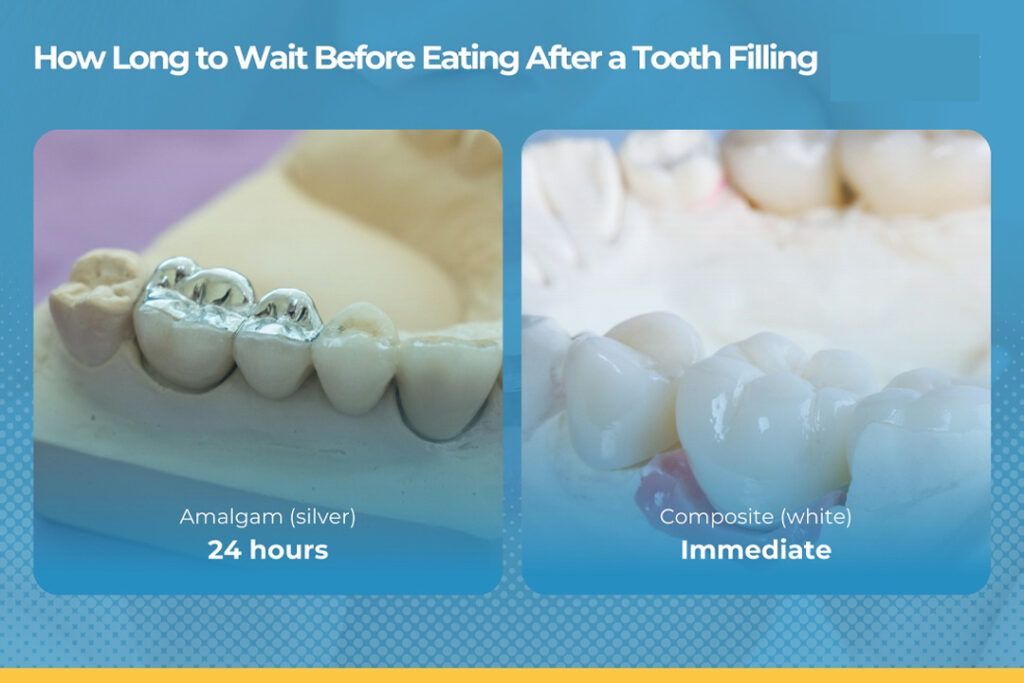
| Amalgam (silver) | Chemical crystallization | 1 – 2 hours (soft foods), 24 hours (hard foods) | 24 – 48 hours |
| Glass ionomer | Acid-base reaction | 1 – 2 hours | 24 hours |
| Resin-modified glass ionomer | Dual-cure (light + chemical) | 30 – 60 minutes | 24 hours |
| Gold / ceramic inlay | Cemented with resin | Immediately after cement cures | Immediate |
Composite resin is the most forgiving material when it comes to eating. Because each layer is fully cured with light during placement, the filling reaches its maximum hardness before you even leave the dental chair. The only reason to wait is the anesthesia, not the material.
Amalgam, by contrast, undergoes a gradual crystallization process and does not reach full compressive strength for 24 to 48 hours. Eating hard or sticky foods on a fresh amalgam filling during this window can deform or fracture the restoration. Glass ionomer cements are moisture-sensitive during the initial setting phase and benefit from at least one to two hours of protection before any food contact.
If you are unsure which material your dentist used, simply ask before leaving the appointment. Knowing your filling type is essential for following the correct post-operative eating timeline.
What Can You Eat After Tooth Filling?
Once the anesthesia has dissipated and the material-specific waiting period has passed, reintroducing food gradually and thoughtfully gives your tooth filling the best start for long-term durability.
Safe Soft Foods
For the first 24 hours after any dental filling, prioritizing soft, gentle foods minimizes stress on the restoration and reduces the chance of post-operative discomfort. The following options are consistently recommended by dental professionals:
- Yogurt, pudding, and smoothies
- Scrambled eggs or soft-boiled eggs
- Mashed potatoes or pureed soups
- Soft pasta with a mild sauce
- Bananas, avocado, and soft-cooked vegetables
- Oatmeal or porridge
- Soft bread without a hard crust
- Protein shakes or meal replacement drinks
These foods provide adequate nutrition without requiring aggressive chewing on the filled tooth. Try to chew on the opposite side of your mouth for the first day, especially if the cavity was deep or if you received an amalgam or glass ionomer filling that has not yet reached full strength.
Beverages: The Temperature Warning
What you drink matters as much as what you eat during the first 48 hours. The freshly filled tooth, particularly if the cavity was deep, is likely to be temporarily sensitive to thermal extremes. Very hot beverages like coffee, tea, or soup can trigger sharp sensitivity in the treated tooth, and very cold drinks or ice water can produce the same reaction.
Room-temperature or lukewarm beverages are the safest choice during the initial recovery period. Acidic drinks such as orange juice, lemonade, and carbonated sodas should also be minimized in the first 24 hours, as acidity can interfere with the final setting of glass ionomer fillings and may irritate the freshly treated gum tissue around the filling site. Water at room temperature is the ideal beverage throughout the first day.
What to Avoid Foods
Knowing what not to eat is just as important as knowing what is safe. Certain food categories pose specific risks to freshly placed dental fillings and should be avoided for the recommended period.
Sticky & Chewy Foods
Sticky and chewy foods are the greatest threat to a new tooth filling, particularly amalgam and glass ionomer restorations that have not yet reached full hardness. Caramel, toffee, chewing gum, gummy candies, dried fruit, and sticky granola bars exert pulling forces on the filling surface that can literally dislodge a restoration from the cavity.
Even for light-cured composite fillings that are fully set, sticky foods can pull at the margins and create microleakage at the bonding interface. Avoid sticky and chewy foods for at least 24 hours after any type of filling, and for 48 hours after amalgam placement.
Hard & Crunchy Foods
Hard foods generate concentrated point forces that can crack or chip a dental filling, especially during the initial setting period. Nuts, hard candies, ice cubes, popcorn kernels, raw carrots, crusty bread, and hard pretzels should be avoided for at least 24 hours after composite fillings and 48 hours after amalgam fillings. Biting directly into whole apples or corn on the cob is also risky because these foods require the front teeth to apply significant shearing force.
If you have received a large, multi-surface filling in a molar, exercising caution with hard foods for the first week is a sensible approach. The same protective principle applies to patients with more extensive restorations such as Dental Crowns or Emax Veneers, where conservative eating habits during the initial bonding phase contribute to long-term success.
Pain When Eating
Some degree of discomfort when eating during the first few days after a tooth filling is common and usually resolves on its own. However, understanding the difference between normal post-operative sensitivity and a problem that requires clinical attention can save you unnecessary worry or, conversely, prevent a small issue from becoming a bigger one.
Post-Op Sensitivity
Mild sensitivity to cold, heat, sweet foods, and biting pressure is expected for one to two weeks after a dental filling, particularly when the cavity was deep and close to the nerve (pulp). During the preparation process, the dentin tubules, microscopic channels that connect the outer tooth surface to the nerve, are exposed.
Even though the filling seals these tubules, the tooth needs time to settle and lay down secondary dentin as a protective barrier. This sensitivity is typically brief and sharp, lasting only a few seconds when triggered, and gradually diminishes day by day.
Over-the-counter desensitizing toothpaste containing potassium nitrate or stannous fluoride can help manage symptoms during this transitional period. If sensitivity persists beyond three to four weeks or worsens rather than improving, contact your dentist for evaluation.
The “High Bite” Issue
If you experience a sharp, localized pain every time you bite down on the filled tooth, particularly when biting on specific foods, the most likely cause is a “high bite,” meaning the filling is slightly too tall and contacts the opposing tooth before the rest of your bite meets. This is a common and easily correctable problem.
During the filling appointment, bite adjustment is performed with articulating paper, but the presence of anesthesia can make it difficult for patients to assess their natural bite accurately. Once the numbness wears off and you begin eating normally, even a fraction of a millimeter of excess height becomes immediately noticeable.
A quick return visit to the dentist for a minor adjustment, which takes only a few minutes and does not require anesthesia, resolves the issue completely. Do not ignore a persistent high bite; left uncorrected, it can cause inflammation of the tooth’s ligament, chronic pain, and even cracking of the filling or the tooth itself.
FAQ
Can I drink water immediately after a filling?
Yes, you can drink room-temperature water immediately after your dental filling appointment, even while still numb. Water does not pose any risk to the restoration regardless of the material type. Just be careful not to dribble due to the numbness, and avoid using a straw with excessive suction force if the filling is in a front tooth. Ice-cold water should be avoided until sensitivity settles, but plain water at ambient temperature is completely safe from the moment you leave the chair.
Can I smoke or vape after a filling?
It is best to avoid smoking or vaping for at least two hours after a tooth filling, and ideally for 24 hours. Smoking reduces blood flow to the gum tissue, impairing the healing of any soft tissue irritation caused during the procedure.
The heat from cigarette smoke can also increase sensitivity in a freshly filled tooth. For patients who received glass ionomer fillings, tobacco smoke can interfere with the fluoride-release mechanism of the material during its initial setting phase. Beyond the immediate post-operative period, smoking remains a significant risk factor for gum disease and recurrent decay around filling margins. Teeth Whitening effectiveness is also significantly reduced in smokers, making cessation beneficial for both restorative and aesthetic outcomes.
Can I brush my teeth tonight?
Yes, you should brush your teeth on the evening of your filling appointment. Maintaining oral hygiene is essential for preventing plaque accumulation at the filling margins, which is the most vulnerable area for secondary decay. Use a soft-bristled toothbrush and gentle pressure around the treated tooth. You may notice slight sensitivity during brushing for the first few days, which is normal.
Flossing around the filled tooth can be resumed the same evening, though you should slide the floss out sideways rather than snapping it upward to avoid dislodging any material from the margins of a freshly placed filling.
Why does my jaw ache after the numbness wears off?
Jaw ache after a dental filling appointment is almost always caused by holding your mouth open for an extended period during the procedure, not by the filling itself. The temporomandibular joint and the muscles of mastication can become fatigued and sore after sustained wide opening, especially for lower molar restorations that require the mouth to be open widest.
This muscular discomfort typically resolves within 24 to 48 hours. Gentle jaw stretches, warm compresses on the outside of the jaw, and soft foods during this period help the muscles recover. If the ache persists beyond a few days or is accompanied by clicking or locking of the jaw joint, a professional evaluation may be warranted.
How do I chew if I’m starving but still numb?
If hunger is unbearable during the numbness window, you can safely consume foods that require absolutely no chewing: smoothies, protein shakes, yogurt, applesauce, or lukewarm pureed soup sipped carefully from a spoon. The critical rule is to avoid anything that requires biting or chewing motions, because without sensation you cannot control your bite force or detect if you are injuring your cheeks, tongue, or lips.
Position the food toward the back of your throat to minimize contact with numb tissue. Once full sensation returns, you can transition to the soft-food recommendations outlined earlier in this article. If you are planning a more comprehensive dental journey that involves multiple procedures across several days, such as a Hollywood Smile transformation or Composite Bonding alongside fillings, your treatment coordinator will help you plan meals and appointment timing so that you are never left hungry and uncomfortable between sessions.
Conclusion
How long after a tooth filling can you eat ultimately comes down to two factors: the type of anesthesia and the type of filling material. The universal rule is to wait until numbness has completely resolved before putting any food in your mouth.
After that, composite resin fillings allow you to eat immediately, while amalgam and glass ionomer fillings require one to two hours for soft foods and a full 24 to 48 hours before hard or sticky foods are safe. Prioritizing soft, room-temperature foods during the first day, avoiding sticky and hard items, and chewing on the opposite side are simple strategies that protect your new restoration and minimize post-operative discomfort.
If sensitivity when eating persists beyond two weeks, or if you feel a sharp pain every time you bite down, a quick visit to your dentist for adjustment will resolve the issue in minutes. Proper care of your dental filling in the first 48 hours sets the stage for years of trouble-free function.
Whether you need a single tooth filling or a comprehensive treatment plan that includes Dental Implants, Emax Veneers, or a full All on 4 restoration, the quality of post-operative care you follow is what determines your long-term satisfaction. To discuss your dental needs with experienced specialists in the heart of the Mediterranean, contact Clean Smiley Turkey. Our team in Antalya is ready to guide you through every step of your treatment journey. Request your free quote today.