Receding Gum Recession is a serious oral health issue that affects millions of people worldwide and often progresses unnoticed. When the gums gradually recede, tooth roots become exposed, sensitivity increases, and if left untreated, it can progress to tooth loss.
What Is Gum Recession?
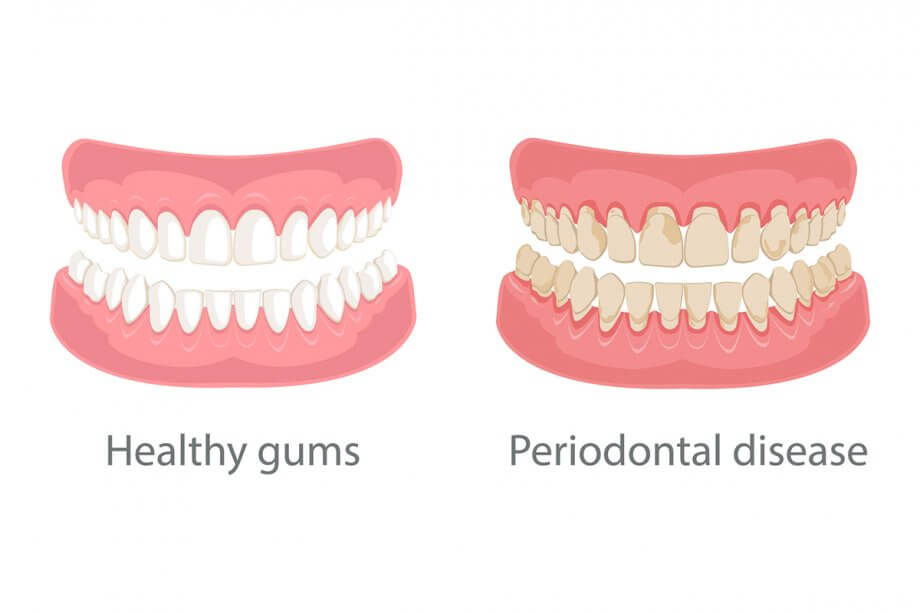
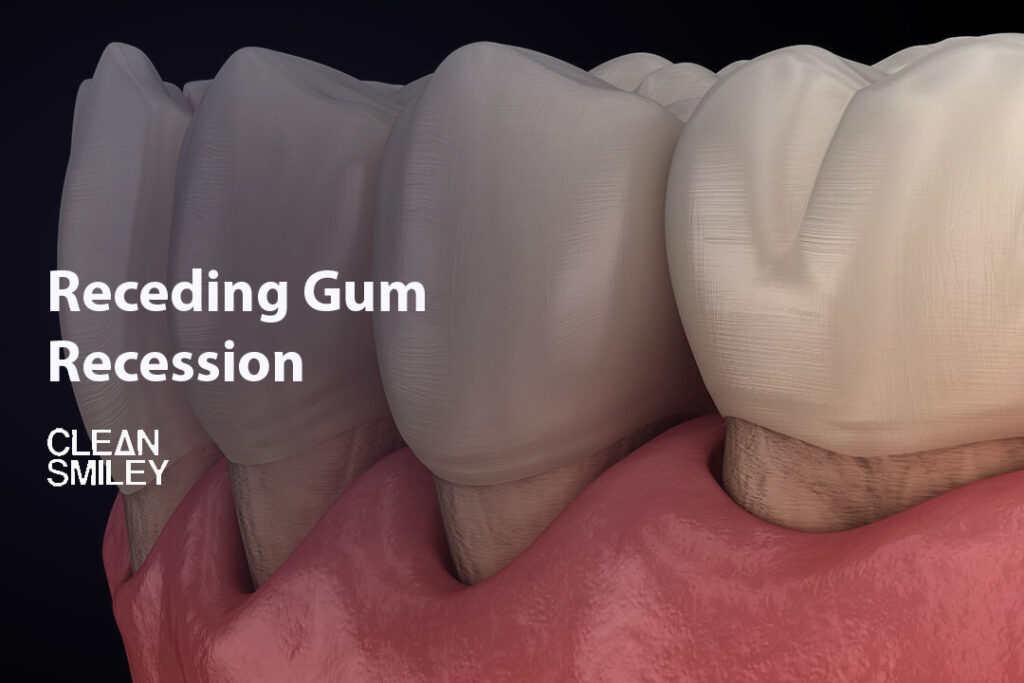
Gum recession is a condition in which the gum tissue recedes toward the tooth root, exposing the root surface that is normally protected by the gums. In a healthy mouth, the gum firmly attaches at the point where the enamel-covered crown portion of the tooth ends, protecting the root surface, periodontal ligament, and alveolar bone underneath. When recession occurs, this protective barrier is lost and the tooth root becomes exposed to the external environment. Since the root surface is not covered with enamel, it is much more vulnerable to decay, abrasion, and sensitivity.
World Health Organization data indicates that periodontal diseases are among the most common chronic diseases worldwide, and gum recession is one of the most visible signs of these diseases. Recession can be localized to a single tooth or can take a widespread form affecting multiple teeth or the entire mouth.
Signs and Symptoms: How to Spot It
Gum recession generally progresses slowly and may not present obvious symptoms in the initial stage. However, it is possible to detect it at an early stage with careful observation and awareness.
Visual Signs (Longer Teeth)
The most obvious visual sign of gum recession is that the teeth appear longer than normal. When the gum line recedes, the normally hidden root portion of the tooth is revealed and the tooth appears optically elongated. You may notice when smiling in the mirror that one tooth looks longer than the others. Irregularity and asymmetry in the gum line are also important indicators. In some patients, the yellowish color of the tooth root becomes visible because the root surface is covered with cementum rather than enamel and has a darker tone.
Sensory Symptoms (Sensitivity)
The most bothersome symptom of gum recession is sensitivity. On the exposed root surface, thousands of dentin tubules are directly connected to nerve endings, and hot, cold, sweet, or acidic stimuli pass through these tubules to trigger sharp pain. Discomfort at the gum line during brushing, stinging in teeth when breathing cold air, and a sudden sharp sensation upon contact with acidic foods are typical signs of sensitivity related to gum recession. Teeth Whitening, sensitivity assessment before such procedures is therefore important.
Advanced Symptoms
In advanced-stage gum recession, symptoms become much more pronounced and concerning. A feeling of looseness in teeth, increasing gaps between adjacent teeth, gum abscess or recurrent inflammation, pain during chewing, and even spontaneous tooth loss are among the characteristic findings of this stage. Visible decay formation on the tooth root is also a serious complication of advanced recession. Patients who reach this stage need urgent professional intervention.
The Stages of Gum Recession
Gum recession is classified into three main stages according to its severity. Each stage has a different treatment approach and prognosis.
Stage 1: Mild Recession
In mild-stage recession, the gum has receded up to 1 to 2 millimeters below the cemento-enamel junction. At this stage, bone loss is minimal or absent, the interdental papilla between teeth is largely intact, and the patient generally reports no significant complaints other than mild sensitivity.
The mild stage is the most ideal time for intervention because progression can be stopped and natural healing is even possible in some cases. Regular dental checkups are the key to early diagnosis at this stage.
Stage 2: Moderate Recession
In moderate-stage recession, the amount of root exposure has reached 3 to 4 millimeters. Measurable bone loss has begun in the alveolar bone, and the interdental papilla may have started to shrink. Sensitivity becomes pronounced, and the risk of initial decay on the root surface increases.
This stage can still be managed with non-surgical treatments, but surgical intervention may be required depending on the rate of progression. Moderate-stage recession Dental Crowns veya Composite Bonding and similar restorative treatments may be needed to protect the exposed root surface.
Stage 3: Severe Recession
In severe-stage recession, the amount of root exposure exceeds 5 millimeters. Significant bone loss is present, tooth mobility (loosening) may have begun, and the interdental papilla may have completely disappeared. Wide black triangles between teeth become prominent.
This stage requires aggressive surgical intervention and comprehensive periodontal treatment. Despite treatment, the prognosis may be poor for some teeth and the risk of tooth loss is high. At this point, Dental Implants veya All on 4 and similar advanced solutions may come into consideration.
Common Causes & Risk Factors
Gum recession does not have a single cause; it generally occurs due to a combination of multiple factors.
Aggressive Brushing & Trauma
Brushing with excessive pressure using a hard-bristled toothbrush is the most common and most preventable cause of gum recession. This condition is called “traumatic recession.” Horizontal back-and-forth sawing motion physically wears down gum tissue and causes recession over time.
This damage occurs much faster especially in individuals with a thin biotype (thin gum tissue structure). Switching from a hard-bristled brush to a soft-bristled brush and learning the correct brushing technique is the most effective step in stopping recession due to this cause.
Periodontal Disease (Gingivitis)
Gum disease is the most common pathological cause of recession. Bacterial colonies formed as a result of plaque accumulation first cause gingivitis (gum inflammation); bleeding, redness, and swelling are signs of this stage. If left untreated, gingivitis progresses to periodontitis; at this stage, bacterial toxins and the immune response destroy the connective tissue fibers that attach the gum to the tooth and the underlying alveolar bone.
As bone loss progresses, the gums recede due to lack of support. Regular professional dental cleaning and home care are the fundamental strategy in preventing periodontal disease. Our treatment options to protect your gum health.
Genetics & Anatomy
Genetic factors play an important role in susceptibility to gum recession. Some individuals are born with thin and fragile gum tissue; this structure is much more vulnerable to trauma and infection compared to a thick biotype. The position of teeth in the jawbone is also a determining factor; in teeth that are tilted outward, the bone layer can be extremely thin and even minimal trauma can cause recession.
A frenum attachment very close to the gum margin can also trigger gum recession. These anatomical factors cannot be changed, but being aware of them ensures that preventive measures are taken early.
Lifestyle Factors
Lifestyle factors significantly increase the risk of gum recession. Smoking slows tissue healing by reducing gum blood circulation and increases the risk of periodontal disease several times. Teeth clenching and grinding accelerate recession by applying excessive force to teeth. Hormonal changes make gum tissue more sensitive and prone to recession. Poor nutrition, especially vitamin C deficiency, causes weakening of gum tissue by disrupting collagen synthesis. Oral piercings can also lead to gum recession through friction trauma.
Can Receding Gums Grow Back?
This is the first question that comes to mind for almost everyone experiencing gum recession, and the answer is neither completely yes nor definitely no. Gum tissue does not grow back on its own like a cut on your finger heals, because the gum attaches to the tooth with specialized connective tissue fibers, and once this connection is broken, spontaneous regeneration does not occur.
However, partial recovery is possible under certain conditions. Gums that appear to have receded due to swelling and inflammation associated with gingivitis may return close to their original position when the inflammation is brought under control. This is not true “regrowth” but rather the tissue readapting as the inflammatory swelling resolves.
Exposed root surfaces can be covered again with surgical interventions, and significant improvement can be achieved both aesthetically and functionally. What is important is to intervene as soon as possible when recession is detected; early intervention dramatically improves outcomes.
Non-Surgical Treatments (Early Stage)
In early and moderate-stage gum recession, it may be possible to stop progression and stabilize the current condition without surgical intervention.
Scaling and Root Planing (Deep Cleaning)
Scaling and root planing is the first-line treatment for gum recession associated with periodontal disease. In this procedure, plaque, tartar, and bacterial toxins accumulated in gum pockets are carefully cleaned using ultrasonic or hand instruments.
Root planing removes roughness from the root surface, facilitating the reattachment of the gum tissue. The procedure is generally performed under local anesthesia and may require one to four sessions depending on the condition of the mouth. American Academy of Periodontology considers this treatment as the cornerstone of non-surgical periodontal therapy. Clean Smiley Turkey partner clinics, visit our contact page ziyaret edebilirsiniz.
Antibiotics & Antimicrobials
After deep cleaning, local or systemic antibiotics can be used to bring the infection under control. In local application, gel or fiber containing antibiotics is placed directly into the gum pocket, and the medication remains in high concentration at the target area. Chlorhexidine mouthwash is the most effective among antimicrobial oral care products and keeps plaque accumulation under control.
Systemic antibiotics are used orally in cases of widespread or aggressive periodontal disease. Antibiotic treatment should always be combined with professional cleaning; it is not sufficient on its own.
Desensitizing Agents & Bonding
Sensitivity on exposed root surfaces is a significant problem that reduces the patient’s quality of life. Fluoride varnishes and desensitizing agents reduce nerve stimulation by blocking the dentin tubules. Professionally applied high-concentration fluoride varnishes are much more effective than home products.
In advanced cases, flowable composite resin bonding can be applied to the exposed root surface; this both eliminates sensitivity and reduces the risk of root decay. Composite Bonding treatment offers an effective solution for aesthetic and functional problems related to gum recession.
Surgical Treatments (Advanced Stage)
In moderate and advanced-stage cases where non-surgical treatments are insufficient, surgical intervention becomes the gold standard in the treatment of gum recession.
Connective Tissue Graft
Connective tissue graft is the most commonly used surgical technique with the highest success rate in the treatment of gum recession. Connective tissue taken from the palate area is placed in the recession area, and the existing gum tissue is closed over it and sutured.
Over time, the graft integrates with the surrounding tissue by forming blood vessels and permanently covers the exposed root surface. This technique provides excellent root coverage rates, especially in localized recession cases affecting one or a few teeth. The healing process generally takes two to four weeks with minimal discomfort.
Free Gingival Graft
A free gingival graft involves transplanting a piece of tissue taken directly from the surface tissue of the palate to the recession area. Unlike the connective tissue graft, a thicker and keratinized tissue transfer is performed. This technique is preferred especially in patients with a thin biotype to increase gum thickness and prevent future recession. Root coverage success may be lower compared to connective tissue graft, but it is superior in increasing keratinized tissue width. Healing at both recipient and donor sites takes several weeks.
Pinhole Surgical Technique (PST)
The pinhole surgical technique is an innovative approach that is much less invasive than traditional graft methods. In this technique, a small pinhole is made in the gum, and the existing gum tissue is gently repositioned to cover the root surface using special instruments.
Collagen membranes are placed to support the tissue’s retention in the new position. Since it does not require incisions or sutures, the healing time is very short and patient comfort is significantly higher. Multiple teeth can be treated in a single session. However, the technique requires a specially trained periodontist and may not be suitable for every case.
Pocket Reduction Surgery (Flap)
Pocket reduction surgery (flap operation) is applied in the treatment of deep gum pockets associated with advanced periodontal disease. The gum tissue is surgically lifted, the underlying bone surface and root surfaces are directly visualized and cleaned, infected granulation tissue is removed, and bone grafts or regenerative membranes are placed when necessary.
Then the gum is repositioned with reduced pocket depth and sutured. This procedure controls the disease by eliminating deep pockets that create an environment for bacterial colonies. In advanced cases, tooth loss may be unavoidable despite treatment; in such cases, All on 6 veya Dental Implants and similar rehabilitation options come into play.
Home Remedies & Management
Home remedies cannot replace professional treatment but can be beneficial as a support to treatment and as a daily management strategy.
Oil Pulling & Green Tea
Oil pulling is an oral care practice from the Ayurvedic tradition. It aims to reduce the bacterial load in the mouth by swishing a tablespoon of coconut or sesame oil in the mouth for 15 to 20 minutes. A limited number of scientific studies have shown that oil pulling may alleviate plaque and gingivitis symptoms, but the level of evidence is not strong.
Green tea exhibits anti-inflammatory and antibacterial properties thanks to the catechin antioxidants it contains. There is research suggesting that regular green tea consumption supports periodontal health. Both methods are harmless and can be considered as additions to the daily care routine.
Aloe Vera & Salt Water
Aloe vera gel is a natural herbal solution known for its anti-inflammatory and antimicrobial properties. Gently massaging pure aloe vera gel onto the gums may help alleviate gum inflammation.
Saltwater gargle is one of the most accessible and reliable home remedies; thanks to its osmotic effect, it reduces gum swelling, lowers bacterial load, and supports oral pH balance. Gargling two to three times a day by adding half a teaspoon of salt to a glass of warm water can be done. These methods are complementary to professional treatment; they cannot reverse recession on their own.
Prevention & Maintenance
Preventing gum recession is always easier, cheaper, and more effective than treating it.
Correct Brushing Technique
Correct brushing technique is the most fundamental step in preventing gum recession. Choose a soft-bristled toothbrush and apply the Bass technique:
- Place the brush at a 45-degree angle to the gum line,
- Gently clean each tooth surface with short circular or vibrating motions.
- Never make horizontal sawing motions and do not apply excessive pressure.
- Electric toothbrushes with pressure sensors are an excellent aid for those with a heavy brushing habit.
Emax Veneers veya Hollywood Smile and similar aesthetic treatments also depends on correct brushing technique.
Night Guards for Grinding
In individuals with teeth clenching and grinding (bruxism) habits, the use of a night guard (occlusal splint) prevents recession by absorbing the excessive force applied to teeth and gums. Bruxism usually occurs unconsciously during sleep; jaw pain, headaches, or sensitivity in teeth upon waking up in the morning are important indicators.
A custom-made night guard prepared by your dentist is much more effective and comfortable than over-the-counter guards. Regular checkups, professional cleaning every six months, smoking cessation, balanced nutrition, and stress management are also important components in maintaining gum health. For a comprehensive evaluation, get a free quote talep edebilirsiniz.
Conclusion
Gum recession is a condition that can lead to serious consequences when ignored but can be successfully managed with early detection and proper intervention. While correct brushing habits and professional cleaning may be sufficient in the mild stage, surgical intervention may be required in advanced stages. What is important is to recognize the symptoms early, control risk factors, and not neglect regular dental checkups.
The health of your gums is the foundation of your smile and overall oral health. Everything starts with healthy gums. Whether you want to protect your natural teeth or plan Dental Crowns, Emax Veneers veya Dental Implants and similar restorative treatments, your gums must be healthy.
To get a professional evaluation about your gum health and create your personalized treatment plan, contact Clean Smiley Turkey. Work with expert periodontists in Antalya, restore your gums to health, and enjoy your smile with confidence.