Noticing a black spot on tooth can be worrying. Is it a harmless superficial discoloration, or a cavity that requires treatment? The cause of a black spot can range widely, from a simple tea stain to serious tooth decay, from an old amalgam filling to rare systemic diseases.
Introduction: Why Dark Spots Appear on Teeth
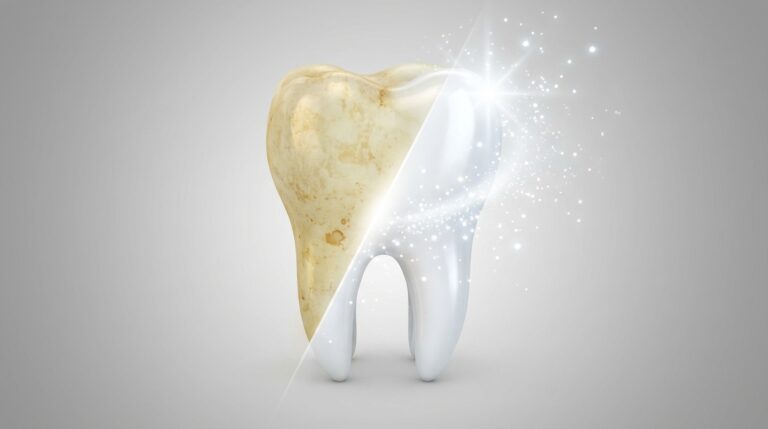
Two main mechanisms underlie the formation of dark-colored spots on teeth. The first is the settling of external pigments on the tooth surface. The other cause is changes occurring in the internal structure of the tooth. Despite appearing smooth, tooth enamel has a porous structure at the microscopic level, and these pores can absorb color pigments. Lesions that penetrate beyond the enamel reach the dentin layer beneath, creating a darker and more permanent appearance.
Regardless of the cause of the black spot, early evaluation and prompt intervention when needed ensures that treatment remains simple and cost-free. A black spot that is ignored may require more complex and expensive treatments over time. American Dental Association recommends that professional evaluation should be sought as soon as possible when any color change in tooth structure is noticed.
Stain vs. Cavity: The At-Home Comparison Checklist
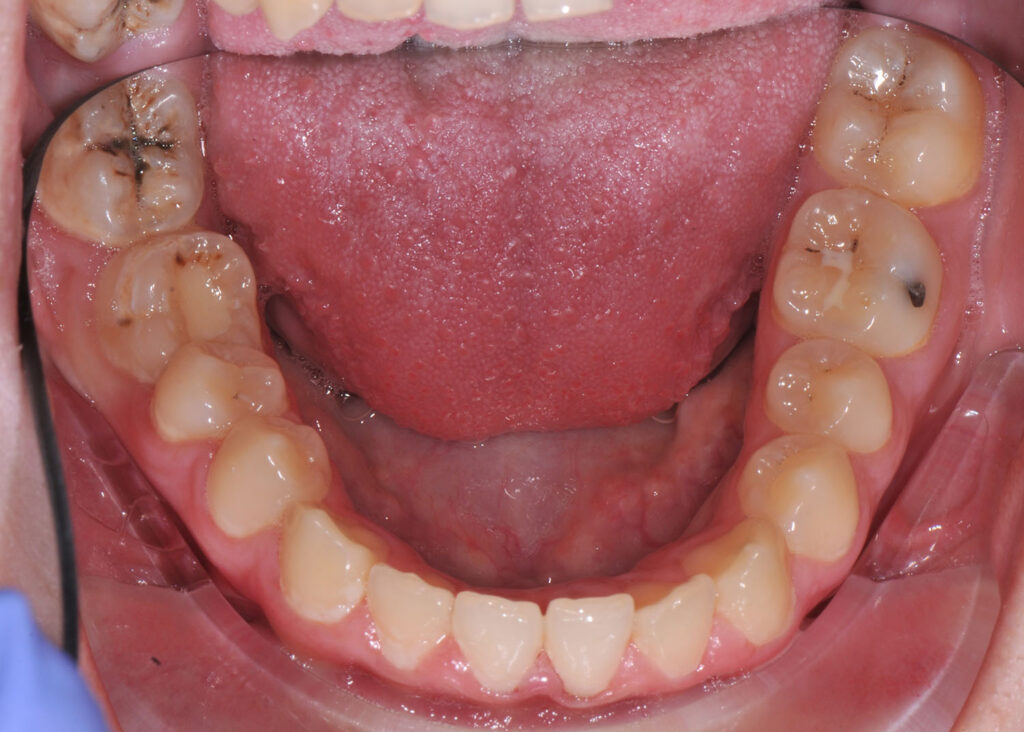
Only your dentist can definitively determine whether the black spot on your tooth is a stain or a cavity. However, some observations you can make at home may help you assess the urgency of the situation.
Tactile Feel (Texture & Stickiness)
Try to feel the surface texture of the black spot with your clean, dry fingers or tongue. Superficial stains generally feel smooth; the natural surface texture of the tooth is undisturbed, and your finger or tongue will not detect any pitting or edges. Since decay destroys tooth structure, roughness, stickiness, or a noticeable pit is felt on the surface.
If a dental probe or dental floss catches when passed over the spot, this is an important indicator of decay. However, this is a simple guide; early-stage cavities may not yet have created a noticeable pit on the surface.
Pain and Temperature Sensitivity
Stains do not cause pain. If you experience sensitivity to cold or hot foods, sensitivity to sweet foods, or spontaneous pain along with the black spot on your tooth, this is a strong indicator of decay. The severity of pain is proportional to the depth of decay; mild and temporary sensitivity is expected in superficial cavities, while severe and prolonged pain is expected in deep cavities.
Pain that wakes you from sleep at night or requires painkillers indicates that the decay has reached the nerve and root canal treatment may be needed. Teeth Whitening is therefore of great importance for pre-treatment sensitivity assessment.
Shape and Border Definition
The shape and borders of the stain also offer important clues. Superficial external stains are generally irregular, diffuse, and have indistinct borders; they can affect multiple teeth and are not limited to a specific anatomical area. Decay, on the other hand, generally starts from a specific focal point and has more defined borders. A localized black spot in the grooves of the chewing surface of the tooth is the classic appearance of fissure decay. Widespread black discoloration on multiple teeth generally suggests staining.
Common Causes of Black Spots (The Big 4)
The four main causes of black spots on teeth account for the vast majority of cases in clinical practice.
Extrinsic Stains (Lifestyle & Diet)
Extrinsic stains are the most common and most harmless cause of black spots. Dark-colored foods and beverages such as coffee, tea, red wine, cola, soy sauce, and blueberries leave pigment on the organic film layer (pellicle) on the enamel surface. Smoking and hookah use create stains ranging from yellow to brown and even black as tar and nicotine adhere to the tooth surface.
Long-term use of mouthwashes containing chlorhexidine can also cause characteristic brown-black stains. All of these stains are superficial and can be easily removed with professional dental cleaning. Consuming dark-colored beverages through a straw and rinsing the mouth with water afterwards are simple but effective measures to reduce stain formation.
Tartar (Black Calculus)
Dental calculus is a hard structure formed by the mineralization of plaque and cannot be removed by regular brushing. Calculus that accumulates below the gum line takes on a dark brown or black color upon contact with hemoglobin pigments from the blood; this is called “black calculus.”
This type of calculus is usually hidden inside gum pockets and becomes visible as gum recession progresses. Black calculus is a strong indicator of active periodontal disease and should be removed by professional cleaning (scaling). If left untreated, gum recession and bone loss accelerate. Our treatment options to learn about professional cleaning.
Tooth Decay (Caries Progression)
Tooth decay is the most serious cause of black spots and requires immediate intervention. Decay begins when acids produced by bacteria in the oral environment dissolve the enamel structure. In the initial stage, it appears as a white opaque spot (white spot lesion); at this stage, reversal through remineralization is possible. As it progresses, enamel cavitation occurs and bacterial pigments along with dissolved tooth tissue take on a dark color.
When decay reaches the dentin, it spreads faster because dentin is softer than enamel and has higher organic content. If left untreated, decay reaches the pulp, causing severe pain and infection. A cavity that could be treated with a simple filling in the early stage may require root canal treatment, a crown, or even tooth extraction when delayed. Dental Crowns and similar restorative treatments are applied to protect the tooth in advanced decay cases.
Old Dental Restorations (Amalgam Leaks)
Old amalgam fillings can stain the surrounding tooth dark gray or black over time through metallic pigment leakage into the tooth structure. This condition is called “amalgam tattoo” or “amalgam leakage.” Silver, tin, and mercury ions in the composition of amalgam penetrate the dentin tubules, creating a permanent color change.
Additionally, micro-leakage occurring at the edges of old amalgam fillings can create a black halo appearance by paving the way for secondary decay at the filling-tooth interface. In modern dentistry, composite resin and ceramic restorations have largely replaced amalgam fillings. If you want to replace your old amalgam fillings with aesthetic and healthy materials, you can consider Composite Bonding veya Emax Veneers options.
Less Common Medical & Structural Causes
Beyond the common causes, certain medical conditions and structural factors can also lead to black spots on teeth.
Dental Trauma & Internal Bruising
A blow to the tooth can cause damage to the blood vessels inside the tooth and bleeding in the pulp chamber. Hemoglobin degradation products penetrate the dentin tubules, giving the tooth a dark gray, blue-black, or brown color from the inside. This discoloration can appear days, weeks, or even months after the trauma.
Sometimes the traumatized tooth maintains its vitality and the discoloration may lighten over time. However, if the tooth has become devitalized (the nerve has died), the discoloration becomes permanent and root canal treatment may be needed. After root canal treatment, the aesthetics can be corrected through internal whitening or Hollywood Smile veneer application.
Celiac Disease & Enamel Defects
Celiac disease is an autoimmune disorder related to gluten intolerance that can affect enamel formation during the tooth development period. Symmetrical enamel hypoplasia and enamel color disorders are frequently observed in celiac patients. These enamel defects can manifest as brown, yellow, or black spots and usually show symmetrical distribution in specific groups of permanent teeth.
Similar enamel defects can also be seen in fluorosis (excessive fluoride exposure), amelogenesis imperfecta, and high-fever illnesses during childhood. These structural defects cannot be removed by brushing or whitening; restorative approaches such as veneers or crowns are needed for treatment.
Medication Side Effects
Some medications can cause permanent color changes in tooth structure. The most well-known example is tetracycline group antibiotics; when used during the tooth development period (pregnancy through age 8), they permanently bind to dentin, forming bands that turn from yellow to brown and to black in daylight. Iron supplement preparations can leave temporary black stains on the tooth surface.
Long-term use of chlorhexidine mouthwash also creates characteristic brown-black discolorations on the tongue and tooth surface. Drinking liquid iron preparations through a straw and rinsing the mouth afterwards keeps stains on the tooth surface to a minimum. Professional whitening or veneer application are the most effective solutions for tetracycline stains.
Professional Treatment: How Your Dentist Fixes It
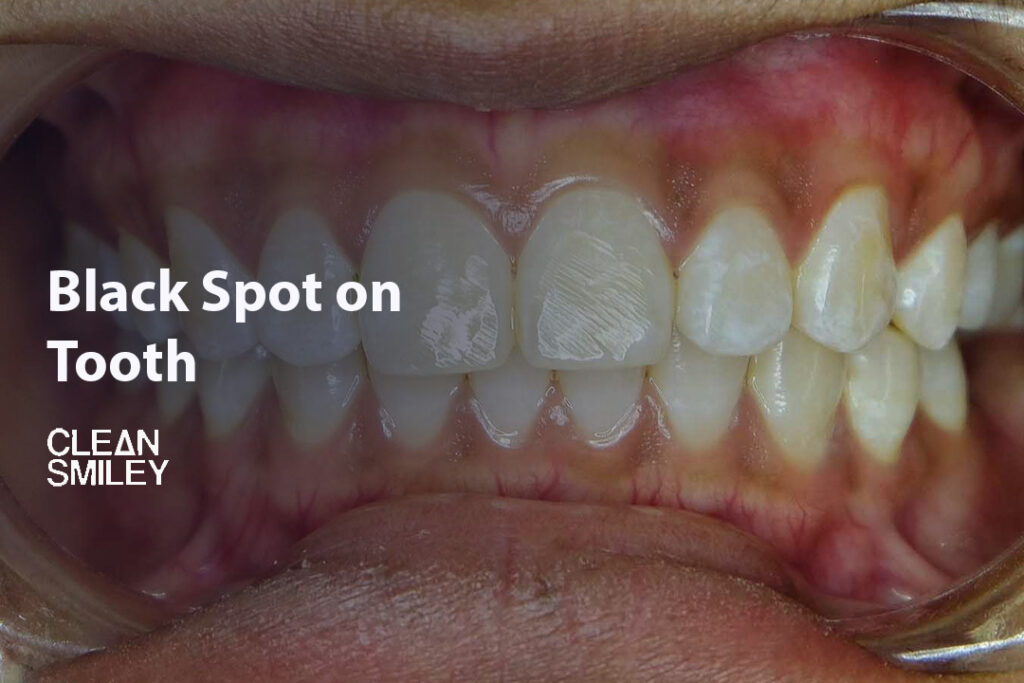
Depending on the cause of the black spot, the treatment approach can range from a simple cleaning to a comprehensive restoration.
Prophylaxis & Air Polishing
For extrinsic stains and superficial calculus, professional dental cleaning (prophylaxis) is the first-line treatment. Calculus is removed with an ultrasonic scaler, then tooth surfaces are polished with polishing paste and a rubber cup. Air polishing systems spray sodium bicarbonate or glycine powder onto the tooth surface with high-pressure water and air, removing stubborn external stains without damaging the enamel surface.
This procedure is especially effective for coffee, tea, and cigarette stains. After professional cleaning, Teeth Whitening application can take the natural whiteness of your teeth one step further.
Composite Bonding & Fillings
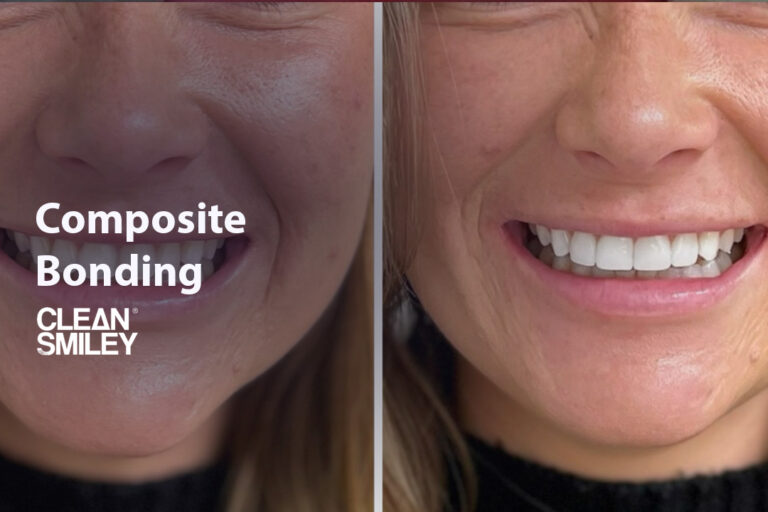
Composite resin restorations are applied for decay-related black spots or small structural defects. After the decayed tissue is completely cleaned, composite resin matching the natural color of the tooth is placed in layers and each layer is cured with light. Modern composite resins offer excellent color matching and surface properties that mimic natural enamel texture.
For wider defects or aesthetically critical areas, the Composite Bonding technique allows for the complete reshaping of the tooth. In cases where decay has progressed significantly and tooth structure has been substantially lost, Dental Crowns may be needed for complete restoration of the tooth.
Veneers & Internal Whitening
External whitening may not be sufficient for internally sourced discoloration. “Internal whitening” can be applied to teeth that have undergone root canal treatment; the whitening agent is placed in the pulp chamber and whitening is achieved from the inside over several sessions.
In cases where internal whitening is insufficient or multiple teeth are affected, porcelain veneers offer a permanent solution. Emax Veneers, thanks to their lithium disilicate glass-ceramic structure, completely mask the discoloration underneath while providing a superior natural appearance. For a comprehensive smile transformation, Hollywood Smile treatment addresses multiple teeth simultaneously, producing a harmonious result.
The Danger of “DIY” Black Spot Removal
Many methods recommended on the internet for removing black spots on teeth at home can cause serious harm rather than providing benefit. Aggressive scrubbing with baking soda abrades the enamel surface, leading to sensitivity and easier staining. Rubbing with lemon juice or apple cider vinegar accelerates enamel erosion due to their strong acid content.
Sharp-tipped “dental calculus cleaning tools” purchased online can cause gum damage, bleeding, and infection. The effectiveness of products containing activated charcoal has not been scientifically proven, and their abrasive nature can damage the enamel surface.
The most dangerous scenario is trying to “clean” a cavity at home thinking it is a stain. Decay progresses without professional intervention, and home attempts cause both loss of time and worsening of the condition. The safest approach for any black spot on your tooth is to get a professional evaluation. Free quote to get an expert opinion.
Summary: When to Call Your Dentist
A black spot on your tooth does not necessarily have to be a serious problem; however, it is not possible to know the cause definitively without professional evaluation. Situations where you should make an appointment immediately include:
- If there is pain or sensitivity along with the black spot,
- If the size of the spot is growing,
- If a noticeable pit or roughness is felt on the surface,
- If gum swelling or bleeding accompanies it,
- If the black spot appeared after a trauma.
Even without pain, any discoloration that has remained unchanged for more than six months should be evaluated during a routine checkup.
Early intervention saves a problem that could be solved with a simple filling from turning into a complex case requiring root canal treatment or tooth extraction. For any changes in your teeth, contact Clean Smiley Turkey. Composite Bonding‘den Dental Crowns‘a, Emax Veneers‘den Teeth Whitening for professional support. Our expert team in Antalya is ready to identify the cause of black spots on your teeth and offer the most appropriate treatment.