Dental bridges are the first option that people with missing teeth turn to. Tooth loss is a serious health issue that affects not only your smile but also your chewing function, speech, and even your facial structure. Dental bridges are one of the most established and reliable restoration methods in dentistry, restoring both aesthetic and functional integrity by closing the gap left by missing teeth.

What is a Dental Bridge? Restoring Function Beyond the Smile
A dental bridge is a fixed prosthetic structure that replaces one or more missing teeth and is attached to adjacent teeth or implants. The basic components of the bridge are crowns placed on the abutment teeth, the artificial tooth or teeth (pontic) suspended between these crowns, and the metal or ceramic substructure that brings all these components together. Once the bridge is cemented in the mouth, it cannot be removed by the patient; it functions like natural teeth. This feature is the most fundamental difference that distinguishes dental bridges from removable dentures.
Why Leaving a Gap is More Than Aesthetic
Leaving a missing tooth untreated leads to a series of problems that create a domino effect over time. Adjacent teeth begin to tilt toward the gap, and this shifting causes bite disorders. The opposing tooth begins to over-erupt because it has lost its counterpart.
These movements disrupt chewing balance and pave the way for temporomandibular joint (TMJ) problems. Additionally, since bone stimulation stops in the missing tooth area, alveolar bone resorption accelerates; this leads to facial collapse and an aged appearance.
American College of Prosthodontists data indicates that untreated tooth loss leads to much more complex and costly problems in the long term. For this reason, restoring the missing tooth as soon as possible is of great importance.
The 4 Primary Types of Dental Bridges Explained
Every case has its own unique requirements, and the type of dental bridge is determined based on the position of the missing tooth, the condition of the adjacent teeth, and the patient’s overall oral health.
Traditional Fixed Bridges: The Multi-Unit Standard
The traditional fixed bridge is the most commonly used bridge type. Healthy teeth on both sides of the gap are prepared as abutments; these teeth are trimmed to receive crowns, and one or more artificial teeth are suspended between the crowns placed on them.
For example, a three-unit bridge is applied for a single missing tooth: two abutment crowns and one pontic. This method produces excellent results in cases where the abutment teeth are sound and have adequate root structure. Its durability is proven, offering 10 to 15 years of trouble-free use with proper care. Dental Crowns to learn about the most suitable material for your bridge abutment crowns.

Maryland Bridges: The Conservative Front-Tooth Option
The Maryland bridge (resin-bonded bridge) is a much less invasive alternative compared to the traditional bridge. Instead of trimming the entire abutment teeth, it is retained by thin metal or ceramic wings bonded to the back surface of the adjacent teeth.
This way, healthy tooth structure is largely preserved. Maryland bridges are ideal especially for single-tooth gaps in the front region and in cases where the abutment teeth are sound. However, they may not provide adequate retention in posterior areas where chewing forces are intense and carry a risk of debonding. In front teeth, they produce aesthetically excellent results and can also be used as a temporary solution in young patients while waiting for bone development to be completed for an implant.
Cantilever Bridges: Solutions for Single-Sided Support
A cantilever bridge is applied in situations where there is an abutment tooth on only one side of the gap. The pontic hangs from a single abutment crown; there is no abutment tooth on the other side of the gap. This design is preferred in cases where the missing tooth is at the very back of the mouth with no other tooth behind it, or when one of the adjacent teeth is not suitable.
However, single-sided support can create a lever effect, causing disproportionate force to be applied to the abutment tooth. For this reason, cantilever bridges are generally applied in low chewing force areas and for single-tooth gaps; their use in the molar region is risky.
Implant-Supported Bridges: The Modern Hybrid
Implant-supported bridges are the combination of the traditional bridge concept with implants, the most powerful technology in modern dentistry. Instead of trimming adjacent natural teeth, titanium implants placed in the jawbone serve as abutments.
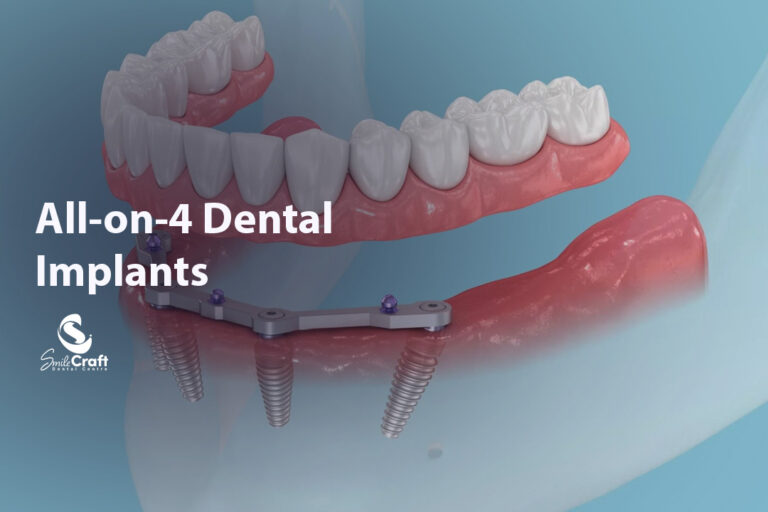
In cases with three or more missing teeth, a bridge can be placed on two implants instead of a separate implant for each tooth; this both reduces cost and minimizes surgical intervention. All on 4 and All on 6 concepts are the most comprehensive applications of this principle and have revolutionized full-arch restoration. Dental Implants to evaluate whether an implant-supported bridge is right for you.
Material Science: Choosing Zirconia vs. Porcelain in 2026
Bridge material selection directly determines both the aesthetics and durability of the restoration. As of 2026, two materials stand out.
Monolithic Zirconia: “Ceramic Steel” for High-Pressure Molars
Monolithic zirconia is an extremely durable ceramic material produced as a single piece that does not require any veneer coating. With a flexural strength of 900 to 1200 MPa, it has become the gold standard for posterior bridges. This strength, which earns it the nickname “ceramic steel,” provides superior resistance to intense chewing forces and even bruxism.
The monolithic design completely eliminates the risk of porcelain chipping seen in layered structures. The latest generation of high-translucency zirconia materials have also made significant advances aesthetically; however, they still fall behind glass ceramics in anterior aesthetics. For posterior bridges, monolithic zirconia is the undisputed leader of 2026.
E-max and Layered Porcelain for a Natural Front-Smile
Naturalness is everything in anterior bridges, and E-max (lithium disilicate glass-ceramic) is unrivaled in this field. The light transmittance of E-max, which is very close to natural tooth enamel, creates an appearance in front teeth that is nearly indistinguishable from a real tooth.
In the layered porcelain technique, porcelain layers of different translucency and color tones are applied by an experienced ceramist onto a zirconia or metal substructure; this method offers the ultimate flexibility for individual color matching. In three-unit anterior bridges, E-max offers both adequate durability and extraordinary aesthetics together. Emax Veneers treatment, the same quality lithium disilicate material also delivers excellent results in bridge restorations.
The Procedure: What Happens in the Chair?
Dental bridge application is a systematic process generally completed in two to three sessions.
Digital Impressions: No More Messy Molds
In modern dental clinics, traditional alginate or silicone impression materials have been replaced by intraoral scanners. The scanner creates a three-dimensional digital model of all teeth, gums, and prepared abutment teeth in the mouth within seconds. The patient is completely freed from the discomfort and gag reflex caused by traditional impression trays.
Digital impressions offer much higher precision compared to physical impressions; this guarantees the perfect fit of the bridge to the abutment teeth. The digital file can be instantly transmitted to the laboratory and accelerates the production process with CAD/CAM technology. Clean Smiley Turkey partner clinics makes your treatment process both comfortable and efficient.
Why “Shaving Down” Teeth is a Permanent Decision
The most important disadvantage of traditional bridge application is that the abutment teeth must be trimmed to receive crowns. In this procedure, approximately 1.5 to 2 millimeters of enamel and dentin are removed from each surface of the tooth. This is an irreversible procedure; the trimmed tooth must be protected with a restoration for the rest of its life. Trimming healthy teeth that have never had a filling in this way creates an ethical dilemma for some patients and dentists.
For this reason, if the adjacent teeth are healthy, alternatives such as implant-supported bridges or Maryland bridges should be considered. It is of great importance to discuss the advantages and disadvantages of all options in detail with your specialist before making a treatment decision. Free quote to determine the most suitable treatment plan for your case together with our expert team.
The choice between a dental bridge and an implant is not just about comparing cost and time, but also about long-term biological outcomes.
The Bone Resorption Factor: What Happens Under the Bridge
The most important long-term disadvantage of a dental bridge is that the jawbone under the pontic cannot receive stimulation. The natural tooth root transmits chewing forces to the jawbone, maintaining bone density and volume. When a tooth is lost, this stimulation stops and bone resorption begins.
The pontic portion of the bridge sits on the gum tissue but does not transmit any force to the bone; therefore, bone loss continues. Over time, bone loss can lead to gap formation under the pontic and aesthetic problems. Implants, on the other hand, prevent resorption by transmitting chewing forces to the bone like a natural tooth root through their titanium root structures. International Team for Implantology research strongly supports the superiority of implants in bone preservation with robust evidence.
Lifespan and Replacement Costs: 10 Years vs. 25+ Years
The average clinical lifespan of traditional dental bridges is between 10 and 15 years. At the end of this period, renewal may be required due to cement deterioration, decay in abutment teeth, bridge fracture, or gum recession. Each renewal brings additional trimming of the abutment teeth and the cost of a new bridge.
Implant-supported restorations, on the other hand, can offer 25 years or more of use; the implant body can function for a lifetime, while the superstructure may be renewed in 15 to 20 years. Although the initial cost is higher for implants, implants generally turn out to be more economical in the total lifetime cost calculation. Dental Implants or All on 6 and similar implant solutions should be evaluated from a long-term investment perspective.

2026 Cost Guide: What to Expect to Pay
Dental bridge cost varies significantly depending on the bridge type, material, number of units, and the country where the treatment is performed.
Understanding the “Price Per Unit” Calculation
Dental bridge pricing is done on a “per unit” basis, and understanding this concept is critical for accurate budget planning. A traditional bridge made to close a single missing tooth consists of three units: two abutment crowns and one pontic. The price is calculated separately for each unit and totaled.
For example, in a bridge costing 300 euros per unit, the total cost for a three-unit bridge will be 900 euros. A four-unit bridge is needed for two missing teeth, and a five-unit bridge for three missing teeth. While some clinics quote per-unit prices, others offer a total bridge price; therefore, always clarify the number of units when comparing prices.
Insurance and Financing: Band 3 NHS vs. Private PPO
In the United Kingdom, dental bridge treatment under the NHS falls under the Band 3 category and is subject to a fixed fee; however, the NHS only covers basic materials and aesthetic options are limited. Private insurance (PPO) plans generally cover 50 to 80 percent of the bridge cost but annual cap limits apply. Social security coverage in European countries varies from country to country.
The advantage of getting treatment in Turkey is that you can receive comprehensive treatment at costs well below European prices without needing insurance contributions. Clean Smiley Turkey, our treatment packages include, in addition to bridge restoration, hotel accommodation and airport transfer. To clarify the cost of your own treatment, you can request a free quote.
Maintenance: How to Clean Under Your Bridge
The longevity of a dental bridge is directly dependent on proper daily care. The most sensitive area of the bridge is the zone between the pontic and the gum; this area cannot be cleaned with standard dental floss.
Essential Tools: Floss Threaders and Water Flossers
It is essential to use special tools for cleaning under the bridge. Floss threaders allow you to pass dental floss under the bridge using a thin plastic needle; the floss cleans plaque by moving back and forth under the pontic. Super floss is a special dental floss containing a thick spongy section designed for under-bridge cleaning. Interdental brushes are small brushes that can enter the space between the bridge and the gum and are effective in mechanically removing plaque.
Water flossers clean food debris and plaque under the bridge with a pressurized water jet. They are an excellent alternative especially for patients with limited manual dexterity or individuals with complex prosthetic structures. American Dental Association strongly recommends the regular use of these tools in the maintenance of bridge restorations. Professional cleaning and check-up appointments every six months are indispensable for monitoring the health of your bridge and abutment teeth.
Conclusion: Is a Bridge the Right Choice for You?
Dental bridges are a reliable and accessible treatment option with decades of clinical success in the restoration of missing teeth. Fast application time, no surgical requirement, and aesthetically satisfying results make bridges attractive for many patients. However, disadvantages such as the need to trim abutment teeth, continued bone loss under the pontic, and a shorter clinical lifespan compared to implants should also be taken into consideration.
The right decision depends on the specific conditions of your case: the condition of your adjacent teeth, your bone density, your budget, your overall health, and your long-term expectations. An experienced prosthodontist will evaluate all options together with you to create the most suitable treatment plan.
To find the most accurate solution for your missing teeth and to discuss your treatment options with experts, contact Clean Smiley Turkey. From traditional bridges to implant-supported solutions, from Hollywood Smile design to All on 4 full-arch restoration, world-class treatment awaits you in Antalya.