Last updated: October 20, 2026
Biting the inside of your cheek now and then is usually a simple accident: you chew fast, talk while eating or turn your head mid-bite. When it keeps happening in the same spot, there is often a physical reason, such as a sharp tooth edge, a crown or filling that sits slightly high, or back teeth that meet unevenly.
Biting the inside of your cheek can also become a habit, known as morsicatio buccarum, or happen during sleep alongside clenching and grinding. At Clean Smiley Turkey in Antalya, a cheek that keeps getting bitten is assessed by checking how the teeth meet, any recent dental work and the sore itself, because the cause decides what will actually help.
Why do I keep biting my cheek?
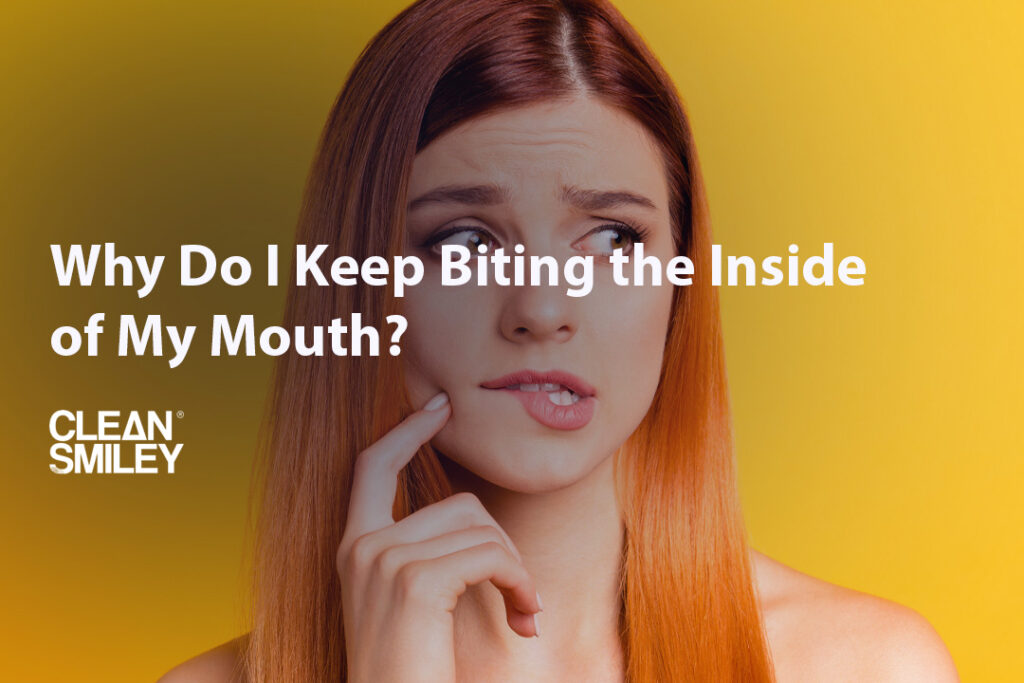
You keep biting your cheek because something is pushing the cheek into the path of your teeth, or because your jaw is biting without your full attention. Most repeat bites fall into three patterns: accidental bites while eating or talking, habitual chewing of the cheek lining (morsicatio buccarum), and biting that happens in your sleep with clenching or grinding.
A single bite also sets up the next one. Bitten tissue swells within hours, and a swollen cheek bulges a little further toward the biting surfaces of the back teeth. For the next two or three days that puffy spot is easier to catch again, which is why cheek bites often seem to come in clusters on the same side. Once the swelling settles, the repeat bites usually stop as well, unless something in the mouth keeps restarting the cycle.
The three patterns usually look and feel different, as the table shows. Many people have more than one at the same time, for example a slightly high filling that started the problem and a chewing habit that kept it going after the filling was fixed.
| Pattern | When it happens | What the inside of the cheek looks like | Sensible first step |
|---|---|---|---|
| Accidental biting | While eating or talking, or after dental numbing | One sore spot, sometimes a blood blister, often on one side only | Let it heal, eat slowly, and look for a dental trigger if it repeats |
| Habitual chewing (morsicatio buccarum) | During stress, boredom or concentration, often without noticing | Rough, white, shredded-looking patches along the bite line, often on both sides | Habit awareness, plus a dental check to rule out sharp edges |
| Biting in sleep | At night, together with clenching or grinding | Soreness on waking, a white ridge along the bite line, sometimes a scalloped tongue edge | Dental check for signs of bruxism and a custom night guard if needed |
Which dental problems make you bite the inside of your cheek?
The dental problems that most often make you bite the inside of your cheek are back teeth that do not overlap properly, a new crown or filling that is slightly too high or bulky, a sharp or chipped tooth edge, wisdom teeth that erupt at an angle, gaps from missing teeth and dentures that have become loose. Each one changes where the cheek rests when you close your mouth.
Back teeth that do not meet evenly
Normally the upper back teeth sit slightly outside the lower ones, so the cheek is held away from the biting surfaces. In a crossbite or an edge-to-edge bite, that small overlap is missing, and the cheek can slip between the teeth as they close. Crowded or tilted teeth can create a similar trap in one particular spot. Small problems can sometimes be corrected by reshaping an edge, while larger bite problems are treated with braces or clear aligners after a full assessment.
A new crown or filling that sits slightly high
A new crown, filling or veneer changes the shape your cheek and tongue are used to. A few days of noticing a “new edge” is normal, but if the restoration is slightly high, too bulky on the cheek side or has a sharp margin, it will keep catching the same spot. The fix is usually quick: the dentist marks the bite with thin articulating paper and smooths or reduces the area that touches too early. If your cheek problems started right after new dental crowns, mention it at the appointment, because the timing is a strong clue.
Temporary crowns deserve a special mention. They are made quickly to protect the tooth while the final crown is being prepared, so their edges can be rougher or fuller than the permanent version. A temporary crown that rubs the cheek can be smoothed, and it helps to know how long temporary dental crowns last so you are not living with a rough edge longer than necessary.
A sharp, chipped or worn tooth edge
A small chip, a broken filling or a worn cusp can leave a ridge as sharp as a fingernail. Your tongue finds it straight away, but the cheek rubs against it hundreds of times a day while you talk and chew. Smoothing the edge, repairing the filling or covering a weakened tooth usually ends the irritation within days.
Wisdom teeth
Upper wisdom teeth often erupt tilted toward the cheek, and a partly erupted lower wisdom tooth can leave a flap of gum and cheek tissue right in the chewing path. Biting in the very back of the mouth, especially with swelling or a bad taste, points toward a wisdom tooth. Our guide to wisdom tooth pain explains the other signs that a wisdom tooth needs attention.
Missing teeth and loose dentures
When a tooth is lost, the neighboring and opposing teeth slowly drift, and the cheek tends to sag into the gap, where it is easy to catch. Dentures cause a similar problem when the bone underneath shrinks over the years and the denture starts to rock or sink. A loose or worn denture can usually be relined or remade so it sits firmly again, and gaps can be closed with a bridge or an implant once the area has been assessed.
Why does cheek biting while eating keep happening?
Cheek biting while eating keeps happening mostly because of speed and divided attention. Chewing quickly, talking with food in your mouth, eating in front of a screen and being tired all reduce the small automatic movements your tongue and cheek muscles make to keep soft tissue out of the way. A recent bite that is still swollen makes the next one more likely.
Fatigue plays a bigger role than most people expect. When you are tired, muscle coordination is slightly less precise, and that includes the muscles that move your jaw and cheek. Poor sleep, alcohol and some medicines can have the same dulling effect. Large mouthfuls, chewy bread and tough meat need wider jaw movements and give the cheek more chances to fold inward.
Dental numbing is another common trigger. After a filling or an extraction, the cheek, lip and tongue can stay numb for a few hours, and it is very easy to chew them without feeling anything. Children are especially prone to this, and the result can look alarming the next day: a swollen lip or a yellowish-white sore. Waiting to eat until normal feeling has returned prevents most of these bites.
A few table habits reduce bites: smaller mouthfuls, chewing with your lips closed, putting the fork down between bites and pausing the conversation while you chew. None of them is complicated, but together they lower how often the cheek ends up between the teeth.
What is morsicatio buccarum (habitual cheek chewing)?
Morsicatio buccarum is the medical name for chronic, repeated biting or chewing of the inner cheek lining. It is usually classed as a body-focused repetitive behavior, in the same family as nail biting or skin picking. People often do it while stressed, bored or concentrating, and many are only partly aware that they are doing it.
The habit feeds itself. Chewing leaves the surface rough and shredded, and the tongue keeps finding the loose bits of tissue. The urge to smooth them away leads to more chewing, so the area never fully settles. Over time the lining along the bite line can turn white, thickened and ragged. Similar habits affect the lips (morsicatio labiorum) and the sides of the tongue, which is why biting the inside of your mouth in several places at once is more often a habit than an accident.
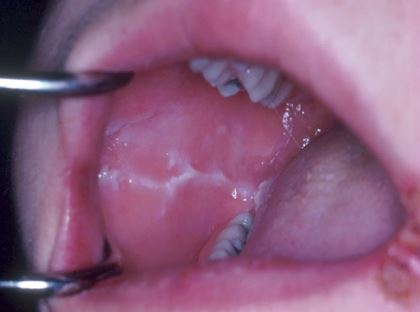
The white patches of morsicatio buccarum are not dangerous in themselves, but they can resemble other white lesions, including leukoplakia, a white patch that needs closer follow-up. A dentist looks at where the patches are, whether they follow the bite line and whether they appear on both sides. If the picture is not clear, the usual approach is to stop the chewing for a couple of weeks and check again, or to take a small tissue sample (biopsy).
Habitual cheek chewing is not a sign of weak willpower. Stress, anxiety and repetitive behaviors are closely linked, and some people find the habit much easier to break with the help of a therapist trained in habit reversal or cognitive behavioral therapy.
Why do I bite the inside of my cheek in my sleep?
Biting the inside of your cheek in your sleep is usually linked to bruxism, the clenching or grinding of teeth that many people do at night without knowing. When the jaw clenches hard, the cheek can be pressed or trapped between the back teeth for long periods. Waking up with a sore cheek, a tender jaw or a morning headache is the typical clue.
Other signs of night-time clenching include a white ridge along the inner cheek at the level where the teeth meet (often called linea alba), a scalloped edge on the sides of the tongue, worn or flattened tooth edges and tired jaw muscles in the morning. Stress, alcohol in the evening, some sleep problems and sleeping face-down with the cheek pressed into the pillow can make it worse. If loud snoring or daytime sleepiness comes with the clenching, mention it to your doctor as well, since grinding and sleep breathing problems sometimes appear together.
A custom-made night guard is the most direct way to protect the cheek during sleep. The thin plastic guard covers the biting surfaces, so even when the jaw clenches, the cheek has nowhere to get trapped. It also spreads the force of grinding and helps protect crowns and fillings. Our article on teeth protectors for grinding teeth goes into the options in more detail, and the night guard user reviews page collects what people say about wearing one night after night.
How can you tell what is causing your cheek biting?
You can usually tell what is causing your cheek biting by noting where the sore is, when the bites happen and what changed in your mouth shortly before they started. A sore right next to a new crown points to the restoration, bites only at meals point to eating habits, and soreness on waking points to night-time clenching.
| Possible cause | Typical clue | What usually helps |
|---|---|---|
| New crown, filling or veneer that is slightly high or bulky | Bites started within days or weeks of the treatment, in the spot next to it | Bite check and a small adjustment or polish of the restoration |
| Sharp, chipped or worn tooth edge | Your tongue can feel a rough or sharp point near the sore | Smoothing the edge or repairing the tooth |
| Back teeth that do not overlap properly (crossbite, edge-to-edge bite, crowding) | Bites always on the same side, often for years | Bite assessment, sometimes reshaping, sometimes orthodontic treatment |
| Erupting or tilted wisdom tooth | Bites far back in the mouth, sometimes with swollen gum | Exam and X-ray to decide whether to monitor, adjust or remove the tooth |
| Missing teeth or a loose denture | The cheek sinks into a gap, or the denture moves while chewing | Denture reline or remake, or closing the gap after assessment |
| Recent dental numbing | Swollen lip or cheek and a sore the day after treatment | No chewing until feeling returns, then gentle care while it heals |
| Eating fast, talking while chewing, fatigue | Bites happen at meals, more often when tired or rushed | Smaller mouthfuls, slower meals, chewing with lips closed |
| Habitual chewing (morsicatio buccarum) | Rough white patches on both sides, chewing during stress or focus | Habit awareness, habit reversal techniques, sometimes a daytime guard |
| Clenching or grinding in sleep | Sore cheek or jaw on waking, white line along the bite, worn teeth | Custom night guard and attention to stress and sleep |
A simple note kept for a week helps a lot: write down when you bit your cheek, which side, what you were doing and how you slept. Bring it to the dental check-up together with the date of any recent dental work. Once the bites are written down, the pattern behind them is often easy to spot.
What should you do right after biting the inside of your cheek?
Right after biting the inside of your cheek, rinse gently with lukewarm salt water, hold something cold against the outside of the cheek for a few minutes and keep food away from the spot. Most bites form a small sore that turns yellowish-white as it heals, which is normal, and they usually settle within about a week to ten days.
- Rinse with lukewarm salt water (about half a teaspoon of salt in a glass of water) a few times a day, especially after meals.
- Hold a cold pack wrapped in a cloth against the outside of the cheek for about 10 minutes at a time on the first day.
- Avoid spicy, salty, acidic and crunchy foods, such as chili, citrus, tomato sauce and crisps, until the sore is less tender.
- Chew on the other side and take smaller bites until the swelling goes down.
- Keep your tongue and fingers away from the spot, and do not pop or cut a blood blister.
- Keep brushing as usual, with a soft brush near the sore.
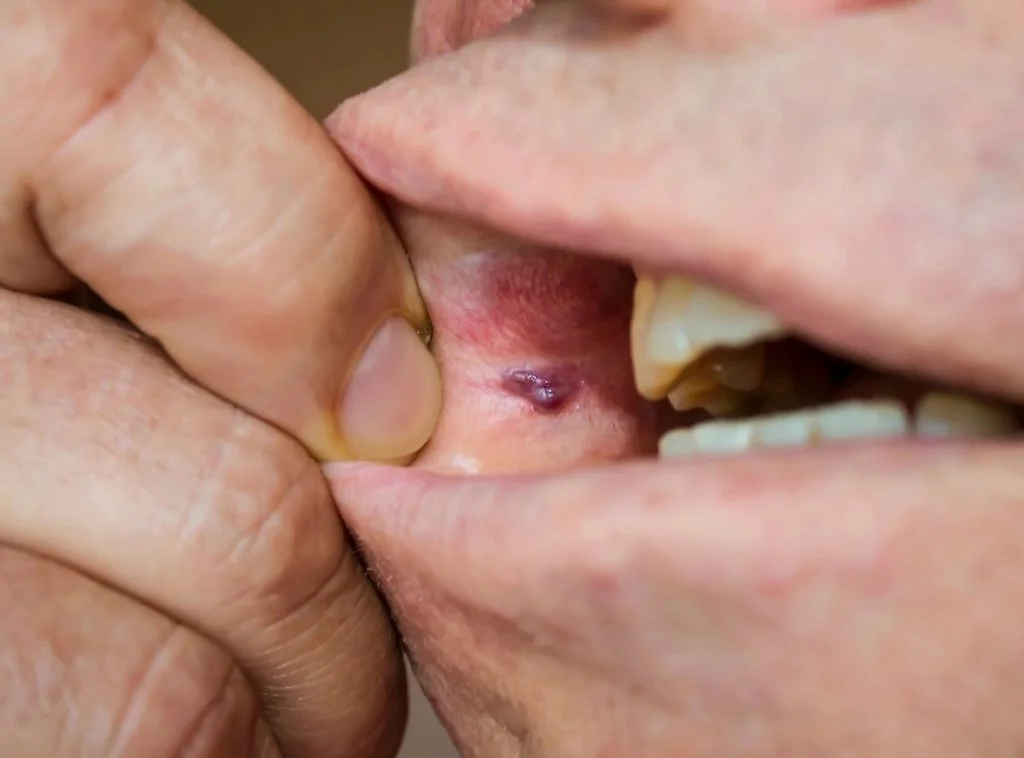
If you need pain relief, use what your doctor or pharmacist recommends for you, and never hold a tablet directly against the sore, as some can burn the delicate lining. A sore that gets smaller and less painful each day is on track. A sore that stays the same size, keeps getting bitten or has not healed in about two weeks needs a look, both to find out why it keeps being injured and to rule out anything else.
How do you stop biting the inside of your cheek?
To stop biting the inside of your cheek, first remove any dental cause, such as a high crown, a sharp edge or a loose denture, and then work on the habits that keep the cycle going: eating speed, stress chewing and night-time clenching. When the trigger is mechanical, a small adjustment often ends the problem within days.
Have the dental cause checked first
A dental check comes first, because no amount of willpower stops bites caused by a high filling or a crossbite. At Clean Smiley Turkey, an exam for cheek biting looks at how the teeth meet using articulating paper, checks every crown and filling near the sore for height and sharp edges, looks closely at the sore itself and, when needed, uses an X-ray to assess wisdom teeth and older restorations. Adjusting a high or rough restoration usually takes only a few minutes and often needs no numbing.
Break the habit loop
Habit reversal is a structured method that tends to work better than simply trying to stop. It starts with awareness: noticing the moments when you chew your cheek, such as during calls, driving, screen work or stressful conversations. Next comes a competing response, a harmless action you do whenever the urge appears, for example resting your tongue against the roof of your mouth with your lips closed and teeth slightly apart, or taking a sip of water. Letting the sore area heal smooth also removes the rough tissue that invites more chewing.
Stress management matters as much as technique, since chewing often rises with tension. Regular exercise, enough sleep and short breaks during long stretches of concentration help many people. If the habit is affecting eating, sleep or daily life and you cannot break it alone, a psychologist experienced with body-focused repetitive behaviors can guide you through it.
Protect the cheek while you sleep
For biting in sleep, a custom night guard made from an impression or scan of your teeth gives the cheek a smooth surface to rest against instead of the edges of the teeth. A thin daytime guard is sometimes suggested for people who chew their cheek during desk work, mainly as a physical reminder. A guard works well alongside the other steps rather than on its own.
When should a cheek sore be checked by a dentist or doctor?
A cheek sore should be checked by a dentist or doctor if it has not healed in about two weeks, if a white or red patch stays after the biting has stopped, if you can feel a lump, or if it bleeds without an obvious cause. Most of the time the explanation turns out to be harmless, but only an examination can confirm it.
| Sign | What it may mean | What to do |
|---|---|---|
| Sore not healed in about two weeks | Repeated injury, a sharp edge, or a sore that needs a closer look | Dental check, sooner if it is growing |
| White or red patch that stays after the biting stops | Friction thickening, or a patch such as leukoplakia that needs further tests | Examination, and a small tissue sample if the cause is unclear |
| Firm, smooth lump along the bite line | Irritation fibroma, a benign lump of scar-like tissue | Dental check, removal with a minor procedure if it keeps getting bitten |
| Bleeding or blood blisters without a clear bite | Something other than biting that needs assessment | See a dentist or doctor promptly |
| Swelling, fever, pus or spreading redness | Possible infection | Same-day or next-day care |
| Numbness, trouble swallowing or a sore that feels hard at the edges | Needs urgent evaluation | See a doctor or dentist without delay |
| Cheek biting that started after new dental work | A high or bulky restoration | Ask for a bite check and adjustment |
Two harmless findings are worth knowing about. Linea alba is a thin white line on the inner cheek where the upper and lower teeth meet, caused by pressure and rubbing, and it usually needs no treatment. Friction keratosis is a white, slightly rough thickening of the lining from long-term rubbing, and it often fades once the source of friction is removed. Cheek biting itself is not considered a direct cause of oral cancer, but any patch that does not behave like a healing bite should be examined rather than self-diagnosed.
Frequently Asked Questions
How long does a bitten cheek take to heal?
A small cheek bite usually heals within about a week to ten days. The first two or three days are the most sore, and the spot often turns yellowish-white while new tissue forms underneath, which is normal. Healing slows down if the same area keeps getting bitten, so chewing on the other side for a few days helps. A sore that is still there after about two weeks should be checked.
Can biting the inside of your cheek cause cancer?
Cheek biting itself is not considered a direct cause of oral cancer. The concern is a different one: long-lasting white or red patches can look like lesions that do need follow-up, such as leukoplakia, and they cannot be told apart reliably in a mirror. Any patch or sore that lasts beyond about two weeks, or keeps coming back in the same place without a clear bite, deserves a professional examination.
Can braces or clear aligners make you bite your cheek?
Yes, especially in the first weeks. Brackets and wires on the cheek side of the teeth give the cheek new surfaces to rub against, and moving teeth can briefly change how the bite meets. Orthodontic wax over a rough bracket and asking the orthodontist to trim a long wire usually help. Clear aligners rarely cause bites, but a rough aligner edge can irritate the cheek and can be smoothed.
Why does my child bite their cheek after a dental filling?
After a filling, the local anesthetic can keep the cheek, lip and tongue numb for a few hours. Children often chew or suck the numb area because it feels strange, and the next day there may be a swollen lip or a yellowish-white sore. Soft food only after feeling has returned, and keeping an eye on younger children, prevents most of these bites. The sores usually heal within a week or so.
Should I pop a blood blister from a cheek bite?
No. A blood blister from a bite usually breaks and heals by itself within a few days, and popping or cutting it opens a wound in a mouth full of bacteria. Rinse with salt water and avoid the spot while chewing. Blood blisters that appear without a clear bite, keep coming back or show up in several places at once should be checked by a dentist or doctor.
Are recurring mouth sores always caused by biting?
No. Canker sores (aphthous ulcers) look similar but appear without any bite, often on the inner lips and cheeks, under the tongue or on the floor of the mouth, and they tend to come back in cycles. Frequent ulcers can be linked to stress, certain nutritional deficiencies or other health conditions, which a doctor can check with blood tests. A sore with a clear bite and a matching tooth edge is usually mechanical.
Could a cheek sore next to my new crown be an allergic reaction?
It is possible but uncommon. Most sores next to a new crown are mechanical, caused by an edge that is slightly high, bulky or rough. Reactions to crown materials tend to show as redness, a burning feeling or a white lace-like patch where the cheek rests against the restoration, rather than a single bitten sore. If you are concerned about the material, mention it at your check-up so the area can be examined.
A cheek that keeps getting bitten is a sign that something has changed, whether that is a filling, the way your teeth meet, your stress level or the way you sleep. At Clean Smiley Turkey in Antalya, the first step is a bite check and a close look at the sore, followed by a clear explanation of the likely cause and which adjustments or protective options make sense. If a sore has not healed in about two weeks, or you notice a lump, a lasting white or red patch, or bleeding without a reason, see a dentist or doctor wherever you are.
This article is for general information and does not replace a dental examination or personal medical advice.
Related Articles